Tamarindo Dulce
Tamarindus indica
Quick facts
Native Region
Tropical Africa (naturalized pan-tropically)
Max Height
20-30 meters (65-100 feet)
Family
Fabaceae
Conservation
LC — Least Concern
Uses
Safety Information
Toxicity Details
Tamarindus indica is non-toxic. The fruit pulp is widely consumed worldwide as a food ingredient, beverage base, and confection. The young leaves and flowers are also edible and used in Southeast Asian and West African cuisines. Seeds are edible when roasted or boiled and are processed commercially for tamarind seed gum and powder. No toxic compounds have been identified in the fruit, leaves, or seeds at normal consumption levels. The bark and root extracts have been used traditionally in medicine. While the fruit is acidic (tartaric acid), this is a culinary characteristic, not a toxicity concern.
Skin Contact Risks
No skin contact risk. The bark, leaves, and fruit do not contain irritant compounds. The sticky fruit pulp can stain hands brown but causes no irritation. The wood dust from sawing is non-irritating (unlike many tropical hardwoods). The tree produces no latex or caustic sap. Safe to handle without protective equipment.
Allergenic Properties
Low allergen risk. Tamarind pollen is primarily insect-dispersed and produced in modest quantities. The protein profile of tamarind fruit is not associated with common food allergens, though rare individual sensitivities are possible with any food. Cross-reactivity with other legume allergens is theoretically possible but not documented as a clinical concern. Tamarind is widely consumed globally with very few allergy reports.
Structural Hazards
Large mature tamarinds can develop heavy lateral branches that may break during storms or high winds, particularly if weakened by decay or termite damage. The extensive root system can lift sidewalks and interfere with underground pipes if planted too close to structures. Plant at least 10 meters from buildings and infrastructure. Old hollow trunks should be assessed by an arborist. Falling pods during fruiting season are harmless but can create litter.
Wildlife & Pet Risks
Non-toxic to all wildlife and domestic animals. Fruit is consumed by birds, bats, monkeys, and other mammals. The foliage provides browse for livestock (cattle, goats). Seeds are consumed by parrots and rodents. The tree is widely used as livestock fodder throughout the tropics with no adverse effects.
Season
Flowering
Mar-May
Fruiting
Jan-Apr, Dec
How to identify
Tamarindo Dulce (Sweet Tamarind)
Tamarindo Dulce (Tamarindus indica), the Sweet Tamarind, is a majestic, long-lived tropical tree that combines utility and beauty. Its massive spreading crown provides some of the finest shade in the tropics, while its sweet-sour fruit pods are used to make the beloved agua de tamarindo — one of Costa Rica's most popular natural beverages. A single mature tree can produce 150-200 kg of fruit per year and live for centuries, making it a true legacy tree.
Quick Reference
Key Information
Overview
Tamarindus indica, known in Costa Rica as Tamarindo or Tamarindo Dulce, is one of the most important fruit trees in the tropical world. The sole species in its genus, this massive, long-lived legume tree has been cultivated across the tropics for millennia for its distinctively flavored fruit pods.
The standard tamarind produces fruit with a sharp, intensely tart flavor — an acquired taste beloved in many cuisines. The sweet tamarind varieties (dulcis or dulce selections), however, produce fruit with significantly reduced tartaric acid content and higher sugar levels, making the pulp more immediately palatable — sweet with a pleasant tang, somewhat like a date crossed with an apricot. These sweet varieties are the ones most commonly cultivated in Costa Rican home gardens.
In Costa Rica, the tamarind is an iconic tree of the Pacific lowlands, particularly Guanacaste province, where it thrives in the hot, dry conditions that characterize northwestern Costa Rica. The city of Santa Cruz in Guanacaste is legendary for its tamarind trees, and the fruit is deeply embedded in local food culture. Agua de tamarindo — a refreshing drink made by soaking tamarind pulp in water with sugar — is a staple beverage found at every soda (local restaurant) and home kitchen in the country. Tamarind paste and candy are also widely enjoyed.
The tree itself is architecturally magnificent. A mature tamarind develops a massive, symmetrical, hemispherical crown that can spread 15–25 meters, creating dense shade that is cooler than the shade of most tropical trees due to the fine, feathery pinnate foliage. The trunk can reach 1.5 meters in diameter, with rugged, deeply fissured bark. Old tamarinds are among the most impressive trees in any tropical landscape, and individual specimens can live 200–400 years.
As a member of the Fabaceae (legume family), the tamarind has nitrogen-fixing bacteria in its root nodules, improving soil fertility wherever it grows. This makes it an excellent agroforestry tree, historically planted in pastures throughout Guanacaste to provide shade for cattle while enriching the soil.
📸 Photo Gallery
Whole tree
📷 (c) Riley Jauniaux, some rights reserved (CC BY-NC)(CC BY-NC)
View source ↗Leaves
📷 (c) Riley Jauniaux, some rights reserved (CC BY-NC)(CC BY-NC)
View source ↗Whole tree
📷 (c) Wolfgang Bittermann, some rights reserved (CC BY-NC)(CC BY-NC)
View source ↗Leaves
📷 (c) Federico A. Chinchilla Romero, some rights reserved (CC BY-NC)(CC BY-NC)
View source ↗Whole tree
📷 (c) mayer212, some rights reserved (CC BY-NC)(CC BY-NC)
View source ↗Photos sourced from iNaturalist's community science database. Browse all observations →↗
Taxonomy and Classification
Common Names by Region
Taxonomic Notes
Tamarindus indica is the sole species in the genus Tamarindus — it has no close relatives. The genus occupies an isolated position within the Detarioideae subfamily of legumes. Despite its species name indica (suggesting Indian origin), the tree is now considered native to tropical Africa, particularly the savanna regions of Sudan, Cameroon, and East Africa. It was introduced to India in antiquity (likely before 5000 BCE) and became so thoroughly naturalized that European botanists originally believed it was of Indian origin. The sweet tamarind varieties are not a distinct variety or subspecies but rather selected cultivars with reduced tartaric acid content.
Physical Description
Growth Form
The Sweet Tamarind is a large, slow-growing, semi-deciduous tree. At maturity, it develops one of the most impressive canopies of any tropical tree — a dense, rounded, hemispherical crown that can spread 15–25 meters. The form is often broader than it is tall, creating a massive umbrella of shade. The branching pattern is dense and twisting, with secondary branches drooping gracefully under their own weight.
Trunk and Bark
The trunk is massive, straight or slightly sinuous, reaching up to 1.5 meters in diameter in old specimens. The bark is dark gray to blackish-brown, deeply fissured and rough, developing an attractive scaly texture with age. The wood is extremely hard, dense (specific gravity 0.8–0.9), and durable, with a beautiful reddish-brown heartwood that takes a fine polish — prized for woodworking but rarely harvested due to the tree's greater value as a fruit producer.
Leaves
The leaves are alternate, pinnately compound, 10–15 cm long, with 10–20 pairs of small, oblong leaflets each 1–2.5 cm long and 5–8 mm wide. The leaflets fold closed at night (nyctinastic movement) and during cloudy weather — a characteristic behavior of many legumes. This gives the tree a soft, feathery appearance by day that transforms into a drooping, closed aspect at dusk. Young foliage is bright green, maturing to a darker green.
Flowers
The flowers are small (2–3 cm) but attractive, appearing in loose racemes at branch tips. Each flower has 3 well-developed petals that are yellow with red or orange veining, giving the inflorescences a warm, ornamental appearance. Flowering occurs during the dry season (March–May in Costa Rica), often triggered by water stress after a period of drought. The flowers are fragrant and attract bees, which are the primary pollinators.
Fruit and Seeds
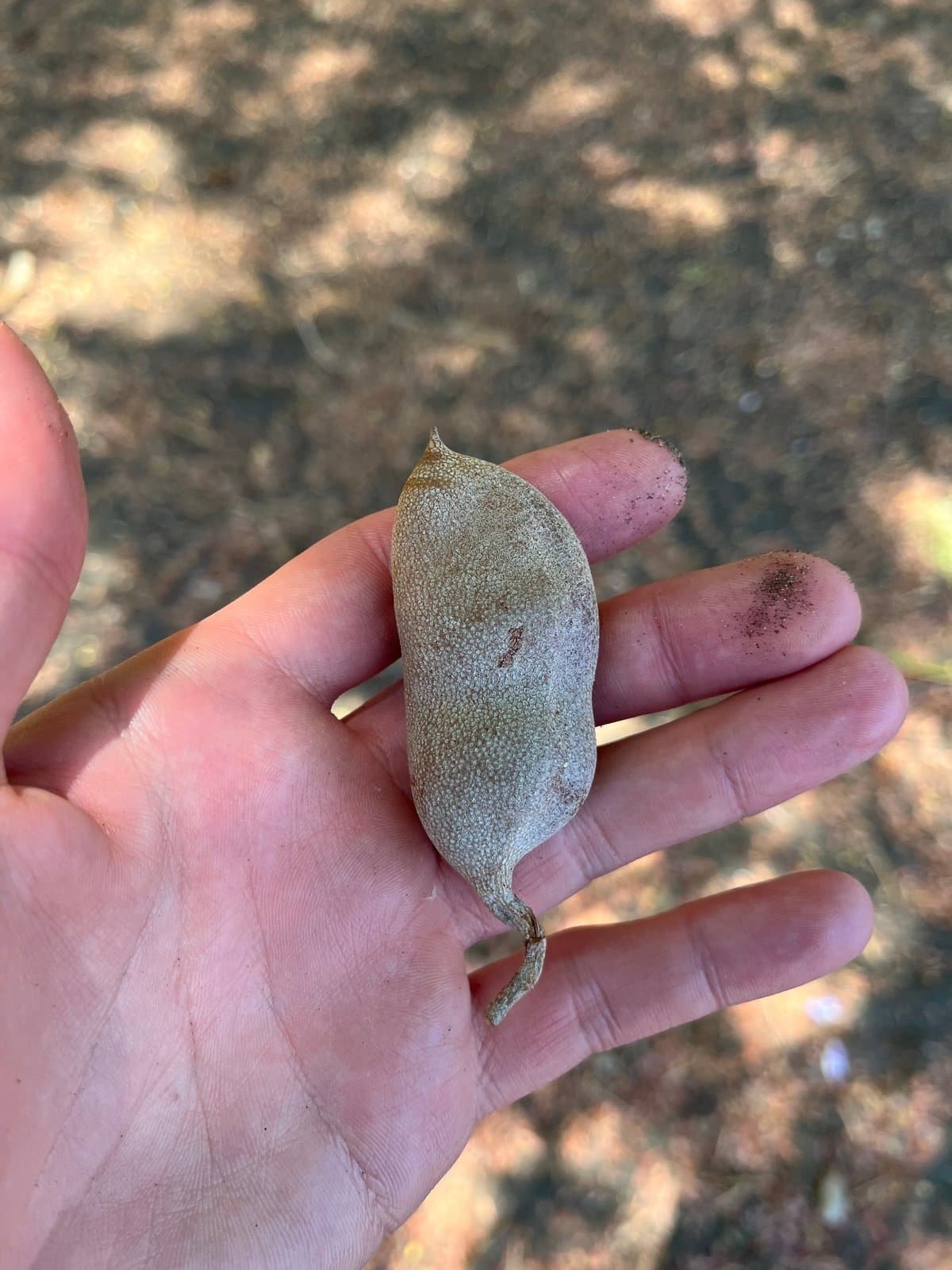
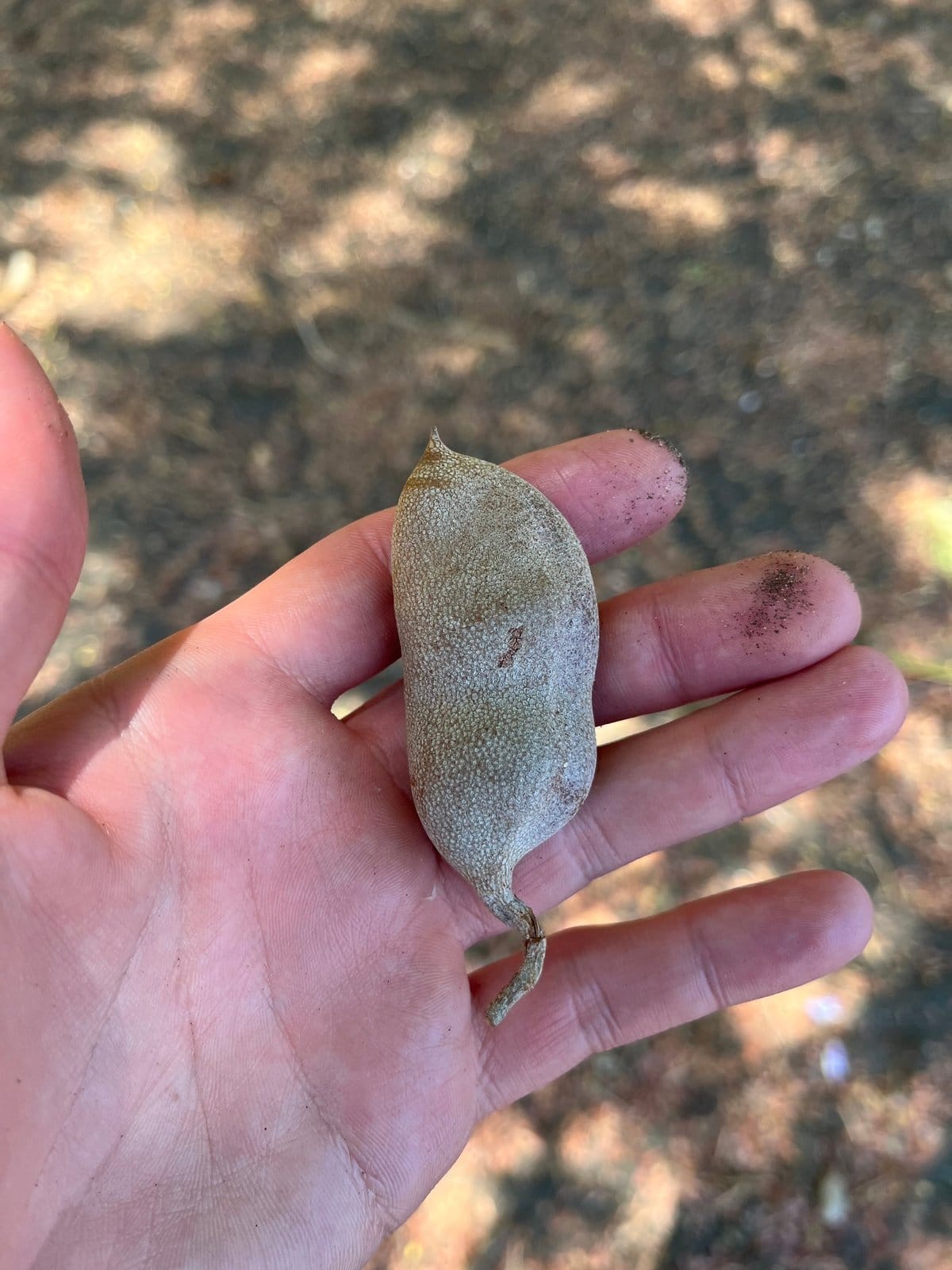
The fruit is the tamarind's defining feature — an elongated, curved pod, 7–20 cm long and 2–3 cm wide, with a brittle, brown shell that cracks easily to reveal the edible pulp within. The pulp of sweet varieties is soft, sticky, dark brown to reddish-brown, with a sweet-tangy flavor and date-like texture. Each pod contains 4–12 hard, smooth, angular, brown seeds embedded in the pulp. The seeds are covered in a thin, red-brown seed coat and surrounded by fibers. Pods hang in clusters of 10–50, often remaining on the tree for months after maturation.
Geographic Distribution
Range in Costa Rica
In Costa Rica, the Sweet Tamarind is most abundant in the Pacific lowlands:
- Guanacaste: The heartland of tamarind culture in Costa Rica. Enormous old trees shade town plazas in Santa Cruz, Nicoya, Liberia, and Filadelfia. The dry climate is ideal.
- Puntarenas: Common throughout the Pacific coast lowlands from Puntarenas city to the Nicoya Peninsula.
- Central Valley: Cultivated in warmer areas of San José, Alajuela, and Grecia at lower elevations.
- Northern Zone: Scattered plantings in the warm lowlands around Cañas and Tilarán.
The species is uncommon on the Caribbean slope, where the consistently wet climate is less suitable than the seasonal dryness of the Pacific side.
Broader Distribution
Tamarindus indica is now pantropical, cultivated in tropical regions worldwide. Major producers include India (world's largest), Thailand (leading producer of sweet varieties), Mexico, Philippines, Bangladesh, and East African nations. The tree has become naturalized throughout Central America, the Caribbean, and coastal South America. It thrives wherever there are warm temperatures and a distinct dry season.
Habitat and Ecology
Ecological Role
Although introduced, the tamarind has become ecologically integrated into Costa Rican landscapes over centuries:
- Shade provider: The dense canopy creates microclimates that support shade-dependent understory plants, reduce soil evaporation, and lower ambient temperatures by 5-10°C
- Nitrogen fixation: As a legume, the tree harbors Rhizobium bacteria in root nodules, enriching soil with atmospheric nitrogen
- Pollinator resource: Flowers provide nectar and pollen for native bees and introduced honeybees during the dry season — a critical resource when few other trees are flowering
- Wildlife food: Fruit consumed by white-faced capuchins, howler monkeys, coatis, squirrels, parakeets, and many other species
- Bat roost: Large old tamarinds with cavities provide roosting sites for bats
Environmental Adaptations
The tamarind is remarkably well-adapted to dry tropical environments:
- Leaf closure: Leaflets fold at night and during drought to reduce water loss (nyctinastic and drought-responsive movements)
- Deep root system: Extensive taproot and lateral roots access deep soil moisture
- Semi-deciduous: May shed some leaves during severe drought, reducing transpiration
- Dense wood: Hard, dense wood resists wind damage in storms
- Fire resistance: Thick bark protects against savanna fires in native habitat
Uses and Applications
Fruit and Beverages
The sweet tamarind fruit is used extensively in Costa Rican cuisine:
Nutritional Content
Timber
The heartwood is hard, heavy, and beautifully colored (dark reddish-brown to purplish), suitable for:
- Furniture making
- Wood turning and carving
- Tool handles
- Posts and heavy construction
- Charcoal (produces excellent, long-burning charcoal)
However, tamarind trees are rarely felled for timber due to their higher value as fruit producers and shade trees.
Traditional Medicine
Tamarind has a long history of medicinal use across tropical cultures:
- Digestive aid: Fruit pulp used as a mild laxative and digestive tonic
- Fever reducer: Leaf and bark decoctions used traditionally to reduce fever
- Anti-inflammatory: Pulp applied topically for skin inflammations and joint pain
- Sore throat: Gargling with tamarind water for throat infections
- Modern research: Studies have confirmed antioxidant, anti-diabetic, antimicrobial, and hepatoprotective properties of tamarind extracts
Cultural and Historical Significance
The tamarind is one of the most culturally significant trees in the tropical world, with a history spanning thousands of years across multiple civilizations.
In Costa Rica
The tamarind is deeply embedded in Guanacastecan culture. The enormous old tamarinds in town plazas throughout Guanacaste and the Nicoya Peninsula are social landmarks — generations have gathered under their shade for markets, festivals, dances, and conversation. The phrase "bajo el tamarindo" (under the tamarind) evokes a sense of community, leisure, and traditional rural life in Costa Rica.
Agua de tamarindo is one of the "aguas frescas" (fresh waters) that define Costa Rican beverage culture, alongside horchata, cas, and chan. It is served at virtually every meal in Guanacaste and is a fixture at fiestas, bullfights, and community celebrations.
Global Significance
- India: The tamarind is considered sacred in Hindu tradition and features in religious ceremonies, Ayurvedic medicine, and every regional cuisine
- Thailand: Thailand leads the world in sweet tamarind production; the fruit is a national snack
- Arabic World: The English name "tamarind" derives from the Arabic تمر هندي (tamar hindi, "Indian date")
- Africa: Wild tamarind groves in the Sudan-Sahel zone provide critical food security during dry seasons
- Mexico: Tamarind candy (pulparindo) is one of Mexico's most popular confections
Conservation Status
Tamarindus indica is classified as Least Concern (LC) by the IUCN. As one of the most widely cultivated fruit trees in the tropics, the species faces no global threat. Wild populations exist across tropical Africa, and the tree is extensively naturalized throughout Asia, the Americas, and the Pacific. In Costa Rica, it is a common cultivated tree requiring no conservation intervention.
Conservation Notes
While the species itself is secure, some concerns exist:
- Genetic erosion: Sweet varieties are often propagated clonally, narrowing the genetic base
- Old-growth loss: Centuries-old tamarinds in towns and plazas are threatened by development and infrastructure projects
- Wild population monitoring: African wild populations in some regions face pressure from land clearing
Growing the Sweet Tamarind
Site Selection
The Sweet Tamarind requires:
- Full sun — minimum 8 hours direct sunlight daily
- Warm climate — lowland areas below 1,000 m elevation in Costa Rica
- Well-drained soil — tolerates most soil types but avoid waterlogged conditions
- Ample space — this is a large tree! Allow a minimum of 12 meters from buildings, utilities, and other trees
- Dry season — performs best in areas with a distinct dry season (Pacific slope)
Guanacaste and the Central Pacific coast provide ideal conditions.
Propagation
From Seed: Seeds germinate readily in 1-2 weeks without pretreatment. However, seedlings from sweet tamarind parents may not produce equally sweet fruit — there is significant genetic variation. Seedlings take 6-8 years to fruit.
Grafting: The preferred method for ensuring fruit quality. Side-veneer or approach grafting onto seedling rootstock produces trees true to the desired variety, fruiting in 3-4 years. Select scion wood from known sweet-fruiting, heavy-bearing trees.
Air Layering: Effective on mature branches; produces fruiting-size trees in 2-3 years. Particularly useful for replicating exceptional sweet varieties.
Planting and Care
- Plant in a large hole (60 × 60 cm) enriched with compost and bone meal
- Water regularly during the first 2-3 dry seasons
- Mulch heavily to conserve moisture for young trees
- Structural pruning in the first 3-5 years to develop a strong central leader and well-spaced scaffold branches
- No regular fertilization needed for mature trees due to nitrogen fixation
- Harvest pods when they are brown, dry, and separate easily from the shell
Care Calendar
Companion Planting
The tamarind pairs well with:
- Beneficial companions: Pasture grasses and cattle (traditional silvopastoral system in Guanacaste); nitrogen-fixing understory legumes; shade-loving crops like coffee (at appropriate elevations)
- Compatible trees: Guanacaste tree, mango, jocote, nance — traditional Guanacaste agroforestry combination
- Plants for understory: Shade-tolerant ornamentals, ginger, turmeric under mature canopy
- Caution: The dense shade and extensive roots can suppress nearby crops — plant shade-intolerant species well away from the canopy drip line
Where to See the Sweet Tamarind
In Costa Rica
- Santa Cruz, Guanacaste: Legendary tamarind trees in town plazas and streets — some several centuries old
- Nicoya: Historic trees in the central park and surrounding areas
- Liberia: Park and roadside trees throughout the city
- Puntarenas city: Large specimens along the coastal promenade
- Any Pacific lowland town: Look for massive, spreading shade trees in parks and plazas
Best Viewing Season
The tamarind is most interesting during:
- March–May: Flowering season — delicate yellow and red flowers against the feathery foliage
- December–March: Fruiting season — heavy clusters of brown pods hang from branches
- Year-round: The architectural form and dense shade canopy are impressive at any time
Similar Species and Common Confusions
Key Distinction
Tamarind is the only large shade tree in Costa Rica with feathery, even-pinnate leaves bearing 10-20 pairs of tiny leaflets that fold at night. The distinctive brown curved pods with sticky sweet-sour pulp are unmistakable once fruiting. No native Costa Rican tree closely resembles it.
Field Identification Checklist
- Habitat: Dry lowland Pacific coast, typically in towns, plazas, roadsides, and pastures (0-800 m)
- Size: Large spreading tree 15-25 m tall; trunk short, often forked, 40-100 cm DBH
- Crown: Dense, symmetrical, broadly rounded — provides exceptional shade
- Bark: Dark gray-brown, rough, deeply fissured into irregular thick scales
- Leaves: Even-pinnate compound; 10-20 pairs of small oblong leaflets (1-2 cm); leaflets fold at night (nyctinastic movement)
- Flowers: Small, yellow with red/orange veins, in loose racemes — delicate and fragrant
- Fruit: Curved brown pod 5-15 cm long, brittle shell enclosing sticky brown pulp surrounding 3-8 hard seeds
- Taste: Pulp distinctly sweet-sour (diagnostic — safe to taste)
- Deciduousness: May drop leaves partially during severe dry season
- Age indicators: Very old specimens (100+ years) develop massive, gnarled trunks with broad buttress-like flaring at the base
Harvest and Post-Harvest Processing
Harvest Timing
- Optimal window: December-March when pods turn brown, shell becomes brittle, and pulp is dark and sticky
- Indicator: Pods snap cleanly when bent; shell is dry and crackly
- Method: Hand-pick from lower branches; use pole pruner or climb for higher pods; collect fallen pods daily
Processing Steps
Quality Grades
- Premium: Intact pods, dark brown pulp, no mold, sweet-sour flavor
- Standard: Minor shell damage, good pulp integrity
- Processing only: Fallen pods, slight fermentation — suitable for paste extraction only
Seed Supply and Nursery Protocol
Seed Collection
- Source: Select large, healthy, productive trees with sweet-flavored fruit
- Timing: Collect mature pods December-March
- Seed longevity: Seeds remain viable for 1-2 years if stored dry and cool
- Pre-treatment: Nick or file seed coat (scarification), then soak 24 hours in warm water to speed germination
Nursery Production
Research Priorities in Costa Rica
- Cultivar evaluation: Compare fruit quality, yield, and sweetness of different naturalized genotypes across Guanacaste
- Heritage tree inventory: Document and protect the oldest tamarind specimens in Costa Rican towns (some possibly 200+ years old)
- Agroforestry integration: Evaluate tamarind in silvopastoral systems for shade, fruit production, and soil improvement
- Processing value chain: Develop standardized small-scale processing protocols for rural cooperatives
- Climate resilience: Assess tamarind's drought tolerance limits under projected climate scenarios for the Central American Dry Corridor
- Pollinator interactions: Document pollinator species visiting tamarind flowers in Costa Rica (bees, butterflies, moths)
- Nutritional profiling: Analyze micronutrient content of Costa Rican tamarind pulp varieties for food security programs
External Resources
References
- Morton, J. F. (1987). Tamarind. In Fruits of Warm Climates (pp. 115–121). Miami, FL: Julia F. Morton.
- De Caluwé, E., Halamová, K., & Van Damme, P. (2010). Tamarindus indica L. – A review of traditional uses, phytochemistry and pharmacology. Afrika Focus, 23(1), 53–83.
- El-Siddig, K., et al. (2006). Tamarind (Tamarindus indica L.). Crops for the Future. Southampton Centre for Underutilised Crops.
- Janick, J., & Paull, R. E. (2008). Tamarind. In The Encyclopedia of Fruit and Nuts (pp. 449–457). CABI.
- Gunasena, H. P. M., & Hughes, A. (2000). Tamarind (Tamarindus indica L.). International Centre for Underutilised Crops.
- León, J. (2000). Botánica de los Cultivos Tropicales (3rd ed.). IICA, San José, Costa Rica.
Safety Information Disclaimer
Safety information is provided for educational purposes only. Individual reactions may vary significantly based on age, health status, amount of exposure, and individual sensitivity. Always supervise children around plants. Consult a medical professional or certified arborist for specific concerns. The Costa Rica Tree Atlas is not liable for injuries or damages resulting from interaction with trees described in this guide.
• Always supervise children around plants
• Consult medical professional if unsure
• Seek immediate medical attention if poisoning occurs
Information compiled from authoritative toxicology sources, scientific literature, and medical case reports.
Help improve this page
Know something about this tree? Share local knowledge, suggest a correction, or submit a photo to improve this guide for everyone.