Cachimbo
Couratari guianensis
Quick facts
Native Region
Costa Rica south through Panama into northern South America (Brazil, Colombia, Venezuela, Guianas, Peru)
Max Height
45-60 meters (150-200 feet)
Family
Lecythidaceae
Conservation
LC — Least Concern
Uses
Safety Information
Toxicity Details
Cachimbo is non-toxic and safe for humans and animals. The seed arils are edible and consumed by wildlife. Bark infusions have been used medicinally without reports of toxicity.
Skin Contact Risks
No skin irritation issues. Safe to handle all parts of the tree including bark, leaves, and wood.
Allergenic Properties
Low allergen risk. Pollen during flowering season may cause mild respiratory irritation in sensitive individuals. Wood dust when cutting or sanding may irritate respiratory passages - use appropriate dust protection when working with the timber.
Structural Hazards
PRIMARY HAZARD: As an emergent tree reaching 45-60 meters, falling branches are the main concern. The massive buttresses (7-8 meters high) can be hazardous when cutting the tree. Large woody seed capsules can fall from great heights. Avoid standing under the tree during storms or high winds. The tree's immense size makes it unsuitable for planting near buildings or power lines.
Wildlife & Pet Risks
Safe for wildlife. Birds and mammals consume the seed arils. Provides important shelter and nesting sites for canopy wildlife.
Season
Flowering
Feb-Apr
Fruiting
May-Aug
How to identify
Cachimbo
Cachimbo (Couratari guianensis), also known as Tauari or Fine-leaf Wadara, is one of the true giants of the Central American rainforest. Rising 45-60 meters above the forest floor with massive buttress roots and a spreading crown, this magnificent emergent tree is a defining feature of primary tropical forests from Costa Rica to the Amazon basin.
Quick Reference
iNaturalist Observations
Community-powered species data
📸 Photo Gallery
Whole tree
📷 (c) Eduardo Chacón Madrigal, some rights reserved (CC BY)(CC BY-NC)
View source ↗Leaves
📷 (c) Eduardo Chacón Madrigal, some rights reserved (CC BY)(CC BY-NC)
View source ↗Whole tree
📷 (c) Diego Lobo Montoya, some rights reserved (CC BY-NC)(CC BY-NC)
View source ↗Leaves
📷 (c) Eduardo Chacón Madrigal, some rights reserved (CC BY)(CC BY-NC)
View source ↗Whole tree
📷 (c) Leonardo Álvarez-Alcázar, some rights reserved (CC BY-NC)(CC BY-NC)
View source ↗Taxonomy & Classification
Common Names by Region
Etymology
- Couratari: From indigenous South American languages, referring to trees in the Brazil nut family
- guianensis: Latin for "from the Guianas," referencing the tree's Amazonian distribution
- Cachimbo: From indigenous Central American languages, possibly referring to the tree's use or appearance
The Lecythidaceae family includes the famous Brazil nut tree and several other tropical forest giants valued for timber and edible nuts.
Physical Description
Tree Form
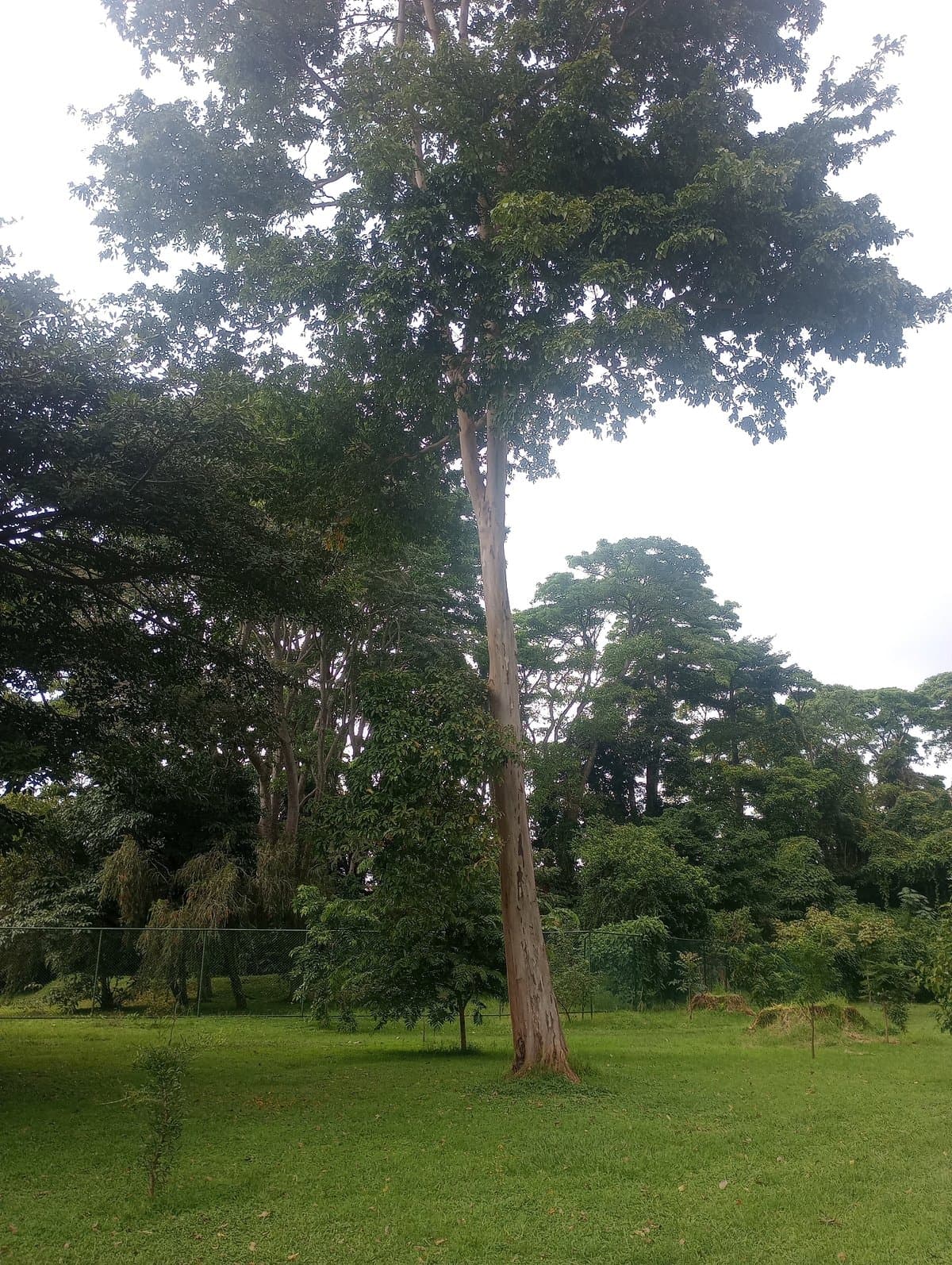
Cachimbo is a true emergent species, towering 45-60 meters above the forest canopy. The tree develops a straight, cylindrical trunk reaching diameters of 1 meter or more, with the first branches often 25-35 meters above ground. Most distinctive are the massive buttress roots extending 7-8 meters up the trunk, creating dramatic flying buttresses that anchor this giant in shallow tropical soils.
The crown is rounded and spreading, emerging above surrounding canopy trees to capture full sunlight. As a deciduous species, Cachimbo sheds most of its leaves before flowering, creating a spectacular display when the bare branches burst into pink blooms.
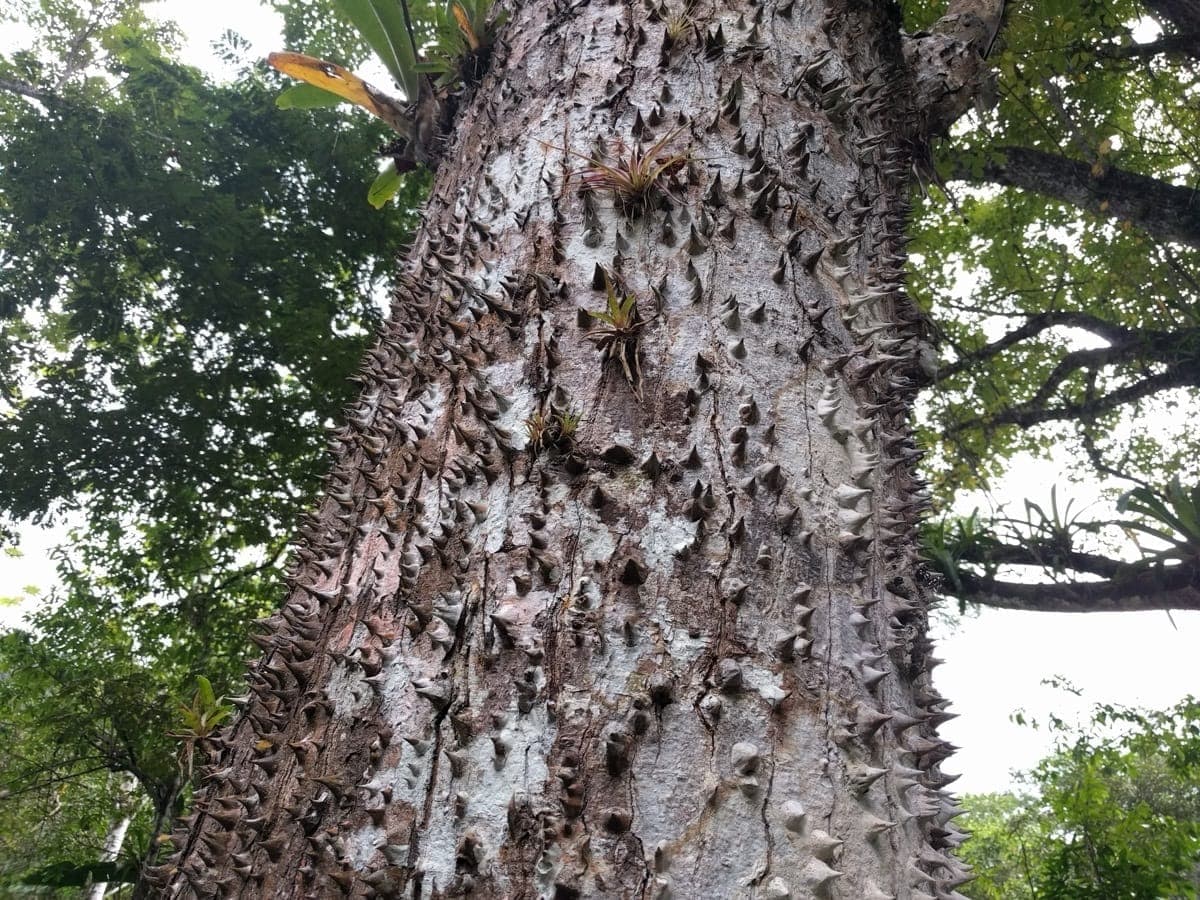
Bark Characteristics
- Color: Grayish-brown to dark gray
- Texture: Moderately smooth when young, becoming slightly fissured with age
- Features: Vertical striations; may develop shallow furrows on old trees
- Lenticels: Present but not prominent
- Inner Bark: Reddish-brown; fibrous
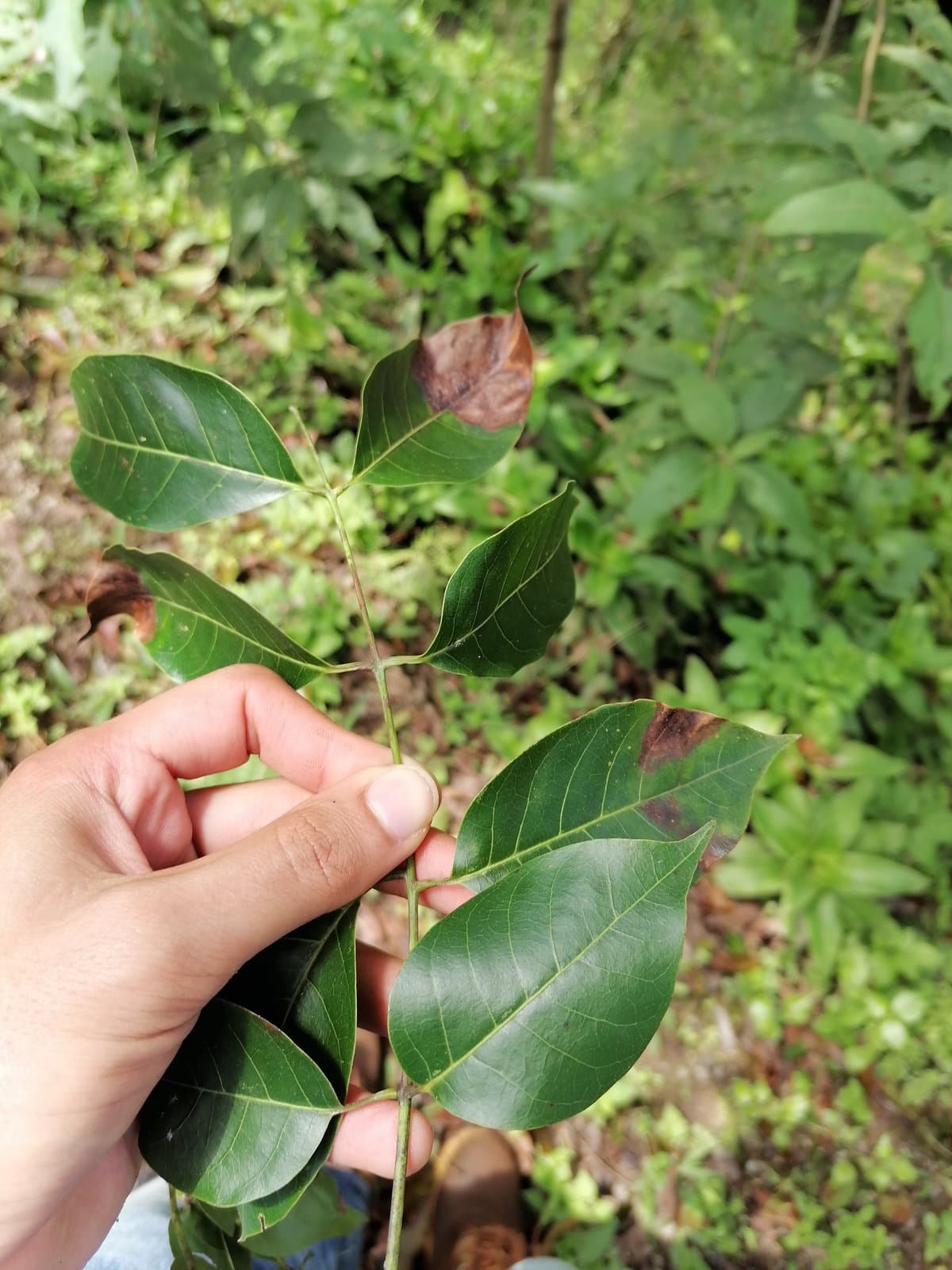
Leaves
- Type: Simple, alternate, spirally arranged
- Shape: Elliptical to oblong
- Size: 10-20 cm long, 4-8 cm wide
- Texture: Leathery (coriaceous)
- Upper Surface: Shiny dark green when mature
- Lower Surface: Pubescent (fine hairs), paler green
- Margins: Entire (smooth)
- Petiole: 1-2 cm long
- Deciduous: Sheds leaves before flowering season
Flowers
- Color: Pink to pale magenta
- Structure: Bisexual, with numerous stamens
- Arrangement: Clustered along branches
- Size: 2-3 cm diameter
- Pollination: Primarily by beetles and large bees
- Timing: February-April (dry season), on leafless branches
- Spectacle: The bare-branched flowering creates a dramatic pink cloud effect visible across the forest
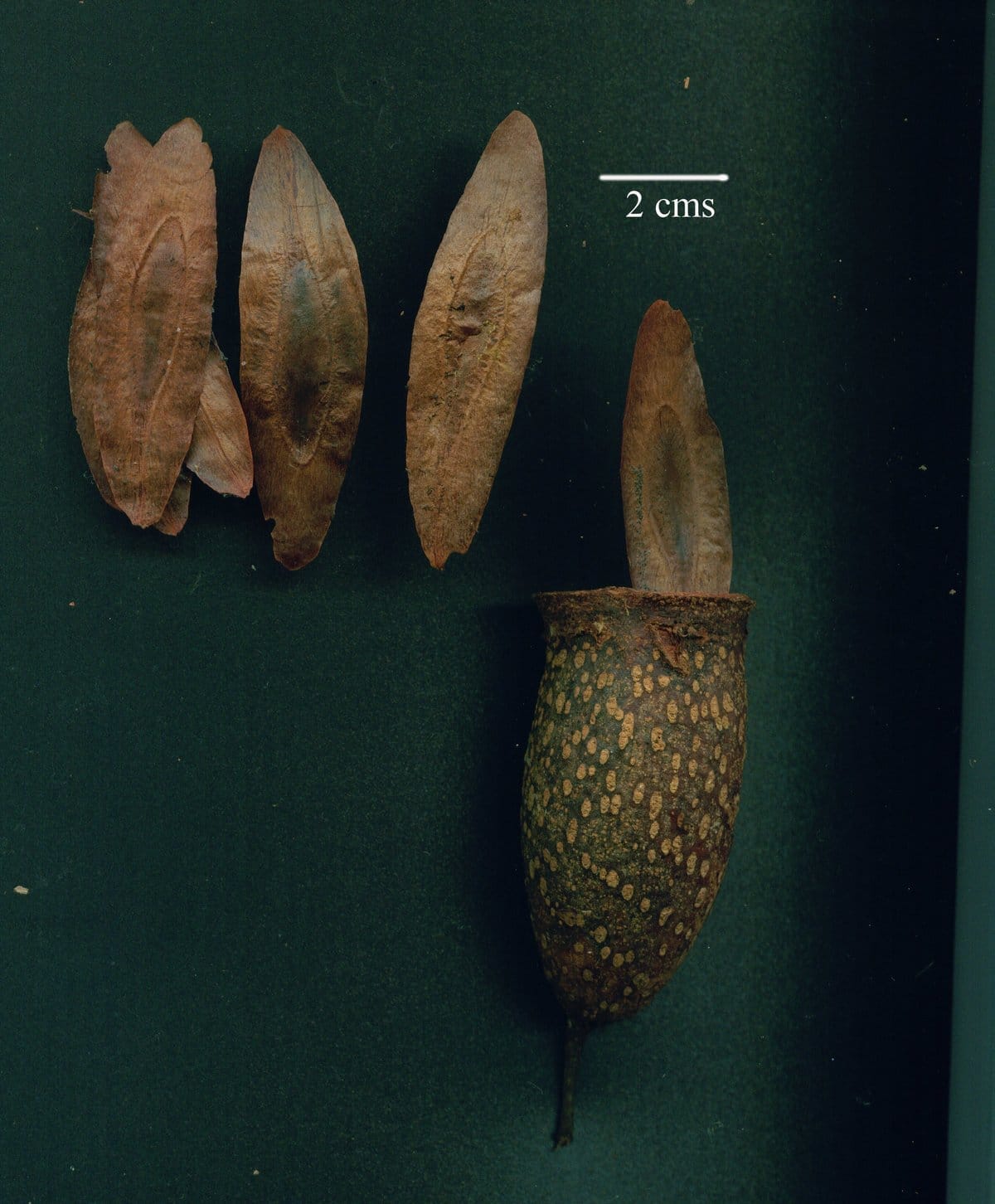
Fruit & Seeds
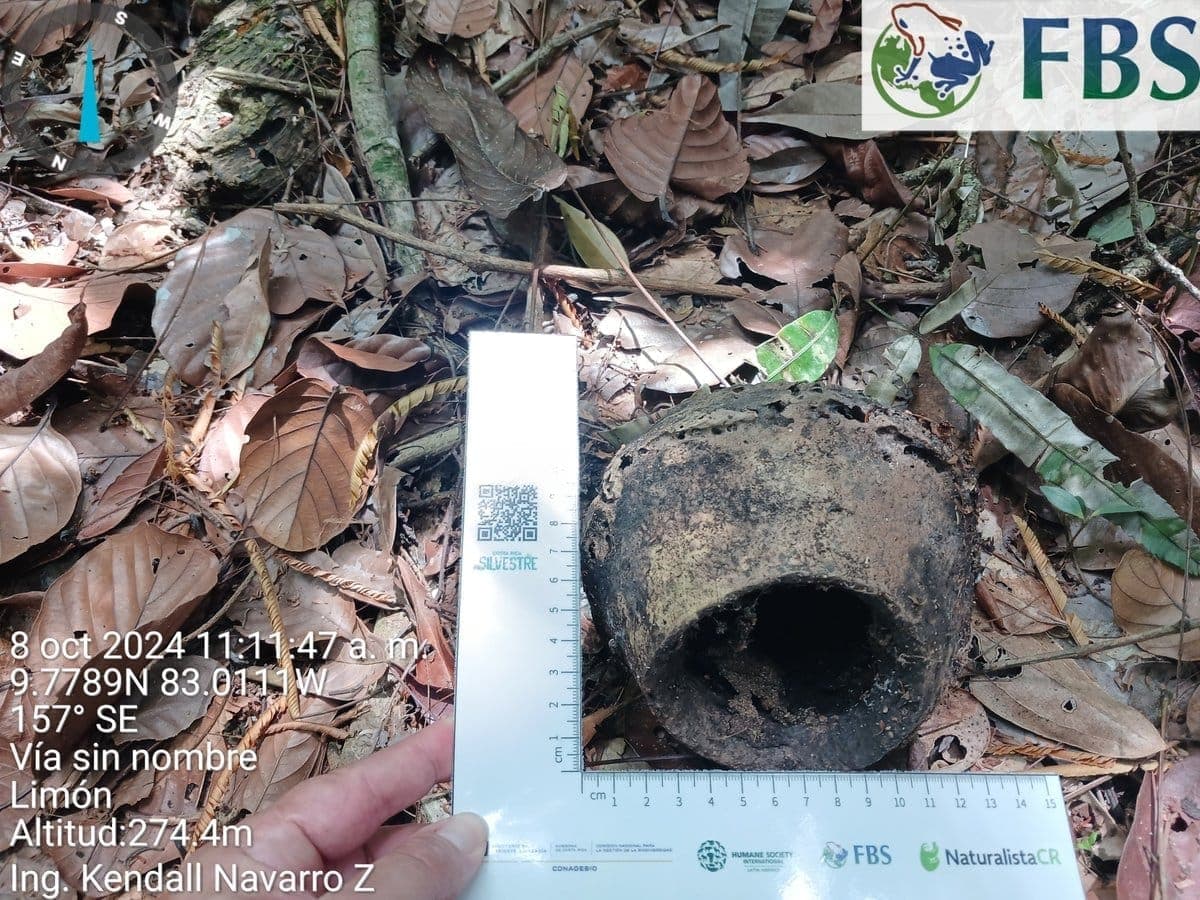
- Type: Large woody capsule (pixidium)
- Shape: Cylindrical to barrel-shaped
- Size: 10-15 cm long, 5-8 cm diameter
- Opening: Dehiscent - the top "cap" falls off when mature
- Seeds per Fruit: 20-40 winged seeds
- Seed Size: 2-3 cm including wing
- Aril: White, fleshy, edible by wildlife
- Dispersal: Wind-dispersed seeds; animals eat arils and scatter seeds
- Timing: May-August
Geographic Distribution
Costa Rica Distribution
Cachimbo occurs primarily on the Caribbean slope and southern Pacific lowlands of Costa Rica:
- Caribbean Lowlands: Most common in Limón Province and northern Heredia
- Southern Pacific: Osa Peninsula and southern Puntarenas
- Northern Zone: Wet forests of Sarapiquí and San Carlos regions
Elevation Range
- Primary Range: 0-500 m
- Maximum: Up to 700 m in favorable microhabitats
- Optimal: Lowland tropical rainforest below 400 m
Habitat Preferences
- Forest Type: Primary old-growth tropical rainforest
- Position: Emergent canopy layer
- Topography: Well-drained slopes and gentle ridges
- Soil: Alluvial, sandy, or clayey soils with good drainage
Habitat & Ecology
Ecological Role
Emergent Canopy Structure: As one of the tallest trees in the rainforest, Cachimbo creates critical structural diversity, providing unique habitat in the emergent layer above the main canopy. This uppermost layer experiences different temperature, humidity, and light conditions than the canopy below.
Wildlife Food Source: The white arils surrounding the seeds are consumed by numerous bird species, primates, and other arboreal mammals. The timing of fruit production (May-August) provides food during a critical period in the rainforest yearly cycle.
Nesting and Perch Sites: The massive crown and bare upper branches provide nesting sites for large birds including raptors, toucans, and parrots. The emergent position makes it valuable as a lookout perch for hawks and vultures.
Seed Dispersal: The winged seeds are wind-dispersed, but the fleshy arils attract animals that carry seeds to new locations, creating a dual dispersal strategy.
Wildlife Associations
- Birds: Toucans, parrots, raptors use crown for nesting and perching
- Mammals: Howler monkeys, spider monkeys, kinkajous feed on seed arils
- Insects: Beetles and large bees are primary pollinators; wood-boring beetles use dead wood
- Epiphytes: Massive branches support orchids, bromeliads, and ferns
Special Adaptations
Massive Buttresses: The flying buttress roots (7-8 m high) provide structural support in shallow tropical soils, distributing the tree's enormous weight and stabilizing it against strong winds.
Deciduous Leaf Drop: Shedding leaves before flowering conserves resources and makes the pink blooms more visible to pollinators flying above the canopy.
Emergent Strategy: Growing 10-20 meters above surrounding trees allows Cachimbo to monopolize sunlight while reducing competition, though it requires massive investment in trunk structure.
Beetle Pollination: Pink flowers adapted for beetle pollination are unusual in emergent trees and represent an evolutionary strategy to ensure pollination by abundant forest-floor insects that venture to the canopy.
Uses & Applications
Timber & Wood Products
Wood Properties:
- Color: Heartwood is reddish-brown; sapwood cream to light brown
- Grain: Straight to slightly interlocked
- Texture: Medium to coarse, uniform
- Density: Hard and heavy
- Durability: Good natural durability
- Workability: Moderate - requires sharp tools due to density
Applications:
- Furniture: High-quality tables, chairs, cabinets
- Interior Construction: Flooring, paneling, trim work
- Veneer: Decorative veneer for furniture
- Plywood: Face and core stock
- Boxes and Crates: Export-quality packing
- Railroad Ties: Historically used due to durability (now restricted)
Timber Caution: Although globally assessed as Least Concern by IUCN, localized populations face overharvesting pressure. Logging should only occur under sustainable forestry management plans with certification (FSC or equivalent), particularly in fragmented Costa Rican forests.
Traditional Medicine
Bark Preparations:
- Fever Reduction: Bark infusions traditionally used to reduce fevers
- Cold Remedy: Combined with other plants in water infusions for treating colds
- Application: Bark is peeled, dried, and boiled to extract medicinal compounds
Modern Use: Limited scientific research on medicinal properties. Traditional use persists in indigenous and rural communities.
Wildlife and Ecological Value
- Reforestation: Increasingly used in tropical forest restoration projects
- Carbon Sequestration: Massive size makes it excellent for carbon storage
- Biodiversity: Supports diverse canopy ecosystems
- Watershed Protection: Deep roots and forest structure protect water quality
Sources: IUCN Red List↗, GBIF↗, RNGR species profile↗, POWO (Kew)↗
Cultural Significance
Indigenous Knowledge
Cachimbo has been known to indigenous peoples of Central and South America for millennia. The tree's distinctive appearance - towering above all others with massive buttresses - made it a landmark in rainforest navigation. Indigenous communities recognized its value for wildlife, noting that animals would gather at fruiting trees.
The medicinal use of the bark for fever reduction is an ancient practice passed through generations of forest dwellers. The inner bark would be carefully harvested without girdling the tree, demonstrating sustainable use practices.
Modern Conservation
Conservation Status: Cachimbo is currently assessed as Least Concern globally by IUCN, reflecting its wide range across Central and South America. However, this global status masks meaningful local pressure: its slow growth rate and requirement for primary forest conditions make populations difficult to restore once depleted, and Costa Rican populations face logging pressure that the global assessment does not capture.
Reforestation Efforts: Costa Rican conservation organizations increasingly recognize Cachimbo as important for forest restoration. However, the tree's slow growth and requirement for intact forest ecosystems mean it only succeeds in later stages of succession, after pioneer species have prepared the site.
Ecotourism Value: The spectacular flowering of leafless pink-bloomed giants emerging above the canopy attracts nature tourists and photographers to Costa Rican rainforests.
Conservation Status
IUCN Assessment
Status: Least Concern (LC)
Population Trend: Decreasing in parts of its range
Scope: Global assessment — does not capture regional logging pressure in Costa Rica
Threats
Primary Threats:
- Unsustainable Logging: High-value timber leads to selective logging pressure
- Habitat Destruction: Deforestation of primary rainforests
- Slow Regeneration: Takes decades to reach reproductive maturity
- Limited Distribution: Restricted to undisturbed lowland rainforests
Secondary Threats:
- Climate change affecting rainfall patterns
- Forest fragmentation isolating populations
- Reduced disperser populations (monkeys, large birds)
- Illegal logging even in protected areas
Protection Measures
- Legal Protection: Protected in Costa Rican national parks and reserves
- CITES: Not currently listed but may require future protection
- Sustainable Forestry: Requires certification for legal harvest
- Reforestation: Included in tropical forest restoration projects
How You Can Help
- Support Sustainable Forestry: Look for FSC-certified tropical hardwood
- Protect Primary Forests: Support organizations preserving old-growth rainforest
- Reforestation: Donate to projects restoring tropical forest
- Ecotourism: Visit protected forests responsibly to support conservation economy
- Awareness: Educate others about the importance of emergent rainforest trees
Sources: IUCN Red List↗, GBIF↗, SINAC↗, Rainforest Alliance↗
Cultivation & Care
Growing Requirements
Climate: Strictly tropical - requires year-round warmth (minimum 20°C), high humidity (80%+), and abundant rainfall (2000-3000 mm annually). Will not survive even brief cold snaps below 15°C.
Site Selection: Only suitable for tropical lowland reforestation in areas with existing or recovering rainforest. Not appropriate for:
- Urban or suburban landscapes
- Coffee or shade plantations (too large)
- Windbreaks (requires intact forest)
- Areas subject to flooding or waterlogging
Soil: Adaptable to various tropical soils (alluvial, sandy, clayey) but requires:
- Good drainage (will not tolerate waterlogging)
- Depth of at least 1 meter for root development
- Acidic to slightly acidic pH (4.5-6.5)
- Reasonable organic matter content
Propagation
Seed Collection:
- Collect capsules as they begin to dehisce (cap loosening)
- Extract seeds with white arils attached
- Seeds viable for only 2-3 months - plant promptly
- Germination rate 60-80% with fresh seeds
Germination:
- Sow seeds in well-draining seedling mix
- Light shade initially, gradually increase to filtered light
- Keep consistently moist but not waterlogged
- Germination begins in 3-6 weeks
- Growth is slow initially (15-30 cm first year)
Nursery Care:
- Transplant seedlings to larger containers after 6 months
- Maintain in partial shade for first year
- Harden off gradually before outplanting
- Outplant when 50-80 cm tall (12-18 months)
Planting
Timing: Beginning of rainy season (May-June on Pacific slope; flexible on Caribbean slope)
Site Preparation:
- Clear competing vegetation in 2-meter radius
- Dig hole 2x the root ball size
- Amend with compost only if soil is severely degraded
- Do not fertilize - tree adapted to low-nutrient tropical soils
Spacing:
- Reforestation: 10-15 meters from other large trees
- Allow 20+ meters from buildings, roads, power lines
- Consider eventual massive size and crown spread
Establishment:
- Water weekly during dry periods in first year
- Mulch 5-10 cm deep around base (keep away from trunk)
- Protect from cattle, deer, and other browsers
- Monitor for competing vines and vegetation
Maintenance
Year 1-3:
- Clear competing vegetation 2-3 times per year
- Protect from browsing with fencing if necessary
- Water during extended dry periods
- Monitor for pest damage (rare but check for wood-boring beetles)
Year 4-10:
- Reduce vegetation clearing to once per year
- Tree should establish independence from maintenance
- Monitor health and growth rate
- Allow natural buttress development
Mature Tree:
- No maintenance required in natural forest setting
- Do not attempt to prune or shape - let grow naturally
- Allow massive buttresses to develop undisturbed
- Monitor for safety hazards near trails or buildings
Never:
- Do not fertilize (adapted to low-nutrient soils)
- Do not prune buttress roots or main trunk
- Do not plant in areas with infrastructure
- Do not attempt to grow outside tropical rainforest conditions
Identification Tips
Key Identification Features
- Massive Buttresses: Among the most impressive in Costa Rica (7-8 m high)
- Emergent Height: Towers 10-20 m above surrounding canopy
- Pink Flowers on Bare Branches: Spectacular dry-season display (Feb-April)
- Large Woody Capsules: Distinctive barrel-shaped fruit with detachable cap
- Shiny Leaves: Leathery, shiny upper surface; spirally arranged
Similar Species
Ceiba pentandra (Ceiba):
- Also emergent with large buttresses
- Spiny trunk (Cachimbo lacks spines)
- White-pink flowers vs. Cachimbo's bright pink
- Cotton-filled pods vs. woody capsules
Cariniana spp. (Abarco):
- Related species in same family
- Smaller stature (30-40 m vs. 45-60 m)
- Different fruit structure
- Less prominent buttresses
Terminalia amazonia (Surá):
- Also emergent with buttresses
- Buttresses less massive
- Different leaf arrangement (clustered at branch tips)
- Different fruit (winged samaras)
Where to See It
Protected Areas in Costa Rica
Caribbean Lowlands:
- Tortuguero National Park: Excellent populations in primary forest
- Barra del Colorado Wildlife Refuge: Remote, undisturbed forests
- La Selva Biological Station: Accessible trails with marked specimens
Southern Pacific:
- Corcovado National Park: One of best places to see old-growth Cachimbo
- Piedras Blancas National Park: Good populations near Golfito
- Osa Peninsula Private Reserves: Various private reserves with mature specimens
Northern Zone:
- Sarapiquí Rainforest: Various private reserves and lodges
- Braulio Carrillo National Park: Lower elevations (below 400m)
Viewing Tips
- Look for emergent trees towering above canopy from lookout points
- Best viewing during flowering season (Feb-April) when pink blooms visible
- Binoculars essential for viewing flowers and crown
- Hire naturalist guide to identify from ground
- Some eco-lodges have observation towers providing canopy-level views
External Resources
Scientific Databases
- Plants of the World Online - Kew Gardens↗
- IUCN Red List - Couratari guianensis↗
- RNGR Species Profile↗
- Useful Tropical Plants Database↗
Costa Rican Resources
- INBio - National Biodiversity Institute↗
- SINAC - National System of Conservation Areas↗
- Organization for Tropical Studies↗
Reforestation & Conservation
- Trees for the Future - Tropical Reforestation↗
- Rainforest Alliance - Sustainable Forestry↗
- FSC - Forest Stewardship Council↗
References
- Useful Tropical Plants Database - Couratari guianensis
- RNGR (Reforestation, Nurseries & Genetics Resources) - Species Technical Sheet
- IUCN Red List - Couratari guianensis Assessment
- Plants of the World Online - Kew Science
- US Forest Service - Tropical Timbers of the World
- Arboretum Osa - Species Account
- Local observations and field research in Costa Rican rainforests
Although globally assessed as Least Concern by the IUCN, Cachimbo faces meaningful local pressure from habitat loss and unsustainable logging in Costa Rica. Please support conservation of primary rainforests and sustainable forestry practices. This magnificent emergent tree is irreplaceable in rainforest ecosystems and takes centuries to reach full maturity.
Last updated: January 14, 2026
Safety Information Disclaimer
Safety information is provided for educational purposes only. Individual reactions may vary significantly based on age, health status, amount of exposure, and individual sensitivity. Always supervise children around plants. Consult a medical professional or certified arborist for specific concerns. The Costa Rica Tree Atlas is not liable for injuries or damages resulting from interaction with trees described in this guide.
• Always supervise children around plants
• Consult medical professional if unsure
• Seek immediate medical attention if poisoning occurs
Information compiled from authoritative toxicology sources, scientific literature, and medical case reports.
Help improve this page
Know something about this tree? Share local knowledge, suggest a correction, or submit a photo to improve this guide for everyone.