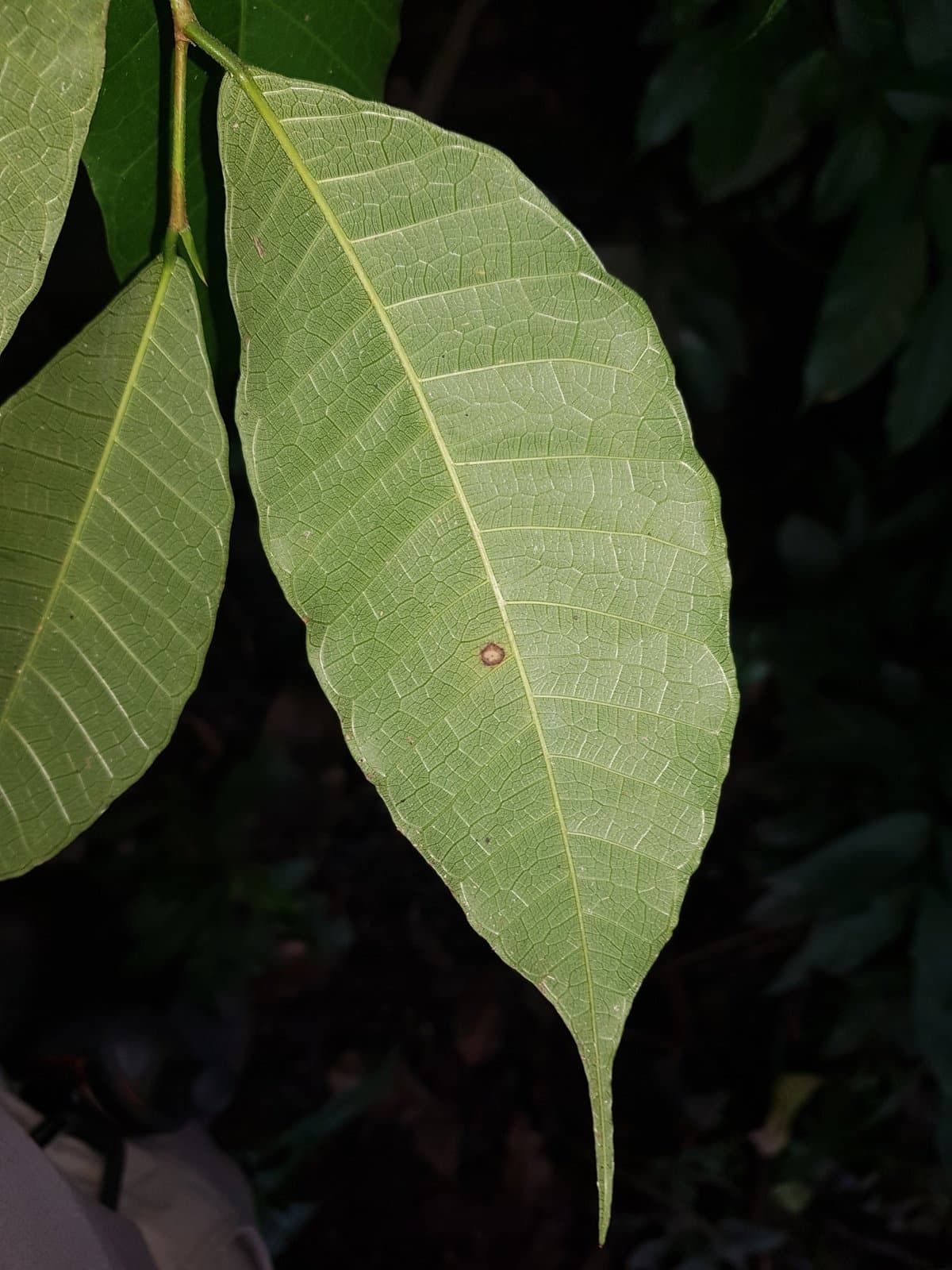
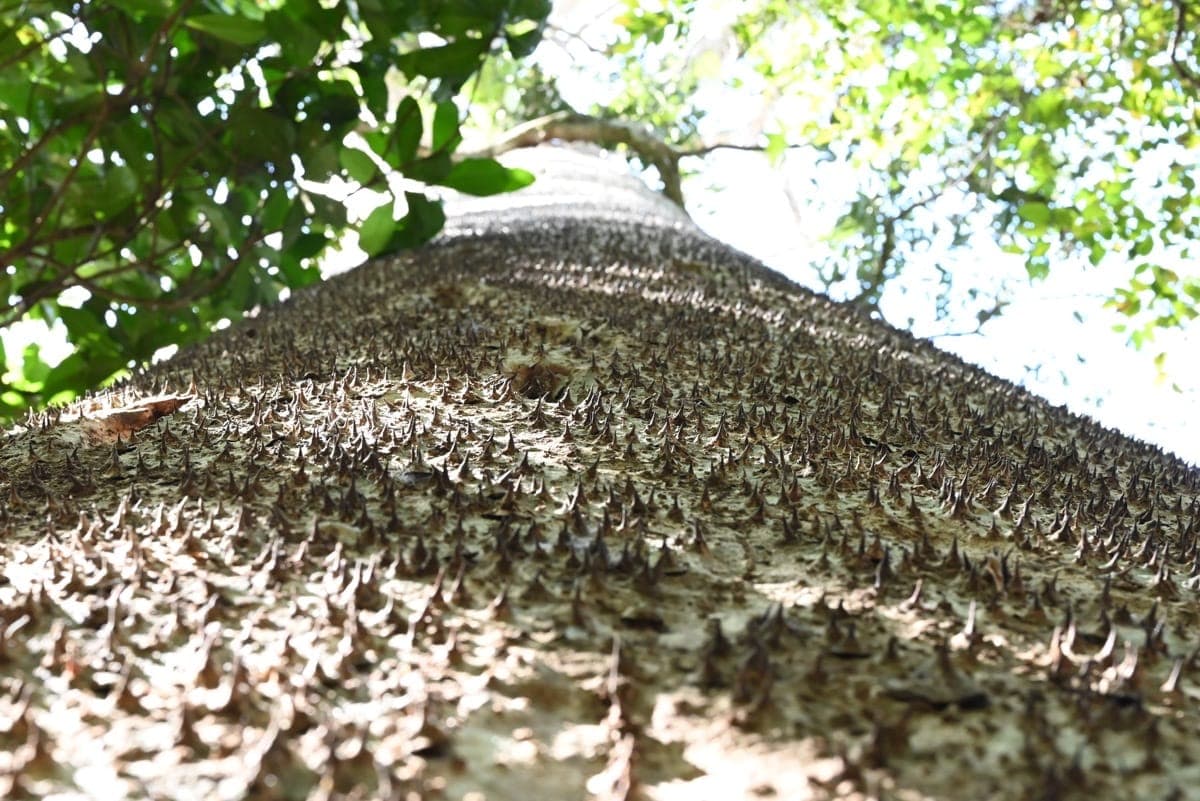
Ojoche
Brosimum alicastrum
Javillo
Hura crepitans
Ojoche vs. Javillo: Safe Superfood vs. Deadly Danger
Key Difference
Ojoche is exceptionally safe with edible seeds, while Javillo is one of the most dangerous trees in the Americas with caustic sap and explosive pods.
Ojoche vs. Javillo: The Ultimate Safety Contrast
Two tall rainforest giants that share similar habitats and heights, but represent opposite extremes of the safety spectrum. One sustained Maya civilization for millennia; the other is nicknamed the "Dynamite Tree" and causes blindness.
Ojoche = EXCEPTIONALLY SAFE (edible superfood, child-friendly) Javillo = EXTREMELY DANGEROUS (toxic sap, explosive pods, fatal seeds) This is perhaps the most important tree ID you can learn in Costa Rica.
🔍Quick Identification Guide
The One-Second Safety Test
Look for spines on the trunk:
- NO SPINES → Likely Ojoche (SAFE - edible seeds)
- COVERED IN SHARP CONICAL SPINES → Javillo (DANGER - stay away!)
Additional quick check - Look at the bark color:
- Smooth, light gray bark → Ojoche (safe)
- Gray-brown bark with spines like a medieval mace → Javillo (danger)
Side-by-Side Comparison
Detailed Comparison Table
| Feature | Ojoche (Brosimum alicastrum) | Javillo (Hura crepitans) | | --------------------------- | --------------------------------------------------- | -------------------------------------------------- | | Family | Moraceae (Fig/Mulberry) | Euphorbiaceae (Spurge) | | Common Names | Breadnut, Maya Nut, Ramón | Sandbox Tree, Dynamite Tree, Monkey Pistol | | Maximum Height | 30-45 m (100-150 ft) | 30-60 m (100-200 ft) | | Trunk Surface | Smooth, light gray, NO SPINES | Gray-brown, COVERED in 1-5cm conical spines | | Bark Texture | Smooth to slightly rough, safe to touch | Cannot touch - covered in sharp woody spines | | Leaf Type | Simple, alternate, evergreen | Simple, alternate, deciduous | | Leaf Size | 6-15 cm long, elliptic | 7-20 cm long, heart-shaped (cordate) | | Leaf Tip | Rounded to short-pointed | Acuminate (long-pointed) | | Latex/Sap | Milky latex, mild, non-irritating | CAUSTIC latex causes severe burns & BLINDNESS | | Flower Type | Small, inconspicuous | Showy red flowers (male & female separate) | | Flowering Season | June-July | February-March | | Fruit Type | Small round fleshy fruit (1-2 cm) | Large pumpkin-shaped explosive capsules (8-15 cm) | | Fruiting Season | September-November | April-June (EXPLOSIVE HAZARD) | | Seed Description | Nutritious brown seeds, edible superfood | Flat brown seeds, EXTREMELY TOXIC (FATAL) | | Seed Dispersal | Animals (monkeys, peccaries), gravity | EXPLOSIVE (seeds launched at 250 km/h, 40-100m) | | Toxicity Level | NONE (completely safe) | SEVERE (all parts highly toxic) | | Skin Contact Risk | None (safe to touch all parts) | SEVERE (sap causes immediate chemical burns) | | Child Safety | 100% SAFE (excellent for schools) | ABSOLUTELY NOT SAFE (keep children away) | | Pet Safety | 100% SAFE (no toxicity to animals) | DANGEROUS (toxic to all pets & livestock) | | Traditional Uses | Maya civilization staple food 3000+ years | Arrow poison, fish poison, warfare | | Modern Uses | Superfood flour, livestock feed, reforestation | Novelty/curiosity only, NOT for cultivation | | Edibility | Seeds highly nutritious (substitute for corn/wheat) | ALL PARTS FATALLY TOXIC - resembles nuts but FATAL | | Wildlife Value | Critical food source for many species | Specialized species only (agoutis, some birds) | | Planting Recommendation | Excellent for all settings, food security | NEVER plant near humans, extreme danger | | Conservation Status | Least Concern (LC) | Least Concern (LC) | | Distribution in CR | All provinces, 0-800m | All provinces, 0-800m | | Habitat Preference | Rainforest, moist areas | Wet areas, riverbanks, disturbed sites | | Growth Rate | Moderate (2-3 ft/year) | Fast (3-4 ft/year) |
Critical Safety Differences
Ojoche: The Safe Superfood Tree
Why It's Safe:
- NO toxicity - all parts completely non-toxic
- Edible seeds - nutritious superfood, fed Maya civilization for 3,000+ years
- Safe to touch - smooth bark, no spines, mild latex
- Child-friendly - excellent for schools, parks, playgrounds
- Pet-safe - livestock and animals can safely graze fallen seeds
- No hazards - no structural risks, no dangerous features
Historical Evidence:
- Sustained millions of Maya people as dietary staple
- Seeds contain more calcium than milk, more protein than corn
- Processed into flour that doesn't spoil (stored for years)
- Present around every ancient Maya ruin (archaeologists use it to find lost cities)
Javillo: The Danger Tree
Why It's Dangerous:
1. CAUSTIC SAP (Immediate Blindness Risk):
- Milky latex contains hurin and creptin (toxic proteins)
- Causes severe chemical burns on skin contact
- Eye contact causes BLINDNESS (temporary or permanent)
- Sap sprays when tree is cut or damaged
- Used historically as arrow poison for warfare
2. EXPLOSIVE SEED PODS (Ballistic Hazard):
- Pumpkin-shaped capsules explode with GUNSHOT sound
- Seeds launched at 250 km/h (155 mph) - faster than baseball pitch
- Travel distances of 40-100 meters
- Can cause serious injury to eyes, face, head
- Fruiting season (April-June) = danger zone beneath tree
3. FATALLY TOXIC SEEDS (Poisoning Risk):
- Seeds resemble edible nuts but are EXTREMELY TOXIC
- Just 1-2 seeds can be FATAL to children
- Causes violent vomiting, diarrhea, nervous system damage
- Historically used as fish poison (kills all fish in pond)
4. SHARP SPINES (Puncture Wounds):
- Trunk covered in 1-5cm conical woody spines
- Present throughout tree's entire life
- Cause deep puncture wounds
- Cannot safely prune or trim
Identification Keys
Trunk Diagnostic (Most Reliable)
Ojoche:
- Trunk is SMOOTH or slightly rough
- Light gray to brown-gray color
- NO SPINES at any age
- Safe to touch with bare hands
- May have slight buttresses at base (small, not prominent)
Javillo:
- Trunk COVERED in conical spines
- Gray-brown bark beneath spines
- Spines 1-5 cm long, woody, sharp
- Resembles medieval weapon
- CANNOT touch safely
- Spines present from sapling to mature tree
Leaf Diagnostic
Ojoche:
- Shape: Elliptic to oblong, pointed tip
- Size: 6-15 cm long
- Base: Rounded to slightly pointed
- Tip: Short-pointed or rounded
- Texture: Leathery, slightly rough above
- Venation: Prominent parallel lateral veins
- Arrangement: Alternate, spirally arranged
- Season: Evergreen (keeps leaves year-round)
Javillo:
- Shape: Heart-shaped (cordate) to broadly ovate
- Size: 7-20 cm long
- Base: Heart-shaped (cordate)
- Tip: Long acuminate (drip tip)
- Texture: Smooth, somewhat glossy
- Venation: Palmate (radiating from base)
- Arrangement: Alternate, spiral
- Season: Deciduous (loses leaves in dry season)
Sap Test (ONLY IF CERTAIN IT'S OJOCHE)
Ojoche:
- Milky white latex when bark scratched
- Mild, does not irritate skin
- Can touch safely
- Dries to rubbery consistency
Javillo:
- DO NOT TEST SAP ON JAVILLO
- Milky latex is CAUSTIC
- Causes immediate chemical burns
- Eye contact = medical emergency
- If sap is caustic, it's NOT Ojoche - stay away!
Fruiting Season Diagnostic
Ojoche (September-November):
- Small round fleshy fruits (1-2 cm diameter)
- Yellow-orange when ripe
- Fall quietly to ground
- Contain single nutritious seed
- Safe to collect and eat
- Animals gather beneath tree to feed
Javillo (April-June):
- Large woody capsules (8-15 cm diameter)
- Pumpkin-shaped, segmented into 8-15 wedges
- EXPLODE with loud bang
- Seeds launch violently through air
- STAY AWAY during fruiting season
- Seeds toxic - do not touch or collect
Habitat & Distribution Overlap
Both trees share similar ranges in Costa Rica, which is why confusion occurs:
Shared Characteristics:
- Both found 0-800m elevation
- Both prefer moist lowland rainforests
- Both reach similar heights (30-45m vs 30-60m)
- Both found in all Costa Rican provinces
- Both grow along rivers and in wet areas
Habitat Distinctions:
Ojoche:
- Primary old-growth rainforest
- Limestone outcrops (tolerates alkaline soil)
- Often found near ancient Maya sites
- Companion to other Moraceae (figs)
- Indicator of mature forest
Javillo:
- Disturbed areas, secondary forest
- Riverbanks, streamsides (flood-tolerant)
- Gap species, likes openings
- Pioneer in damaged areas
- Common along forest edges
Cultural & Historical Context
Ojoche: Tree of Civilization
Ancient Maya Connection:
- Sustained Maya population of 10+ million people
- Seeds stored for years without refrigeration
- Ground into flour (more nutritious than corn or wheat)
- Called "Ramón" in Central America
- Archaeological indicator species (ruins found near Ojoche groves)
Modern Rediscovery:
- NASA identified as crop for space missions
- Climate change resilient (drought-tolerant once established)
- Food security solution for Central America
- Livestock superfood (nutritious fodder)
- Reforestation species that produces food
Nutritional Profile:
- More calcium than milk
- More fiber than oats
- Comparable protein to wheat
- Rich in potassium, iron, zinc, B vitamins
- Gluten-free flour alternative
- Roasted seeds taste like coffee/chocolate
Javillo: Tree of Danger
Indigenous Uses (Historical):
- Arrow poison for warfare (Carib peoples)
- Fish poison (stupefy fish in streams)
- Latex used on dart tips
- Respected and feared in indigenous cultures
Colonial Era:
- Hollowed seed pods used as sandboxes (hence "Sandbox Tree")
- Pens dipped in sand-filled pod to dry ink
- Novelty item in Victorian times
- Seeds called "monkey pistols" (loud explosive sound)
Modern Perspective:
- Ecological curiosity (extreme defenses)
- Educational value (plant defense mechanisms)
- Should NOT be cultivated near human spaces
- Existing trees valuable in remote conservation areas
- Example of evolutionary "arms race" with herbivores
When to See Each Tree
Flowering Time
Ojoche (June-July):
- Small inconspicuous flowers
- Not showy, easy to miss
- Insects pollinate
- Not a visual spectacle
Javillo (February-March):
- Showy RED flowers
- Separate male and female flowers
- Males bright crimson, clustered
- Females orange-red, solitary
- Very ornamental (but don't approach!)
Fruiting Time
Ojoche (September-November - HARVEST TIME!):
- Small fruits fall continuously
- Collect seeds daily for best quality
- Roast or dry seeds immediately
- Process into flour or feed livestock
- Peak wildlife activity beneath trees
Javillo (April-June - DANGER ZONE!):
- DO NOT approach during fruiting
- Loud bangs heard throughout forest
- Seeds ricochet through understory
- Establish 50+ meter safety perimeter
- Serious injury risk from exploding pods
Planting Recommendations
Ojoche: Highly Recommended ✅
Ideal For:
- Reforestation projects (food-producing native)
- Sustainable agriculture (agroforestry)
- Edible landscaping
- School grounds (educational + safe)
- Wildlife gardens (critical food source)
- Food security initiatives
- Carbon sequestration + food production
- Livestock farms (nutritious fodder)
Planting Tips:
- Space 15-20 m from buildings
- Plant in rainy season (May-June)
- Protect seedlings from browsing (first 2-3 years)
- Begins seed production in 8-12 years (be patient!)
- Produces 300-600 lbs seeds annually when mature
- Virtually maintenance-free once established
Long-term Value:
- Tree can live 300+ years
- Provides food for generations
- Increases property value
- Ecological + economic benefits
- Helps combat climate change
- Legacy tree for grandchildren
Javillo: DO NOT PLANT ❌
Reasons NOT to Plant:
- Extreme safety hazard to humans and animals
- Legal liability if injury occurs
- Caustic sap causes blindness
- Explosive pods injure people
- Seeds are fatally toxic
- Cannot be safely maintained or removed
- No legitimate modern use justifies risk
If You Inherit Javillo on Property:
- Establish 50-meter safety perimeter
- Post warning signs
- Never stand beneath during fruiting (April-June)
- Do not attempt to prune or trim yourself
- Consider professional removal (requires hazmat equipment)
- Warn neighbors and children to stay away
- Do not burn wood (smoke is toxic)
Only Appropriate Settings:
- Remote forest conservation areas
- Botanical gardens (with barriers and warnings)
- Research facilities studying plant defenses
- Locations far from any human activity
- Scientific study of extreme plant adaptations
Summary: The Safety Spectrum
Ojoche and Javillo represent opposite ends of the tree safety spectrum:
| Aspect | Ojoche ⭐⭐⭐⭐⭐ | Javillo ☠️☠️☠️☠️☠️ | | -------------------- | --------------------------------- | ---------------------------- | | Overall Safety | COMPLETELY SAFE | EXTREMELY DANGEROUS | | Edibility | Seeds are nutritious superfood | All parts fatally toxic | | Skin Contact | Safe to touch | Caustic sap causes burns | | Children | Perfect for schools | Life-threatening hazard | | Pets/Livestock | Safe food source | Toxic to all animals | | Structural Risks | None | Explosive pods, sharp spines | | Planting Advice | Highly recommended | Never plant near humans | | Value to Humans | Food, nutrition, climate solution | Danger, novelty only | | Historical Role | Sustained civilizations | Poison weapon | | Modern Use | Sustainable food production | Avoid, do not cultivate |
Key Takeaway
The most important tree identification you can learn in Costa Rica:
✅ Smooth trunk = Ojoche = SAFE (edible superfood, plant everywhere)
❌ Spiny trunk = Javillo = DANGER (toxic, explosive, stay away)
When in doubt, observe from a distance and look for trunk spines. If you see spines, back away and assume it's dangerous. If the trunk is smooth, it's likely safe (but always verify with other features).
Ojoche deserves celebration and cultivation—a miracle tree that fed ancient civilizations and offers hope for food security in the 21st century.
Javillo deserves respect and caution—a reminder that nature's defenses can be spectacularly dangerous, and some trees simply don't belong near people.
Learn More
- Full Ojoche Profile - Complete care guide, propagation, recipes
- Full Javillo Profile - Detailed safety information, ecology
- Maya Nut Institute↗ - Organization promoting Ojoche cultivation
- Tree Safety Guide - Toxicity levels, emergency contacts
Want to explore more?
Use our interactive tool to compare these species side by side.
Compare in interactive tool