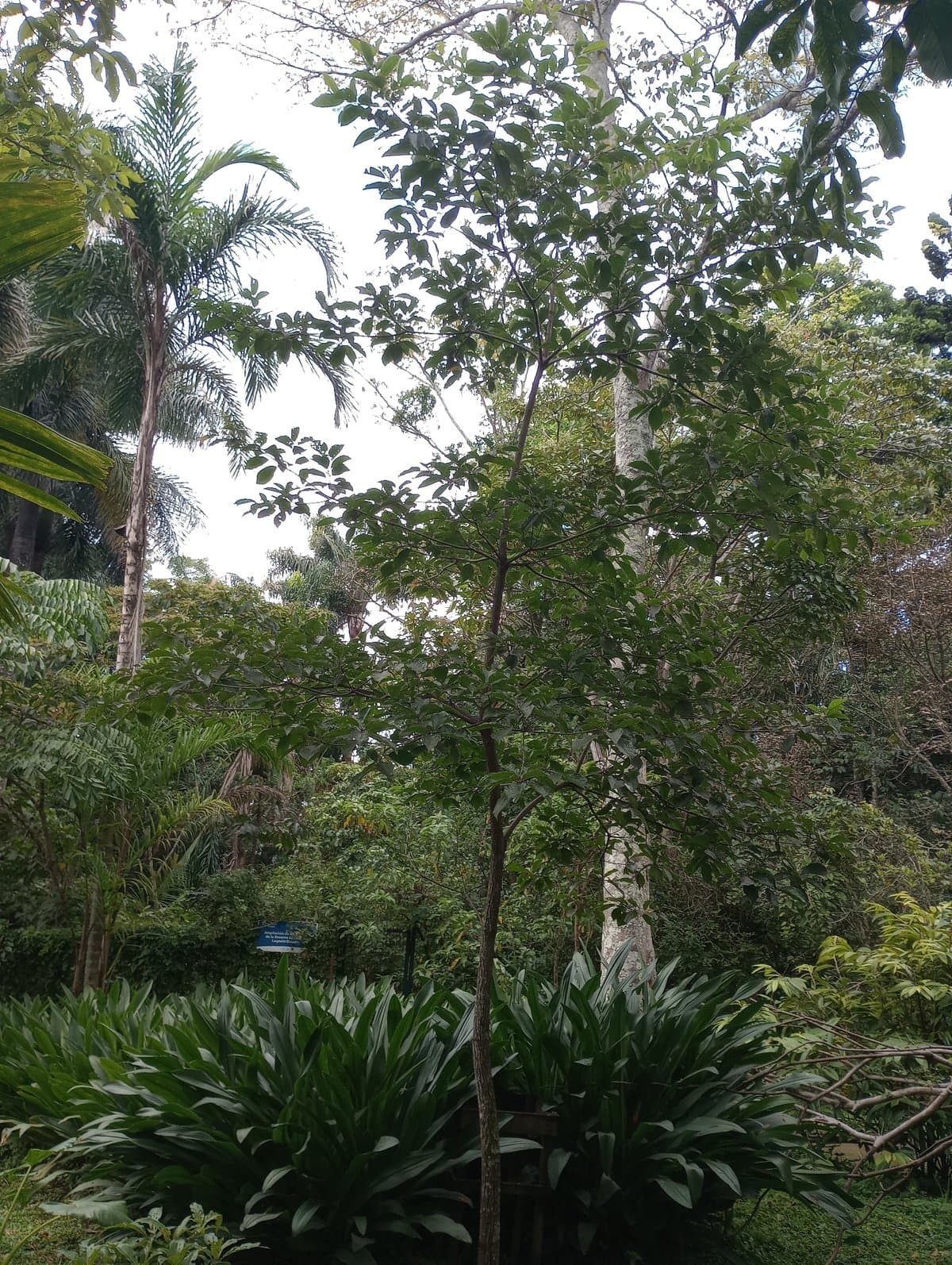
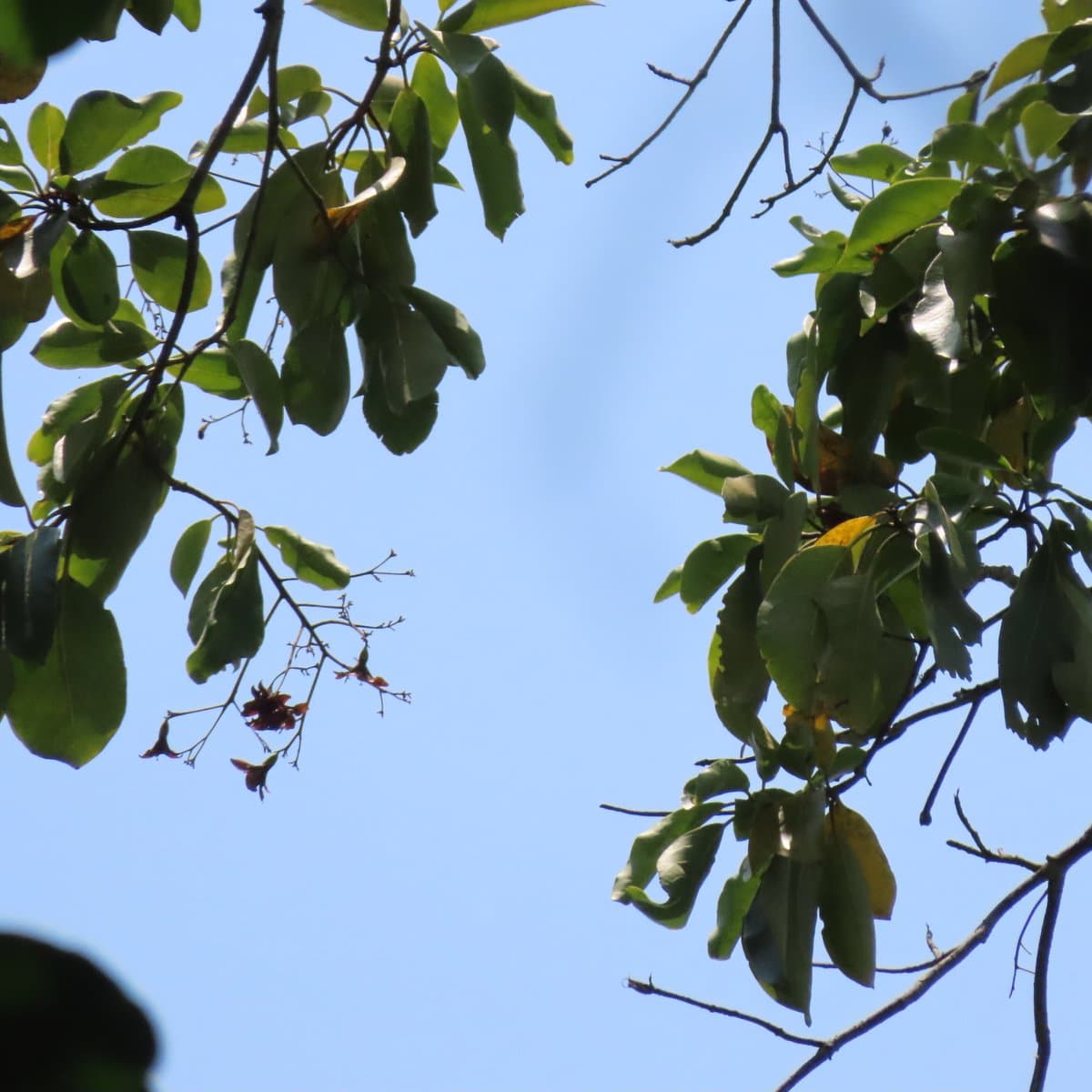
Laurel
Cordia alliodora
Laurel Negro
Cordia megalantha
Laurel vs. Laurel Negro: Two Cordias, Two Different Woods
Key Difference
Laurel has lighter wood and swollen ant-inhabited nodes (domatia) on twigs; Laurel Negro has dark heartwood and no domatia—check the twigs!
Laurel vs. Laurel Negro: Costa Rica's Timber Tree Twins
These two native Boraginaceae species share the "Laurel" name and are both prized timber trees, causing frequent confusion among farmers, foresters, and wood buyers. Both produce excellent furniture-grade wood, but they differ significantly in ecology, habitat, and wood characteristics. Knowing the difference matters for reforestation projects, timber value assessment, and agroforestry planning.
Laurel: Look for swollen nodes on young twigs that house ants—these ant domatia are unique to Cordia alliodora! Laurel Negro: Twigs are smooth with no swollen nodes. The heartwood is notably darker when cut.
Side-by-Side Comparison
Detailed Comparison Table
| Feature | Laurel (Cordia alliodora) | Laurel Negro (Cordia megalantha) | | ----------------------- | ------------------------------------- | -------------------------------------- | | Common Names | Spanish Elm, Ecuador Laurel, Salmwood | Black Laurel, Laurel Macho | | Tree Type | Semi-deciduous timber tree | Deciduous timber tree | | Height | 30-45 m | 30-45 m | | Trunk Features | Straight, cylindrical, few buttresses | Straight, may develop small buttresses | | Bark | Gray-brown, shallow fissures | Dark gray-brown, deeper fissures | | Leaf Size | 8-20 cm long, 3-8 cm wide | 15-30 cm long, 8-15 cm wide (larger!) | | Leaf Texture | Slightly rough (scabrous) | Rougher, more pubescent below | | Unique Feature | Swollen ant domatia on twigs | No domatia | | Flowers | White, small, fragrant clusters | White, larger clusters | | Flowering Season | February-April | January-March | | Heartwood Color | Light brown to golden | Dark brown to nearly black | | Wood Density | Medium (0.40-0.55 g/cm³) | Higher (0.50-0.65 g/cm³) | | Habitat | Humid lowlands, coffee zones, 0-1500m | Pacific dry forest to moist, 0-1200m | | Distribution | Both slopes, nationwide | Primarily Pacific slope | | Conservation Status | Least Concern | Vulnerable (VU) | | Agroforestry Use | Excellent shade for coffee/cacao | Less commonly planted | | Growth Rate | Fast (1-3 m/year) | Moderate (0.5-1.5 m/year) |
Key Identification Features
1. Twig Domatia (Most Diagnostic!)
Laurel (Cordia alliodora):
- Swollen nodes (domatia) at branch junctions house ant colonies
- These hollow swellings are visible on young twigs
- Ants protect the tree from herbivores
- Unique among Costa Rican Cordias!
- If you see ants entering swollen twig nodes = Laurel
Laurel Negro (Cordia megalantha):
- Twigs are smooth, no swollen domatia
- No ant association
- Normal cylindrical twigs throughout
- If twigs lack swellings = could be Laurel Negro
Examine young twigs at branch junctions. If you see swollen, hollow nodes that ants enter and exit, you're looking at Laurel, not Laurel Negro!
2. Heartwood Color (Definitive When Cut)
Laurel:
- Heartwood: Light brown, golden, or honey-colored
- Sapwood: Pale, similar to heartwood
- Little contrast between heart and sapwood
- Beautiful but less distinctive than Laurel Negro
Laurel Negro:
- Heartwood: Dark brown to nearly black (hence "Negro")
- Sapwood: Pale cream (strong contrast!)
- Dramatic color contrast
- Premium price due to dark coloring
3. Leaf Size and Texture
Laurel:
- Leaves: 8-20 cm long, 3-8 cm wide (smaller)
- Texture: Rough above (scabrous), pubescent below
- Shape: Elliptic to ovate-lanceolate
- Tip: Pointed (acuminate)
Laurel Negro:
- Leaves: 15-30 cm long, 8-15 cm wide (larger)
- Texture: More pubescent, especially below
- Shape: Broadly elliptic to obovate
- Tip: Pointed but often broader
4. Habitat and Distribution
Laurel:
- Wetter climates: Coffee zones, humid lowlands
- Pioneer species in disturbed areas
- Both Caribbean and Pacific slopes
- Elevation: 0-1500m (higher range)
- Very common in agroforestry systems
- Nationwide distribution
Laurel Negro:
- Drier to moist forests: Pacific slope dominant
- More selective about habitat
- Primarily Guanacaste, Puntarenas, Pacific Alajuela
- Elevation: 0-1200m (lower maximum)
- Less common, often in remnant forests
- More restricted distribution
5. Conservation Status
Laurel:
- Status: Least Concern
- Commonly planted, extensively used in agroforestry
- No harvest restrictions
- Abundant seedlings available
Laurel Negro:
- Status: Vulnerable (VU)
- Overharvested for valuable timber
- Natural populations declining
- Harvest may require permits
- Conservation priority species
Quick Decision Guide
🔍Laurel vs. Laurel Negro Identification
When They Look Most Similar
- Young trees: Before domatia are well-developed, juveniles can look similar
- Pacific moist forests: Where ranges overlap, both may grow together
- Dried leaves: Fallen leaves without twig context are hard to distinguish
- Lumber at market: Without bark/leaves, wood identification requires expertise
Be aware that Laurel Negro wood is sometimes marketed as "Laurel" to fetch premium prices, or vice versa. If buying timber, insist on species verification—the price difference can be significant!
Ecological & Cultural Significance
Laurel (Cordia alliodora)
- Pioneer species: Colonizes disturbed areas, helps forest regeneration
- Coffee shade: The preferred shade tree for coffee and cacao agroforestry
- Ant mutualism: Fascinating ecological partnership with ants
- Economic value: Provides income to farmers while growing with crops
- Reforestation favorite: Fast growth, easy propagation
Laurel Negro (Cordia megalantha)
- Old-growth indicator: More common in mature forests
- Premium timber: Among the most valuable native woods
- Conservation concern: Vulnerable due to overharvesting
- Cultural significance: Traditional furniture wood of Guanacaste
- Slower regeneration: Less common in plantations
Choose Laurel if you see: Swollen ant domatia on twigs, lighter heartwood, wetter habitat, coffee plantation setting, fast growth. Choose Laurel Negro if you see: Smooth twigs without domatia, dark heartwood, Pacific dry forest habitat, larger leaves, older forest setting.
Related Comparisons
- Cedro Amargo vs. Cedro María - Another pair of trees sharing a name
- Teak vs. Gmelina - Timber tree comparison
Want to explore more?
Use our interactive tool to compare these species side by side.
Compare in interactive tool