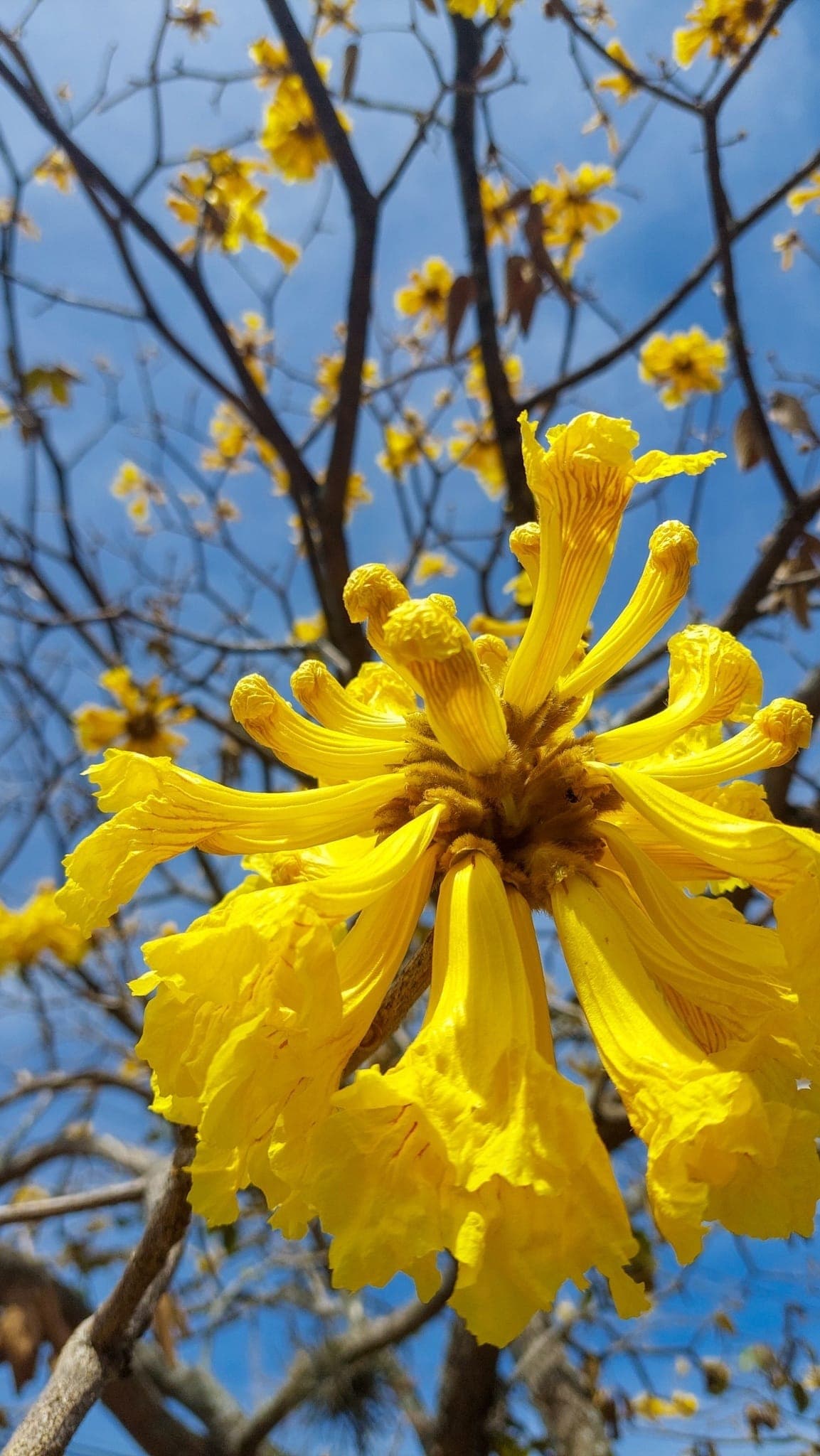
Corteza Amarilla
Handroanthus ochraceus
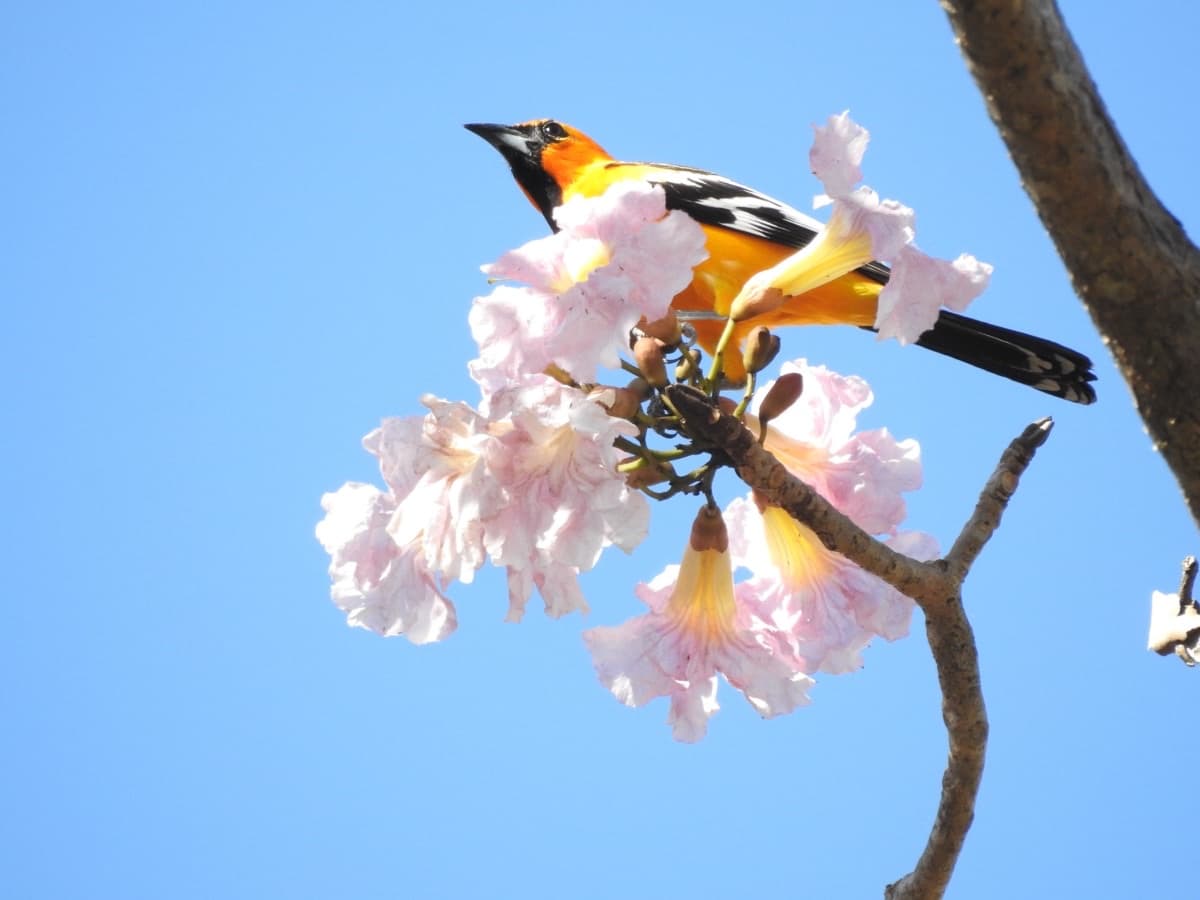
Roble de Sabana
Tabebuia rosea
Corteza Amarilla vs. Roble de Sabana: Golden vs. Pink Flowering Trees
Key Difference
Corteza Amarilla explodes in brilliant golden-yellow flowers, while Roble de Sabana blooms in delicate pink - both deciduous Bignoniaceae trees flowering in dry season.
Corteza Amarilla vs. Roble de Sabana: Dry Season Spectacle
Both Corteza Amarilla and Roble de Sabana are beloved Bignoniaceae trees that transform Costa Rica's landscapes during dry season with spectacular floral displays. Here's how to tell them apart.
Look at the flower color. Brilliant golden-yellow flowers? That's Corteza Amarilla. Delicate pink to lavender flowers? That's Roble de Sabana.
🔍Quick Identification Guide
Side-by-Side Comparison
Detailed Comparison Table
| Feature | Corteza Amarilla (Handroanthus ochraceus) | Roble de Sabana (Tabebuia rosea) | | ----------------------- | ------------------------------------------- | --------------------------------------- | | Flower Color | Brilliant golden-yellow | Pale to deep pink, sometimes lavender | | Flower Size | 5-8 cm diameter | 6-12 cm diameter (larger) | | Flower Shape | Trumpet-shaped, flared | Bell-shaped trumpet, ruffled edges | | Flowering Intensity | Dense clusters, tree appears solid gold | More scattered, elegant display | | Flowering Season | March-April (peak dry season) | March-May (dry to early rainy) | | Flowering Duration | 2-3 weeks | 3-4 weeks (longer display) | | Leafless Flowering | Yes, completely bare when flowering | Yes, but may have some new leaves | | Maximum Height | 15-25 m (50-80 ft) | 20-30 m (65-100 ft) | | Trunk Diameter | 40-60 cm | 60-100 cm (larger) | | Bark Color | Yellowish-brown to gray | Dark gray to brown | | Bark Texture | Furrowed, somewhat rough | Deeply fissured, rough | | Bark Feature | Yellow inner bark (namesake!) | Gray-brown throughout | | Leaf Type | Palmately compound (5 leaflets) | Palmately compound (5 leaflets) | | Leaflet Shape | Elliptic to oblong, serrated | Elliptic to obovate, serrated | | Leaflet Size | Smaller (8-12 cm) | Larger (10-18 cm) | | Fruit Type | Cylindrical capsule, 15-30 cm | Cylindrical capsule, 20-35 cm | | Fruit Color | Brown | Dark brown to black | | Crown Shape | Rounded, somewhat irregular | Spreading, umbrella-like | | Habitat | Dry forests, hillsides | Savannas, forest edges, more widespread | | Elevation | 0-800 m | 0-1200 m (wider range) | | Distribution | Pacific slope, Guanacaste | Throughout Costa Rica (more common) | | Drought Tolerance | High | Very high | | Cultural Status | Valued ornamental, timber | National tree of El Salvador |
Key Identification Features
1. Flower Color (Most Obvious)
Corteza Amarilla:
- GOLDEN-YELLOW flowers - unmistakable
- Bright, vivid, eye-catching yellow
- Color of buttercups or gold coins
- Entire hillsides turn golden when multiple trees flower
- One of the most intensely yellow-flowering trees
- No pink tones whatsoever
Roble de Sabana:
- PINK flowers - delicate and beautiful
- Ranges from pale baby pink to deep rose pink
- Sometimes with lavender or purple tones
- Never yellow
- Costa Rica's most widespread pink-flowering tree
- "Roble rosado" means "pink oak"
2. Bark (When Not Flowering)
Corteza Amarilla:
- YELLOW INNER BARK - this is key!
- "Corteza Amarilla" literally means "yellow bark"
- Scratch outer bark to reveal bright yellow layer
- Outer bark grayish to yellowish-brown
- Moderately furrowed
- This feature is diagnostic year-round
Roble de Sabana:
- Gray to dark brown bark throughout
- No yellow coloration even when scraped
- More deeply fissured and rough
- Darker overall appearance
- Thick, protective bark
3. Size and Stature
Corteza Amarilla:
- Medium-sized tree (15-25 m)
- Trunk 40-60 cm diameter
- Rounded, somewhat irregular crown
- More compact appearance
- Often on hillsides and slopes
Roble de Sabana:
- Larger tree (20-30 m)
- Trunk 60-100 cm diameter
- Broad, spreading, umbrella-shaped crown
- Impressive presence in landscape
- Commonly planted along roads and in parks
4. Flowering Characteristics
Corteza Amarilla:
- Flowers in DENSE CLUSTERS
- Tree appears as a solid mass of gold
- Incredibly showy, stops traffic
- Peak flowering: March-April
- Duration: 2-3 weeks
- Completely leafless when flowering
Roble de Sabana:
- Flowers more SCATTERED across crown
- Elegant, airy appearance
- Beautiful but less dense than Corteza Amarilla
- Peak flowering: March-May (longer season)
- Duration: 3-4 weeks
- May have some new leaves emerging during flowering
5. Leaves (When Present)
Corteza Amarilla:
- Palmately compound with 5 leaflets
- Leaflets smaller (8-12 cm long)
- Elliptic to oblong shape
- Finely serrated margins
- Medium green color
Roble de Sabana:
- Also palmately compound with 5 leaflets
- Leaflets larger (10-18 cm long)
- Elliptic to obovate (broader at tip)
- Coarsely serrated margins
- Darker green, more robust
When They Look Most Similar
Dry Season Without Flowers
Both are completely leafless and deciduous during dry season.
Solution: Check the bark - scrape a small area. Yellow inner bark = Corteza Amarilla. Gray throughout = Roble de Sabana.
Young Trees
Juvenile trees may not show distinctive bark or size differences.
Solution: If flowering, color is diagnostic. If not, wait for flowers or check habitat.
From a Distance
Both appear as deciduous trees with similar shape.
Solution: During flowering season, color is obvious even from kilometers away. Outside flowering, look for size difference.
Range & Habitat
Corteza Amarilla
- Distribution: Pacific slope, especially Guanacaste, Puntarenas
- Habitat: Dry forests, hillsides, rocky slopes, forest edges
- Elevation: 0-800 m (lowland dry forest specialist)
- Tolerance: High drought tolerance, full sun required
- Soil: Well-drained, rocky soils, tolerates poor soil
- Status: Less common than Roble de Sabana
Roble de Sabana
- Distribution: Throughout Costa Rica - most widespread
- Habitat: Savannas, pastures, roadsides, parks, urban areas
- Elevation: 0-1200 m (wider elevation range)
- Tolerance: Very high drought tolerance, extremely adaptable
- Soil: Grows in variety of soils, very tolerant
- Status: One of Costa Rica's most common native trees
Flowering Phenology
Corteza Amarilla
- Trigger: Responds to first rains after prolonged drought
- Timing: Usually March-April (peak dry season)
- Sequence:
- All leaves drop (December-February)
- Tree completely bare
- Sudden explosion of flowers (overnight!)
- Flowers last 2-3 weeks
- New leaves emerge after flowering
- Synchrony: Multiple trees flower simultaneously
- Spectacle: Entire hillsides turn gold
Roble de Sabana
- Trigger: Also responds to seasonal cues
- Timing: March-May (dry season to early rainy season)
- Sequence:
- Loses leaves (not always completely)
- Flowers appear over 1-2 weeks
- Flowers last 3-4 weeks
- New leaves may appear before flowering ends
- Synchrony: Less synchronized than Corteza Amarilla
- Spectacle: Pink clouds scattered across landscape
Wildlife Relationships
Corteza Amarilla
- Pollinators: Bees (primary), some hummingbirds
- Honey production: Excellent nectar source
- Seeds: Wind-dispersed (lightweight, winged)
- Wildlife value: Moderate - mainly during flowering
Roble de Sabana
- Pollinators: Bees, butterflies, hummingbirds
- Honey production: Important honey tree
- Seeds: Wind-dispersed (papery wings)
- Wildlife value: High - provides nesting sites, insect habitat
- Epiphytes: Often hosts orchids, bromeliads
Cultural & Economic Significance
Corteza Amarilla
Timber:
- High-quality hardwood
- Excellent durability
- Used for construction, furniture, outdoor applications
- Naturally rot-resistant
- Similar to other Handroanthus species (Guayacán group)
Ornamental:
- Spectacular flowering display
- Increasingly popular in landscaping
- Drought-tolerant for dry regions
- Low maintenance once established
Traditional Medicine:
- Bark used in traditional remedies
- Anti-inflammatory properties reported
Roble de Sabana
Cultural Icon:
- National tree of El Salvador
- Symbol of dry season arrival
- Beloved throughout Central America
- Often planted in town squares and parks
Timber:
- Light construction timber
- Not as durable as Corteza Amarilla
- Used for boxes, crates, light carpentry
- More commonly planted as ornamental than harvested
Ornamental:
- Most widely planted native flowering tree
- Urban street tree
- Parks and gardens throughout Costa Rica
- Tolerates pollution and urban conditions
Honey Production:
- Important nectar source for beekeepers
- Dry season flowering provides food when few other sources available
Growing & Landscaping
Corteza Amarilla
Advantages:
- Spectacular golden flowers
- Drought-tolerant
- Moderate size (fits smaller spaces)
- High-quality timber potential
- Relatively fast-growing
Considerations:
- Prefers drier Pacific climate
- Needs full sun
- Less adaptable than Roble de Sabana
- Harder to find in nurseries
- Shorter flowering period
Best For:
- Dry gardens in Guanacaste
- Specimen tree on slopes
- Reforestation in dry forests
- Golden color accent
Roble de Sabana
Advantages:
- Beautiful pink flowers
- Extremely adaptable
- Widely available in nurseries
- Proven urban tree
- Longer flowering period
- Tolerates various soils and conditions
Considerations:
- Larger size (needs space)
- Deciduous (bare in dry season)
- Falling flowers can be messy
- Extensive root system
Best For:
- Street tree (most common use)
- Large gardens and parks
- Rural properties
- Living fences
- Reforestation throughout country
Quick Field Test
-
Are there flowers?
- Golden yellow → Corteza Amarilla
- Pink → Roble de Sabana
-
No flowers? Scrape the bark lightly:
- Yellow inner bark → Corteza Amarilla
- Gray throughout → Roble de Sabana
-
How large is the tree?
- Medium-sized (15-25 m) → Probably Corteza Amarilla
- Large (20-30 m) → Probably Roble de Sabana
-
Where are you?
- Steep hillside in dry Guanacaste → More likely Corteza Amarilla
- Roadside or savanna throughout country → More likely Roble de Sabana
Similar Species to Know
Other Yellow-Flowering Trees:
- Cortez Amarillo (Tabebuia chrysantha) - Very similar to Corteza Amarilla
- Guayacán (Guaiacum sanctum) - Smaller, purple-blue flowers (not yellow)
Other Pink-Flowering Trees:
- Poró (Erythrina spp.) - Bright red-pink but different flower structure
- Jacaranda (Jacaranda mimosifolia) - Purple-blue, not pink
Tips for Beginners
Dry season is best - Both trees are most distinctive when flowering (March-April).
Learn the bark trick - Corteza Amarilla's yellow inner bark is diagnostic even when tree is not flowering.
Size matters - Roble de Sabana is notably larger and more imposing.
Color is unmistakable - If flowering, you cannot confuse gold vs. pink!
Visit Costa Rica in March - This is peak flowering season for both species. You'll see entire hillsides painted in yellow and pink.
Check urban areas - Roble de Sabana is planted everywhere. Corteza Amarilla is less common but worth seeking out.
Conservation & Reforestation
Both species are excellent for reforestation:
Corteza Amarilla:
- Dry forest restoration
- Erosion control on slopes
- Timber production (35-40 years)
- Drought-tolerant landscaping
- Bee forage
Roble de Sabana:
- Most versatile native tree for planting
- Live fences in pastures
- Watershed protection
- Urban greening
- Agroforestry systems
- Windbreaks
Neither species is threatened (both Least Concern), but Corteza Amarilla habitat (dry forests) has been heavily cleared for agriculture, making reforestation efforts valuable.
Want to explore more?
Use our interactive tool to compare these species side by side.
Compare in interactive tool