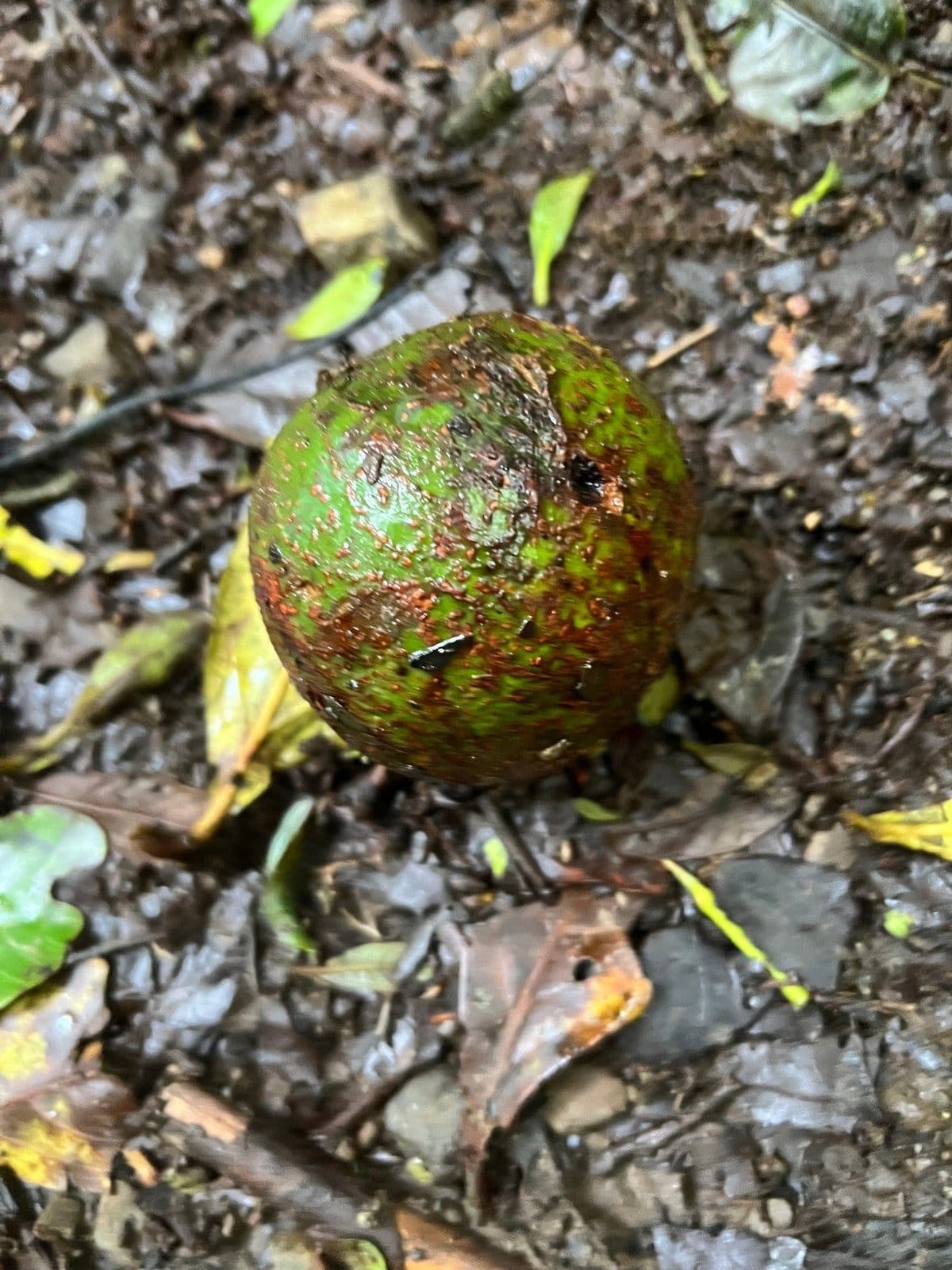
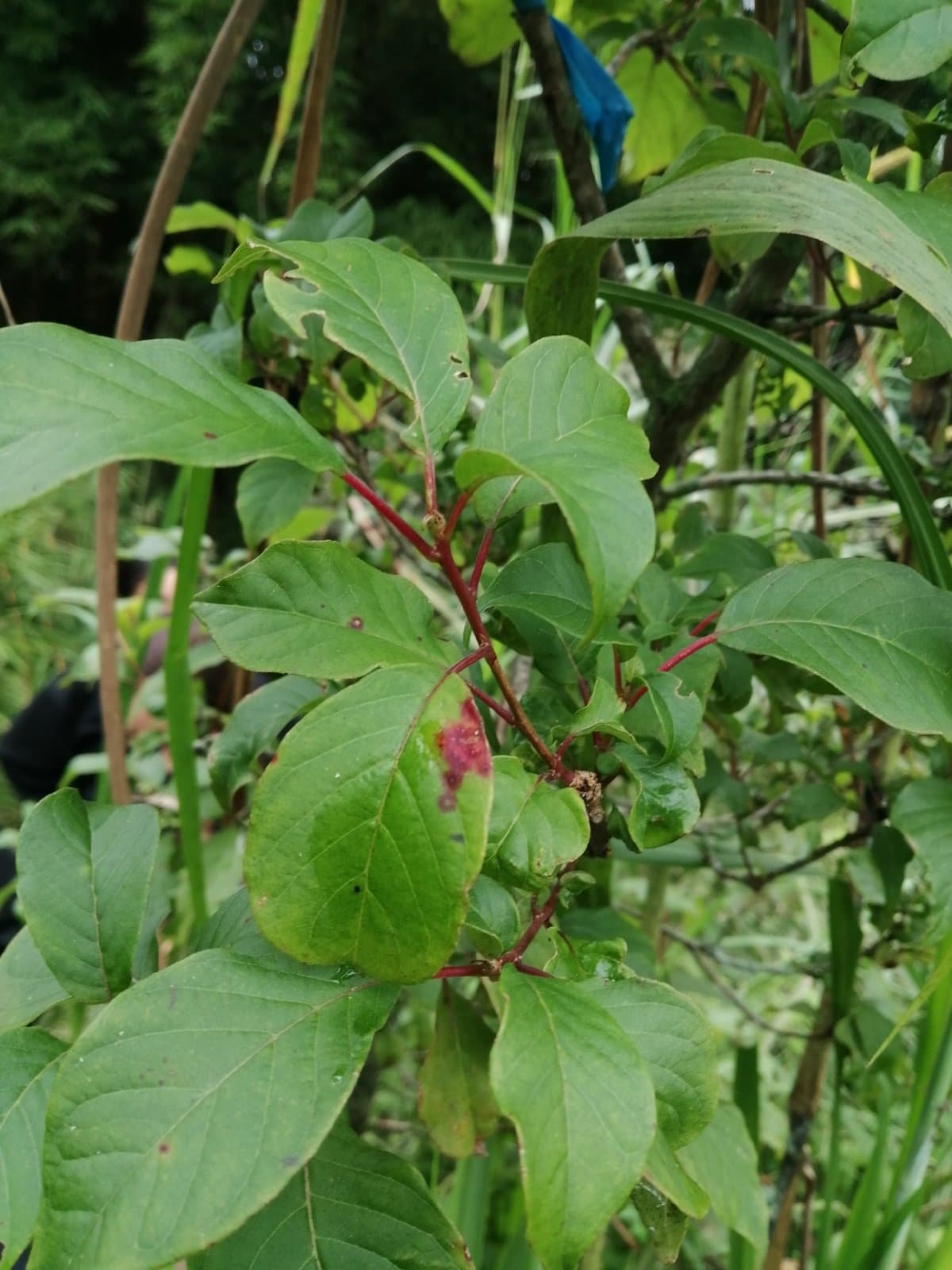
Aguacate
Persea americana
Aguacatillo
Persea caerulea
Aguacate vs. Aguacatillo: Cultivated Giant vs. Wild Quetzal Food
Key Difference
Aguacate is the cultivated avocado with large edible fruits, while Aguacatillo is a wild cloud forest relative with tiny fruits that are the primary food of Resplendent Quetzals.
Aguacate vs. Aguacatillo: Cultivated vs. Cloud Forest Cousins
Two members of the Persea genus (Lauraceae family) with confusingly similar names, but dramatically different fruits, habitats, and ecological roles. One feeds humans; the other feeds the Resplendent Quetzal.
Aguacate = CULTIVATED avocado (lowlands, large edible fruits for humans) Aguacatillo = WILD "little avocado" (highlands, tiny fruits for quetzals) The "-illo" suffix means "little" in Spanish—the key clue!
The One-Minute ID Test
Check the elevation:
- Below 1000m (lowlands/mid-elevation) → Probably Aguacate
- Above 1200m (cloud forests/highlands) → Probably Aguacatillo
Look at the fruit size:
- Large fruits (7-20 cm, fist-sized) → Aguacate (cultivated avocado)
- Tiny fruits (2-3 cm, marble-sized) → Aguacatillo (wild avocado)
Observe the canopy level:
- Often pruned short (6-8m) in orchards → Aguacate (cultivated)
- Tall emergent canopy tree (15-30m) → Aguacatillo (wild forest)
🔍Quick Identification Guide
Side-by-Side Comparison
Detailed Comparison Table
| Feature | Aguacate (Persea americana) | Aguacatillo (Persea caerulea) | | ---------------------------- | --------------------------------------------------------- | -------------------------------------------------------- | | Scientific Name | Persea americana | Persea caerulea | | Family | Lauraceae (Laurel/Avocado) | Lauraceae (Laurel/Avocado) | | Common Name Meaning | "Avocado" (from Nahuatl "ahuacatl") | "Little avocado" (-illo = diminutive) | | Other Names | Avocado, Palta (South America) | Wild Avocado, Coyo, Yas | | Origin | Cultivated domesticate (wild ancestors Mexico/C.A.) | Wild native species | | Maximum Height | 10-20 m (often pruned to 6-8m in orchards) | 15-30 m (tall cloud forest canopy tree) | | Trunk Diameter | 30-60 cm | 50-80 cm (larger, forest tree) | | Leaf Size | 10-25 cm long, broad elliptic | 8-18 cm long, narrower elliptic-lanceolate | | Leaf Texture | Leathery, slightly rough above | Smooth, thinner (cloud forest humidity) | | Leaf Color | Dark green, somewhat glossy | Bright green to blue-green | | Leaf Arrangement | Alternate, spiraled | Alternate, spiraled | | Deciduous/Evergreen | Evergreen (keeps most leaves) | Evergreen | | Flower Size | Small, 5-10 mm | Very small, 3-5 mm | | Flower Color | Greenish-yellow | Greenish-white to pale yellow | | Flowering Season | January-March | January-March | | Fruit Size | LARGE: 7-20 cm long, 100-1000g | TINY: 2-3 cm long, 10-20g | | Fruit Shape | Pear-shaped, oval, or round (variety dependent) | Small ellipsoid/ovoid, avocado-shaped miniature | | Fruit Skin | Thick, leathery (green to purple-black) | Thin, dark purple to black when ripe | | Flesh/Pit Ratio | 70-80% flesh, small pit (cultivated trait) | 10-20% flesh, HUGE pit (mostly seed) | | Flesh Texture | Creamy, buttery, rich | Thin layer, oily, not much flesh | | Oil Content | High (10-30% depending on variety) | Very high oil (20-30%) but tiny amount of flesh | | Edibility (Humans) | EXCELLENT - nutritious superfood | NOT PRACTICAL - mostly pit, tiny flesh | | Edibility (Wildlife) | Mammals eat fallen fruit, some birds | QUETZALS LOVE IT - primary food source | | Fruiting Season | June-September (peak varies by variety) | March-June (cloud forest rainy season) | | Seed Dispersal | Large mammals historically (megafauna), now humans | Resplendent Quetzals primarily, other birds | | Persin Toxicity (Pets) | YES - toxic to dogs, cats, birds, horses | YES - toxic to domestic animals (but safe for quetzals!) | | Persin Toxicity (Humans) | Fruit safe; pit, leaves, bark contain persin (minor risk) | Not consumed by humans (too small) | | Cultivation Status | Widely cultivated globally (major crop) | Wild, occasionally planted for reforestation/wildlife | | Varieties | 500+ cultivated varieties (Hass, Fuerte, etc.) | Wild species, no cultivated varieties | | Grafting | Commonly grafted for fruit production (3-4 years) | Not grafted (wild species) | | Propagation | Seeds, grafting (commercial), air layering | Seeds only (wildlife-dispersed) | | Growth Rate | Moderate (grafted trees fruit in 3-4 years) | Moderate to slow (10-15 years to fruit) | | Elevation Range | 0-2500m (variety-dependent: lowland/highland types) | 1200-3000m (CLOUD FORESTS ONLY) | | Climate Preference | Tropical to subtropical (varies by variety) | Cool humid montane (cloud forest specialist) | | Habitat | Cultivated orchards, home gardens, mixed elevation | Primary/secondary cloud forests, steep slopes | | Conservation Status | Least Concern (domesticated) | Least Concern (but habitat threatened) | | Ecological Role | Agricultural crop (replaces natural ecosystems) | KEYSTONE SPECIES for cloud forest wildlife | | Quetzal Importance | Not significant (wrong elevation) | CRITICAL - primary food source during breeding | | Main Economic Use | Fruit production for human consumption | Conservation value, ecotourism, watershed protection | | Reforestation Value | Limited (agricultural, not native ecosystem) | HIGH (cloud forest restoration, wildlife corridors) | | Water Needs | Moderate, drought-sensitive | HIGH (cloud forest moisture-dependent) | | Root System | Shallow, sensitive to waterlogging | Deeper, adapted to steep cloud forest slopes | | Root Rot Risk | VERY HIGH (Phytophthora) | Lower (adapted to high rainfall) |
The Name Confusion: "-illo" Means "Little"
The Spanish diminutive suffix "-illo" (or "-illa") means "little" or "small":
Examples:
- Árbol → Arbolito = tree → little tree
- Gato → Gatillo = cat → little cat/kitten
- Aguacate → Aguacatillo = avocado → little avocado
Why "little avocado"?
- Small fruits (2-3 cm vs. 10-20 cm)
- Tiny amount of flesh (mostly pit)
- Smaller leaves (8-18 cm vs. 10-25 cm)
- Same family resemblance but diminutive features
This naming pattern appears throughout Costa Rican tree names. When you see "-illo" or "-illa", think "smaller relative" of the base species.
Fruit Size: The Defining Difference
Aguacate: Bred for Human Consumption
Commercial Avocado Fruits:
- Size: 7-20 cm long (3-8 inches)
- Weight: 100-1000 grams (¼-2+ pounds)
- Flesh: 70-80% of fruit (cultivated trait)
- Pit: Small relative to flesh size
- Skin: Thick, protective
- Oil content: 10-30% (varies by variety)
- Taste: Creamy, buttery, mild, nutty
- Harvest: Picked unripe, ripens off tree
- Uses: Eaten fresh, guacamole, cooking oil, smoothies
Breeding History:
- Domesticated by Mesoamerican peoples 5,000+ years ago
- Selected for LARGE fruit size over millennia
- Wild ancestors had much smaller fruits
- Modern varieties (Hass, Fuerte, Bacon, Reed, etc.) are result of intensive selection
- Goal: Maximum flesh, minimum pit
- Result: One of most calorie-dense fruits (240 kcal/100g)
Why So Large?
- Human agricultural selection pressure
- Larger fruits = more yield per tree
- Commercial viability depends on flesh:pit ratio
- Cultivated avocados would not survive in wild (relies on human cultivation)
Aguacatillo: Evolved for Quetzal Dispersal
Wild Aguacatillo Fruits:
- Size: 2-3 cm long (less than 1 inch) - 10 times smaller
- Weight: 10-20 grams (½ ounce) - 50 times lighter
- Flesh: 10-20% of fruit (thin layer around huge pit)
- Pit: HUGE relative to fruit (90% of fruit volume)
- Skin: Thin, dark purple-black when ripe
- Oil content: 20-30% in thin flesh layer (very rich)
- Taste: Oily, not particularly palatable to humans
- Ripening: Falls when ripe, eaten immediately by wildlife
- Uses: Not practical for human consumption - LEFT FOR WILDLIFE
Ecological Adaptations:
- Size fits perfectly in Resplendent Quetzal's beak
- Quetzals swallow fruit whole, regurgitate pit later (seed dispersal!)
- Thin flesh = quick energy for quetzals during breeding season
- High oil content = calorie-dense despite small size
- Fruiting season (March-June) coincides with quetzal nesting
- Co-evolved relationship between tree and bird over millions of years
Why So Small?
- Natural evolutionary pressure (bird dispersal)
- Smaller fruits = more fruits per tree = more seeds dispersed
- Large pit ensures seed survives digestion
- Quetzals prefer smaller fruits they can swallow whole
- Tree doesn't need humans - quetzals do the job!
Habitat & Elevation: Key Separation
Aguacate: Versatile Tropical Crop
Elevation Range: 0-2500m (variety-dependent)
- West Indian varieties: 0-800m (lowland tropical, heat-tolerant)
- Guatemalan varieties: 800-1500m (mid-elevation, subtropical)
- Mexican varieties: 1200-2500m (highland, cold-tolerant)
- Commercial orchards throughout Costa Rica's agricultural zones
Climate Requirements:
- Tropical to subtropical (varies by race)
- Requires distinct seasons (flowering triggered by changes)
- Sensitive to frost (except Mexican varieties)
- Needs well-drained soils (ROOT ROT risk if waterlogged)
- 1000-2000 mm annual rainfall preferred
- Dry season beneficial for flowering
Habitat:
- Cultivated orchards (monoculture or mixed)
- Home gardens (backyard trees)
- Mixed agricultural systems (coffee shade, polyculture)
- Humid slopes (with good drainage)
- NOT in primary forests (replaced by cultivation)
Aguacatillo: Cloud Forest Specialist
Elevation Range: 1200-3000m (MONTANE ONLY)
- Cloud forest belt (where clouds touch mountains)
- Upper montane rainforests
- Does NOT occur in lowlands (different niche than cultivated avocado)
- Elevation separation from Aguacate minimizes competition
Climate Requirements:
- Cool temperatures (10-25°C average)
- Very high humidity (80-100% year-round)
- Constant cloud cover (moisture from clouds, not just rain)
- High rainfall (2000-4000+ mm/year)
- No distinct dry season (some months less rain, but never truly dry)
- Tolerates cold better than cultivated avocado
Habitat:
- Primary cloud forests (mature, old-growth)
- Secondary cloud forests (regenerating)
- Steep mountain slopes (well-drained despite high rain)
- Ridge tops and valleys (cooler microclimates)
- Along streams in montane areas
- Often emergent layer (tallest trees in canopy)
Geographic Overlap:
- Aguacate and Aguacatillo CAN occur at same elevation (1200-2500m)
- In this zone, check fruit size and habitat (cultivated vs. forest)
- Aguacatillo in forests; Aguacate in gardens/farms
The Quetzal Connection: Why Aguacatillo Matters
Resplendent Quetzal (Pharomachrus mocinno)
Central America's Most Iconic Bird:
- Iridescent green and red plumage
- Long tail feathers (up to 1 meter in males)
- Sacred to Maya and Aztec civilizations
- National bird of Guatemala
- Symbol of freedom (dies in captivity)
- Major ecotourism draw in Costa Rica (Monteverde, Los Quetzales National Park)
Quetzal-Aguacatillo Mutualism:
For the Tree:
- Quetzals disperse seeds over long distances
- Seeds pass through digestive system unharmed
- Germination enhanced by gut passage
- Seeds deposited with fertilizer (bird droppings)
- Quetzals move between forest patches (genetic diversity)
For the Bird:
- Primary food source during breeding season (March-June)
- High-oil fruits provide energy for nesting
- Fruit size perfect for swallowing whole
- Protein-rich (compared to other fruits)
- Reliable annual crop (tree doesn't have off years)
- Available when insects scarce (early rainy season)
How Quetzals Eat Aguacatillo:
- Quetzal hovers near branch, plucks fruit mid-flight
- Swallows fruit whole (pit and all)
- Digests thin flesh layer (1-2 hours)
- Regurgitates pit intact (like an owl pellet)
- Pit germinates where it lands (seed dispersal complete!)
Without Aguacatillo:
- Quetzal populations decline (loss of critical food)
- Breeding success drops (insufficient nutrition)
- Nestlings starve (parents can't find enough food)
- Migration patterns disrupted (quetzals follow fruiting trees)
Without Quetzals:
- Aguacatillo seeds don't disperse far (fall beneath parent tree)
- Seedlings compete with parent (reduced survival)
- Genetic diversity decreases (no mixing between populations)
- Forest regeneration slows (seeds need gap/light to germinate)
Conservation Implications:
- Protecting Aguacatillo = protecting quetzals
- Logging cloud forests = losing quetzal food
- Reforestation with Aguacatillo = restoring quetzal habitat
- Keystone species - Aguacatillo sustains entire cloud forest ecosystem
Persin: The Shared Toxicity
Both Aguacate and Aguacatillo contain persin, a fungicidal toxin found throughout the Lauraceae family.
What is Persin?
- Chemical compound produced by avocado trees as fungal defense
- Found in leaves, bark, pit, and fruit (varying concentrations)
- Safe for humans in normal dietary amounts (fruit flesh)
- TOXIC TO MANY ANIMALS - dogs, cats, birds, horses, cattle, goats, rabbits, fish
Persin Effects on Domestic Animals
Dogs & Cats:
- Vomiting, diarrhea
- Lethargy, loss of appetite
- Pancreatitis (inflammation of pancreas)
- Rarely fatal but can cause serious illness
- Pit is also choking hazard
Birds (Parrots, Canaries, etc.):
- Respiratory distress (difficulty breathing)
- Heart damage (myocardial necrosis)
- Fluid accumulation around heart
- Often FATAL even in small amounts
- Death can occur within 12-48 hours
Horses, Cattle, Goats:
- Edema (swelling), especially in head and neck
- Colic (abdominal pain)
- Mastitis in lactating animals (udder inflammation)
- Respiratory distress
- Can be fatal in large amounts (eating leaves/bark)
Why Are Quetzals Immune?
- Co-evolution over millions of years
- Quetzals (and some other birds) evolved detoxification mechanisms
- Gut enzymes break down persin
- Or persin absorption is blocked
- Similar to how koalas can eat toxic eucalyptus
- Specialization - quetzals adapted to exploit resource other animals can't
Practical Safety
Aguacate (Cultivated Avocado):
- Fruit flesh SAFE for humans
- Keep pits away from children (choking hazard)
- NEVER feed avocado (any part) to pets
- Compost avocado waste in secure bins
- Dispose of pits where pets/livestock can't access
Aguacatillo (Wild Avocado):
- Fruits rarely encountered by humans (high in trees, wildlife eats quickly)
- If planting for quetzals, ensure pets can't access fallen fruit
- Same precautions as cultivated avocado
- Wild birds are safe; domestic birds are not
Identification Keys
Elevation (First Check)
Below 1000m:
- Almost certainly Aguacate (cultivated)
- Aguacatillo does not grow at low elevations
- Look for signs of cultivation (grafting, pruning, orchard setting)
1000-1200m:
- Likely Aguacate (especially if cultivated setting)
- Could be high-elevation Aguacate varieties
- Check for cultivation indicators
1200-2500m (Overlap Zone):
- COULD BE EITHER species
- Use fruit size, habitat, and cultivation status to distinguish
- Aguacate in gardens/farms; Aguacatillo in forests
Above 2500m:
- Could be Aguacatillo (cloud forests)
- Aguacate rare this high (only cold-tolerant Mexican varieties)
- Very cool, humid conditions favor Aguacatillo
Fruit Size (Most Reliable When Present)
Aguacate:
- Length: 7-20 cm (3-8 inches)
- Width: 5-12 cm (2-5 inches)
- Weight: 100-1000 grams (¼-2+ pounds)
- Fits in your palm, requires two hands for large specimens
- Thick flesh layer (70-80% of fruit)
- Pit size: moderate (20-30% of fruit)
Aguacatillo:
- Length: 2-3 cm (less than 1 inch)
- Width: 1.5-2 cm
- Weight: 10-20 grams (½ ounce)
- Size of a large marble or small olive
- Thin flesh layer (10-20% of fruit)
- Pit size: HUGE (80-90% of fruit - mostly seed)
Setting & Cultivation
Aguacate:
- Planted in rows (orchards)
- Often grafted (visible graft union on trunk near base)
- Pruned to manageable height (6-8m typically)
- Irrigated in dry season (drip lines visible)
- Mixed with coffee/cacao in agroforestry systems
- Branches may be propped (heavy fruit load)
- Human activity nearby (harvesting, maintenance)
Aguacatillo:
- Growing wild in forests (not planted rows)
- Never grafted (wild species)
- Tall canopy tree (15-30m, unpruned)
- No irrigation (cloud forest has natural moisture)
- Growing with other native cloud forest trees
- Branches natural shape
- Wildlife activity (quetzals feeding, monkeys, other birds)
Leaf Details
Aguacate:
- Larger leaves (10-25 cm long)
- Broader elliptic shape
- Leathery, thicker texture
- Slightly rough surface (especially above)
- Dark green, somewhat glossy
- Aromatic when crushed (distinctive avocado smell)
Aguacatillo:
- Smaller leaves (8-18 cm long)
- Narrower elliptic-lanceolate shape
- Thinner texture (cloud forest adaptation)
- Smooth surface
- Bright green to blue-green
- Less aromatic than cultivated avocado
When to See Each Tree
Flowering
Aguacate (January-March):
- Small greenish-yellow flowers
- Clustered at branch tips
- Strong sweet fragrance
- Attracts bees and flies
- Flowers open/close in specific pattern (Type A or Type B - affects pollination)
Aguacatillo (January-March):
- Very small greenish-white flowers
- Inconspicuous, easily missed
- Less fragrant than cultivated avocado
- Pollinated by small insects
- Flowering synchronized with quetzal breeding preparation
Fruiting
Aguacate (June-September):
- Large fruits develop over 4-6 months
- Remain green on tree until picked
- Ripen OFF tree within 5-10 days
- Harvest by picking (commercial) or waiting for drop (home gardens)
- Pest issues: Avocado seed moth, fruit flies, anthracnose
Aguacatillo (March-June):
- Tiny fruits develop quickly
- Turn dark purple-black when ripe
- Fall when ripe (not harvested by humans)
- Quetzals feed heavily during this period
- Ground beneath tree littered with regurgitated pits
- Peak fruiting = peak quetzal activity (ecotourism opportunity!)
Planting Recommendations
Aguacate: Excellent Home Fruit Tree (with caveats)
Plant Aguacate If:
- You want fresh avocados for consumption
- You have space for 6-10m tree (or can prune)
- Elevation is 0-2500m (variety-appropriate)
- You can provide well-drained soil (ROOT ROT prevention)
- You have patience (3-4 years for grafted, 5-13 for seedling)
- You can keep pets away from tree
Planting Tips:
- Choose variety suited to your elevation:
- Lowlands (0-800m): West Indian types (Simmonds, Pollock)
- Mid-elevation (800-1500m): Guatemalan types (Hass, Reed)
- Highlands (1200-2500m): Mexican types (Mexicola, Duke)
- Perfect drainage essential - plant on mound if soil heavy
- Space 6-10m from buildings
- Plant 2+ trees for better pollination (even "self-fertile" varieties)
- Protect from pets (persin toxicity)
- Water regularly first 2 years, then moderate
- Prune to maintain manageable height (6-8m allows easy harvest)
Avoid Planting If:
- Soil stays wet (Phytophthora root rot will kill tree)
- Space is limited (needs room)
- You have pets that can't be excluded
- You want quick results (takes years)
Aguacatillo: Conservation & Wildlife Tree
Plant Aguacatillo If:
- You want to attract Resplendent Quetzals
- You live at 1200-3000m elevation (cloud forest zone)
- You have space for large tree (15-30m)
- You're doing cloud forest reforestation
- You value wildlife over personal fruit harvest
- You want a native conservation tree
Planting Tips:
- Only plant at appropriate elevation (1200-3000m)
- Needs cool, humid cloud forest conditions
- Allow tree to grow naturally (don't prune)
- Plant with other native cloud forest species
- Protect from grazing animals when young
- Be patient - takes 10-15 years to fruit
- Leave fruits for wildlife (they're not for you!)
Benefits:
- Attracts quetzals (ecotourism value)
- Supports entire cloud forest food web
- Provides shade and erosion control
- Protects watershed
- Native species (ecological integrity)
- Carbon sequestration
Conservation Value:
- Cloud forests are threatened ecosystems
- Aguacatillo restoration = quetzal habitat restoration
- Private landowners can create wildlife corridors
- Connect forest fragments for species migration
Summary: Cultivated Giant vs. Wild Quetzal Food
Aguacate and Aguacatillo are related species with very different roles:
| Aspect | Aguacate 🥑 | Aguacatillo 🦜 | | ---------------------- | ------------------------------------- | ------------------------------------- | | Species | Persea americana | Persea caerulea | | Status | Cultivated domesticate | Wild native species | | Fruit Size | LARGE (7-20 cm, 100-1000g) | TINY (2-3 cm, 10-20g) | | Flesh:Pit Ratio | 70-80% flesh | 10-20% flesh | | Primary Consumer | Humans | Resplendent Quetzals | | Edibility (Human) | Excellent superfood | Not practical (too small) | | Elevation Range | 0-2500m | 1200-3000m (cloud forests) | | Habitat | Orchards, gardens, farms | Primary/secondary cloud forests | | Tree Height | 10-20m (often pruned shorter) | 15-30m (tall canopy tree) | | Cultivation | Widely planted, grafted | Rarely cultivated, wild-grown | | Growth to Fruit | 3-4 years (grafted) | 10-15 years | | Main Value | Fruit production (commercial) | Wildlife habitat (conservation) | | Quetzal Importance | Minimal (wrong elevation) | CRITICAL (primary food source) | | Reforestation | Limited ecological value | HIGH value (native, keystone) | | Conservation Role | Agricultural crop | Ecosystem restoration species | | Persin Toxicity | Toxic to pets (fruit safe for humans) | Toxic to pets (quetzals immune) | | Best Planting Use | Home gardens for food | Cloud forest restoration for wildlife |
Key Takeaway
The "-illo" suffix tells you everything: Aguacatillo is the "little avocado" with tiny fruits left for wildlife, while Aguacate is the big cultivated fruit tree for human consumption.
✅ Want avocados to eat? → Plant Aguacate (cultivated varieties)
✅ Want to see quetzals? → Plant Aguacatillo (cloud forests 1200-3000m)
✅ Have pets? → Both species contain persin - keep pets away from fruits!
Remember: Aguacate feeds people, Aguacatillo feeds the Resplendent Quetzal. Both are valuable, just in different ways. Choose based on your elevation, goals, and whether you want a fruit tree or a wildlife conservation tree.
Learn More
- Full Aguacate Profile - Complete care guide, varieties, propagation
- Full Aguacatillo Profile - Cloud forest ecology, quetzal relationship
- Tree Safety Guide - Persin toxicity, pet safety
- Conservation Dashboard - Cloud forest protection, quetzal habitat
- Resplendent Quetzal Research↗ - Quetzal conservation
Want to explore more?
Use our interactive tool to compare these species side by side.
Compare in interactive tool