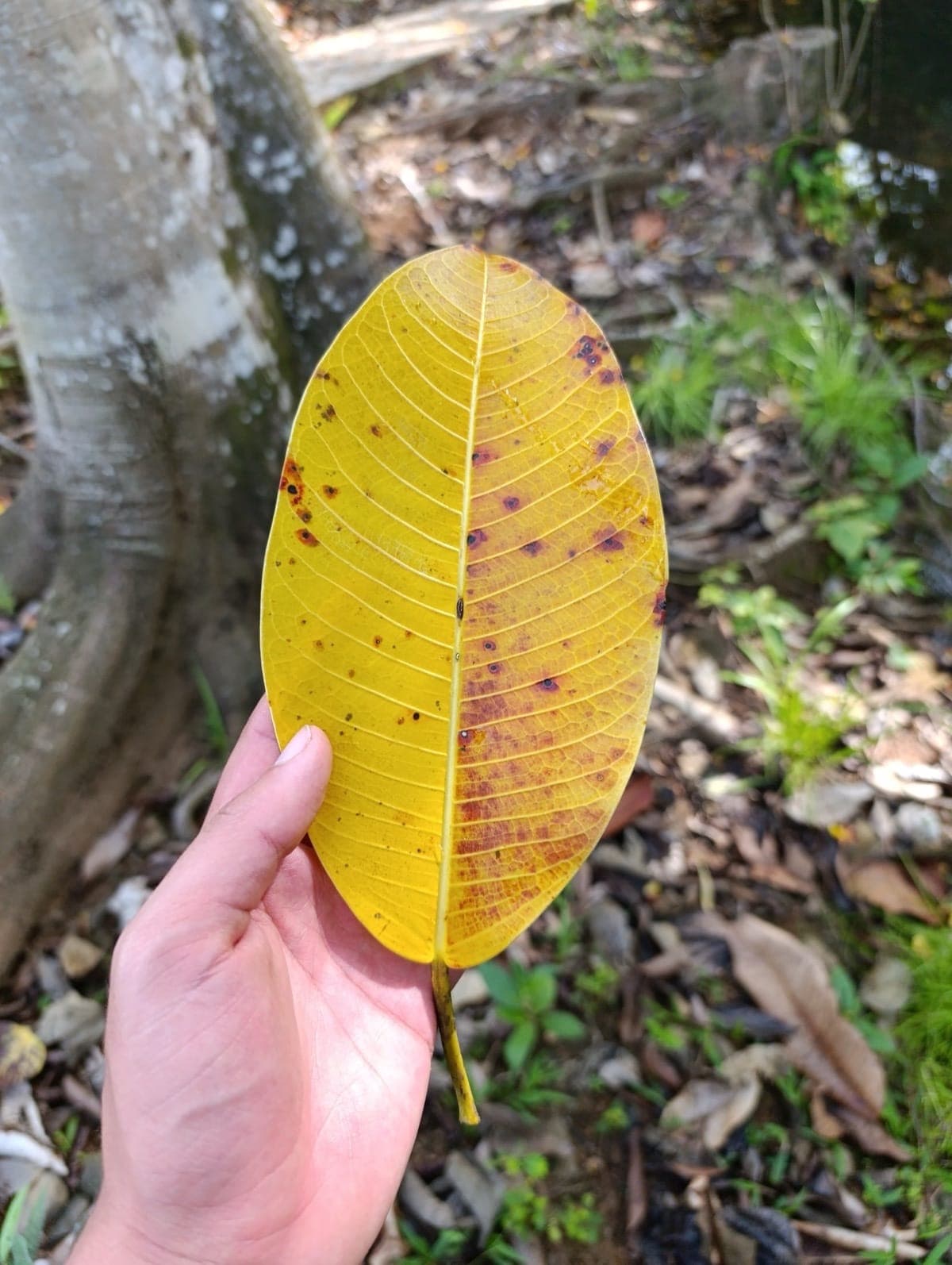
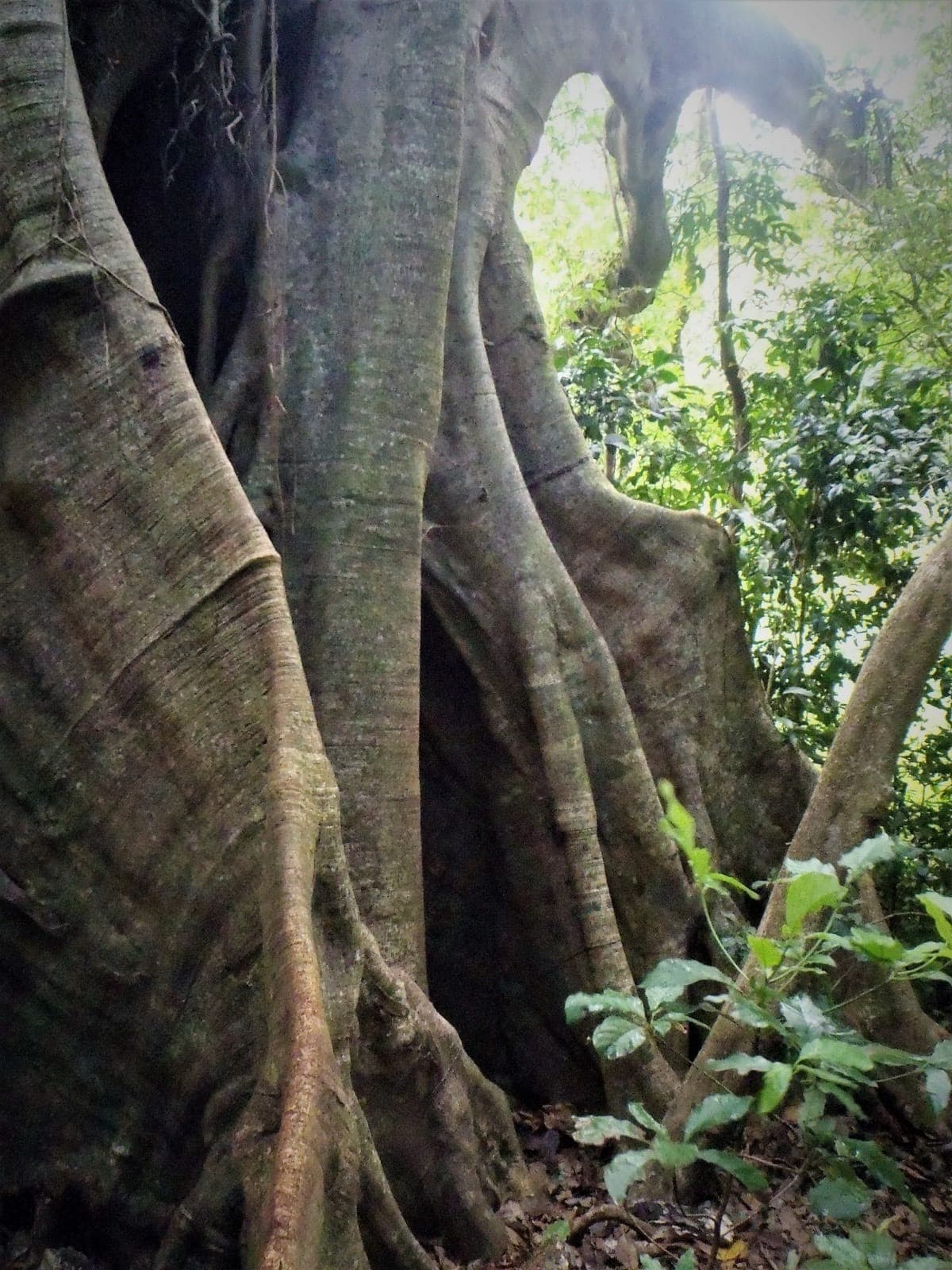
Higuerón
Ficus insipida
Matapalo
Ficus spp.
Higuerón vs. Matapalo: Costa Rica's Strangler Figs
Key Difference
Higuerón (Ficus insipida) is a single species with specific characteristics, while Matapalo refers to multiple Ficus species (F. obtusifolia, F. pertusa, etc.) that share the strangling growth habit.
Higuerón vs. Matapalo: Understanding Costa Rica's Strangler Figs
Costa Rica's strangler figs are among the most ecologically important and visually dramatic trees in the forest. The terms "Higuerón" and "Matapalo" are often used interchangeably, but understanding the distinctions helps appreciate these remarkable trees.
Higuerón specifically refers to Ficus insipida, a particular species. Matapalo (literally "tree killer") is a general term for multiple Ficus species that grow as stranglers, including F. obtusifolia, F. pertusa, F. citrifolia, and others. All are strangler figs, but not all are Higuerón!
🔍Quick Identification Guide
Side-by-Side Comparison
Detailed Comparison Table
| Feature | Higuerón (Ficus insipida) | Matapalo (Ficus spp.) | | ----------------------- | -------------------------------------------- | -------------------------------------------------------------------- | | Scientific Name | Ficus insipida (one species) | Multiple species (F. obtusifolia, F. pertusa, F. citrifolia, others) | | Common Name Origin | From "higo" (fig) - big fig tree | "Mata palo" = "kills tree" (strangling behavior) | | Growth Start | Often terrestrial (from ground) or epiphytic | Typically epiphytic (starting in canopy) | | Strangling Behavior | Can strangle but less aggressive | Classic aggressive strangler | | Final Form | Massive single-trunked tree or lattice | Hollow lattice trunk (strangled host decays) | | Maximum Height | 30-40 m (100-130 ft) | 25-45 m depending on species | | Trunk Diameter | 1-2 m when mature | 1-3 m (lattice can be massive) | | Root Pattern | Large buttress roots if terrestrial | Fused aerial roots forming hollow trunk | | Bark Color | Light gray to whitish | Gray to brown, varies by species | | Bark Texture | Smooth, can be mottled | Smooth to slightly rough | | Leaf Size | Large, 15-30 cm long | Varies by species (10-25 cm) | | Leaf Shape | Elliptic to oblong, entire margin | Varies: some entire, some toothed | | Leaf Arrangement | Alternate, spiral | Alternate | | Leaf Tip | Acuminate (drip tip) | Usually acuminate | | Figs (fruits) | Small, 1-1.5 cm, yellowish-green | Size varies by species (0.8-2 cm) | | Fig Color | Yellowish-green to pale | Green, red, purple, or black when ripe | | Fig Production | Year-round, prolific | Year-round, often synchronized | | Latex | White, milky, moderately irritating | White, milky, can be more irritating | | Flowering | Internally in figs (syconium) | Internally in figs (all Ficus) | | Pollinator | Specific fig wasp species | Species-specific fig wasps | | Habitat | Moist to wet forests, riparian | Various: dry to wet forests | | Elevation | 0-1200 m | 0-1500 m (some species higher) | | Distribution | Throughout Costa Rica | Throughout Costa Rica | | Wildlife Value | Extremely high - year-round fruit | Extremely high - keystone species | | Conservation Status | Least Concern | Mostly Least Concern |
Key Identification Features
1. Taxonomy & Naming
Higuerón (Ficus insipida):
- ONE specific species
- Scientific name means "insipid fig" (bland-tasting figs)
- Also called White Fig or River Fig
- "Higuerón" is augmentative of "higo" (big fig tree)
- Specific epithet: insipida
- Consistently called Higuerón throughout Central America
Matapalo (Multiple Ficus species):
- GENERAL TERM for strangler figs
- Not a single species
- "Matapalo" = "tree killer" or "stick killer"
- Includes:
- Ficus obtusifolia (Costa Rica's most common strangler)
- Ficus pertusa
- Ficus citrifolia
- Ficus americana
- Ficus costaricana
- Others
- Each has unique characteristics
- Name reflects strangling behavior, not species
2. Growth Pattern (Key Difference)
Higuerón:
- Often starts terrestrial (seed germinates on ground)
- Grows normally like most trees
- Can also start epiphytically but less commonly
- May strangle if it starts as epiphyte
- Often found along rivers and streams
- Develops large buttress roots when growing from ground
- Single massive trunk structure
Matapalo:
- Classic epiphytic start - seed deposited by bird/bat in canopy
- Germinates on host tree branch
- Sends aerial roots down to ground
- Roots fuse and thicken around host
- Gradually strangles and kills host tree
- Host wood decays, leaving hollow lattice trunk
- Dramatic strangling behavior
3. Visual Recognition
Higuerón:
- Light gray to whitish bark
- Large, broad leaves (15-30 cm)
- Often near water (rivers, streams)
- Single solid trunk or multiple fused trunks
- Massive spreading crown
- White latex when damaged
- Small yellowish-green figs
Matapalo:
- Gray to brown bark (varies by species)
- Variable leaf size depending on species
- Distinctive hollow lattice trunk (if strangler)
- Aerial roots visible fusing into trunk
- Crown shape varies
- White latex when damaged
- Fig color varies: green, red, purple, or black
4. Habitat Preferences
Higuerón:
- Riparian specialist - loves water
- Common along rivers and streams
- Gallery forests
- Moist to wet lowland forests
- 0-1200 m elevation
- Prefers consistent moisture
Matapalo:
- Habitat generalists (depends on species)
- F. obtusifolia: dry to moist forests
- F. citrifolia: coastal and lowland
- Can grow in various forest types
- Some species more drought-tolerant
- 0-1500 m elevation range
The Strangling Process
How Stranglers Work
- Seed Deposition: Bird or bat eats figs, deposits seed in host tree canopy
- Germination: Seed germinates on branch in organic debris
- Downward Growth: Aerial roots grow down trunk to soil
- Root Fusion: Roots fuse together, forming network around host
- Constriction: Fused roots thicken, compress host trunk
- Crown Competition: Fig grows large crown, shades host
- Host Death: Host dies from combined strangulation and shading
- Lattice Trunk: Dead host wood decays, leaving hollow fig trunk
- Mature Fig: Free-standing fig with lattice trunk structure
Timeline: Process takes 50-100+ years
Why Strangling Evolved
- Light Competition: Starting in canopy provides immediate sunlight
- Nutrient Access: Epiphytic growth accesses canopy nutrients
- Structural Support: Host provides free scaffold while fig develops
- Ecological Strategy: Shortcut to canopy vs. growing from ground
Not "Evil": This is natural forest ecology, not cruelty. Strangling is an evolutionary strategy, creating habitat and diversity.
Ecological Importance
Both are Keystone Species
Definition: Species whose impact on ecosystem is disproportionately large relative to abundance.
Why Figs are Keystone:
-
Year-Round Fruiting:
- Most figs fruit year-round
- Asynchronous fruiting (not all trees at once)
- Provides food during "hungry season" when other trees not fruiting
- Critical for fruit-eating wildlife survival
-
Feed More Species:
- 50+ animal species eat Ficus fruits in Costa Rica
- Mammals: monkeys, sloths, bats, coatis, kinkajous, peccaries
- Birds: toucans, parrots, trogons, tanagers, dozens more
- Reptiles: iguanas, basilisks
- Fish: in flooded forests, fallen figs feed fish
-
Structural Habitat:
- Hollow trunks provide nesting cavities
- Buttresses create microhabitats
- Epiphytes grow on bark
- Strangler roots are bat roosts
-
Mutualism:
- Each Ficus species has specific fig wasp pollinator
- Wasp depends 100% on that fig species
- Fig depends 100% on that wasp
- Ancient mutualism (60+ million years old)
Remove Figs → Ecosystem Collapses
Studies show that removing figs from tropical forests causes cascading extinctions of fruit-eating animals. They are irreplaceable.
Common Matapalo Species in Costa Rica
1. Ficus obtusifolia (Most Common)
- Rounded leaves with blunt tip
- Small figs (8-12 mm), turn red or purple when ripe
- Classic strangler
- Dry to moist forests
- Very common
2. Ficus pertusa
- Pointed leaves
- Larger figs (1-1.5 cm)
- Yellow-green figs
- Moist forests
- Common
3. Ficus citrifolia
- Narrower leaves
- Small figs
- Coastal areas
- Sand tolerance
4. Ficus insipida (Higuerón)
- Large leaves
- Yellowish figs
- Riparian
- Often not strangler
Cultural & Traditional Uses
Higuerón
Traditional Uses:
- Latex used in traditional medicine
- Wood for canoes (soft but workable)
- Leaves for livestock fodder
- Bark for cordage
- Important Maya food source (figs)
Modern Uses:
- Shade tree along rivers
- Wildlife habitat restoration
- Living fences (when pollarded)
- Ornamental in large properties
Matapalo
Traditional Uses:
- Latex for waterproofing
- Traditional medicine (various applications)
- Structural wood (if large enough)
- Religious significance (strangling = transformation)
Modern Uses:
- Conservation value (keystone species)
- Ecotourism attraction (dramatic appearance)
- Wildlife gardens
- Educational demonstrations
Safety Considerations
Both Species: LOW Toxicity
Latex:
- White milky sap contains ficin enzyme
- Can cause skin irritation in sensitive people
- Wash hands after handling
- Avoid eye contact
- Not severely toxic but can be irritating
Figs (Fruits):
- Higuerón figs: safe but bland ("insipida")
- Matapalo figs: generally safe, variable taste
- Wildlife eat them safely
- Some people eat them (not particularly tasty)
- Not toxic but not cultivated for human consumption
Physical Hazards:
- Falling branches on mature trees
- Aerial roots can be tripping hazard
- Buttresses create uneven ground
Children & Pets:
- Generally safe around both
- Teach children not to break branches (latex)
- Pets can play near trees safely
- Not a major safety concern
Quick Field Test
-
Is the trunk hollow with fused root lattice?
- YES → Definitely a strangler Matapalo
- NO → Could be Higuerón (terrestrial) or young Matapalo
-
Is the tree growing along a river or stream?
- YES → More likely Higuerón (riparian specialist)
- NO → Could be either
-
What color are the figs?
- Yellowish-green, small → Probably Higuerón
- Red, purple, or black → Probably other Matapalo species
- (Note: hard to see figs without climbing!)
-
How did it start growing?
- Can you see evidence of host tree inside?
- Hollow lattice = started as strangler
- Solid trunk near river = probably Higuerón
Conservation Value
Both Groups: Essential for Forest Health
Protect Strangler Figs Because:
- Keystone species (irreplaceable)
- Support 50+ wildlife species
- Provide year-round food
- Create structural diversity
- Ancient mutualism with wasps
- Indicator of healthy forest
Threats:
- Deforestation (primary threat)
- Fear/misunderstanding (people kill "tree killers")
- Agricultural clearing
- Urban development
Conservation Actions:
- Leave figs standing when clearing land
- Plant in reforestation projects
- Educate about ecological importance
- Protect along waterways (Higuerón)
Growing & Landscaping
Higuerón
Advantages:
- Beautiful large-leaved shade tree
- Excellent riparian planting
- Wildlife magnet
- Relatively safe (less aggressive strangler)
Considerations:
- Needs LOTS of space (massive tree)
- Requires consistent moisture
- Can damage infrastructure with roots
- Best for large properties or parks
Matapalo
Advantages:
- Dramatic conversation piece
- Incredible wildlife value
- Unique lattice trunk structure
- Various species for different conditions
Considerations:
- Will strangle nearby trees
- Needs space (very large)
- Aggressive root system
- Choose location carefully
Note: Both are forest trees, not really suitable for small urban yards.
Tips for Beginners
Don't fear the "tree killer" - Strangling is natural forest process, not evil.
All figs are valuable - Whether Higuerón or Matapalo, they're keystone species.
Look for the lattice - The hollow strangler trunk is diagnostic and beautiful.
Check the habitat - Higuerón loves rivers, other Matapalos more versatile.
Watch the wildlife - Best way to find figs is watching animals feed.
Learn fig ecology - Understanding the fig-wasp mutualism helps appreciate these trees.
Protect them - When clearing land, leave strangler figs standing.
Fascinating Fig Facts
- Ancient Mutualism: Fig-wasp relationship evolved 60+ million years ago
- Enclosed Flowers: Figs are inside-out flowers, not fruits!
- Wasp Size: Fig wasps are 1-2 mm long, nearly invisible
- Species Specificity: Each fig species has its own wasp species
- Gender Separation: Some fig trees are male, some female
- Chemical Communication: Figs release scent to signal ripeness
- Seed Numbers: One fig can contain 50-1,500 seeds
- Germination: Seeds need light to germinate (canopy advantage)
- Longevity: Mature stranglers can live 500+ years
- Buddha Connection: Buddha achieved enlightenment under a fig tree (Ficus religiosa)
The Bottom Line
Higuerón = Ficus insipida, specific species, often riparian, often terrestrial growth
Matapalo = General term for multiple strangler Ficus species
Both = Ecologically critical, beautiful, dramatic trees that define tropical forests
When in doubt, just call them Ficus and appreciate their role as forest architects!
Want to explore more?
Use our interactive tool to compare these species side by side.
Compare in interactive tool