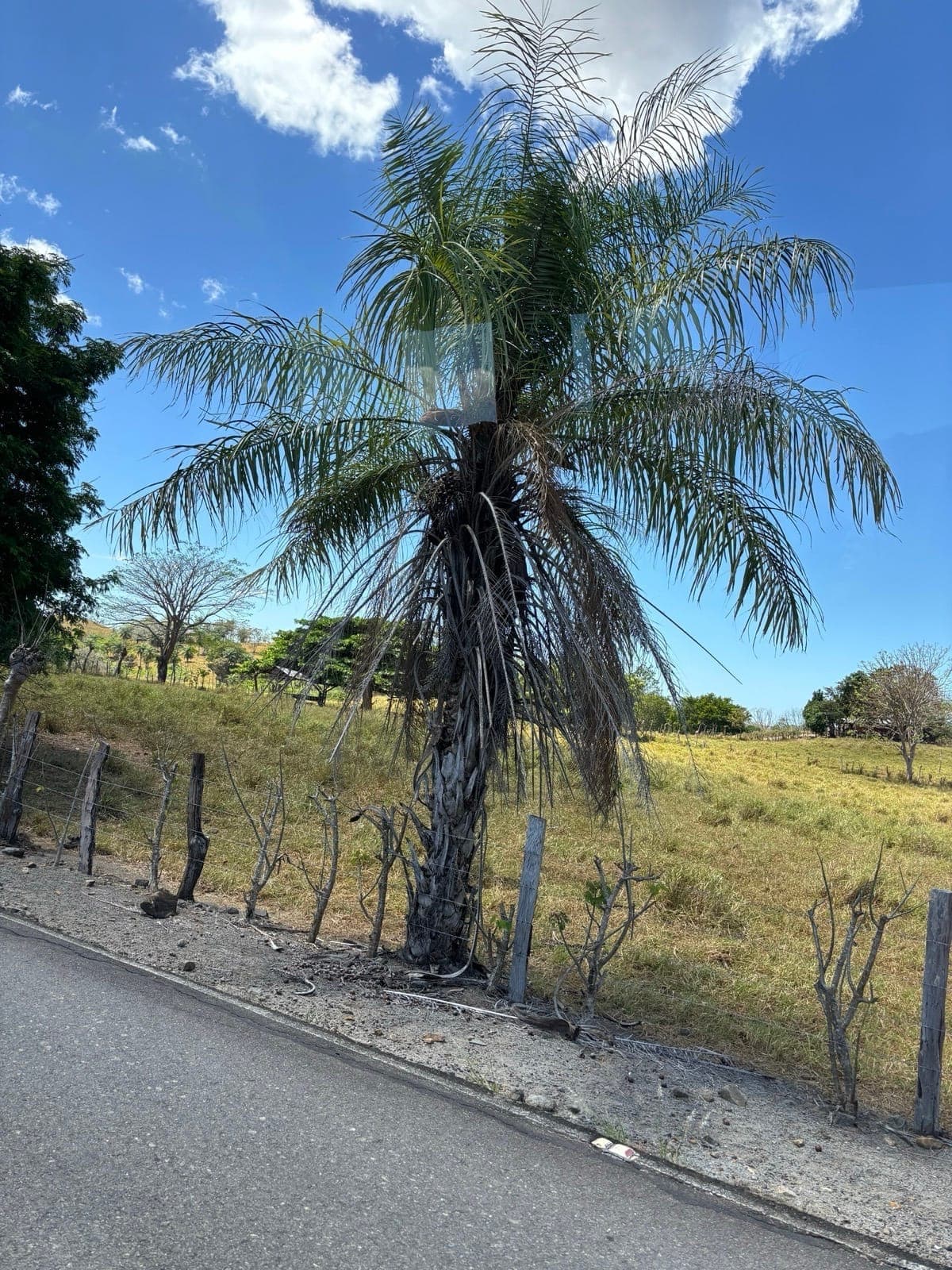
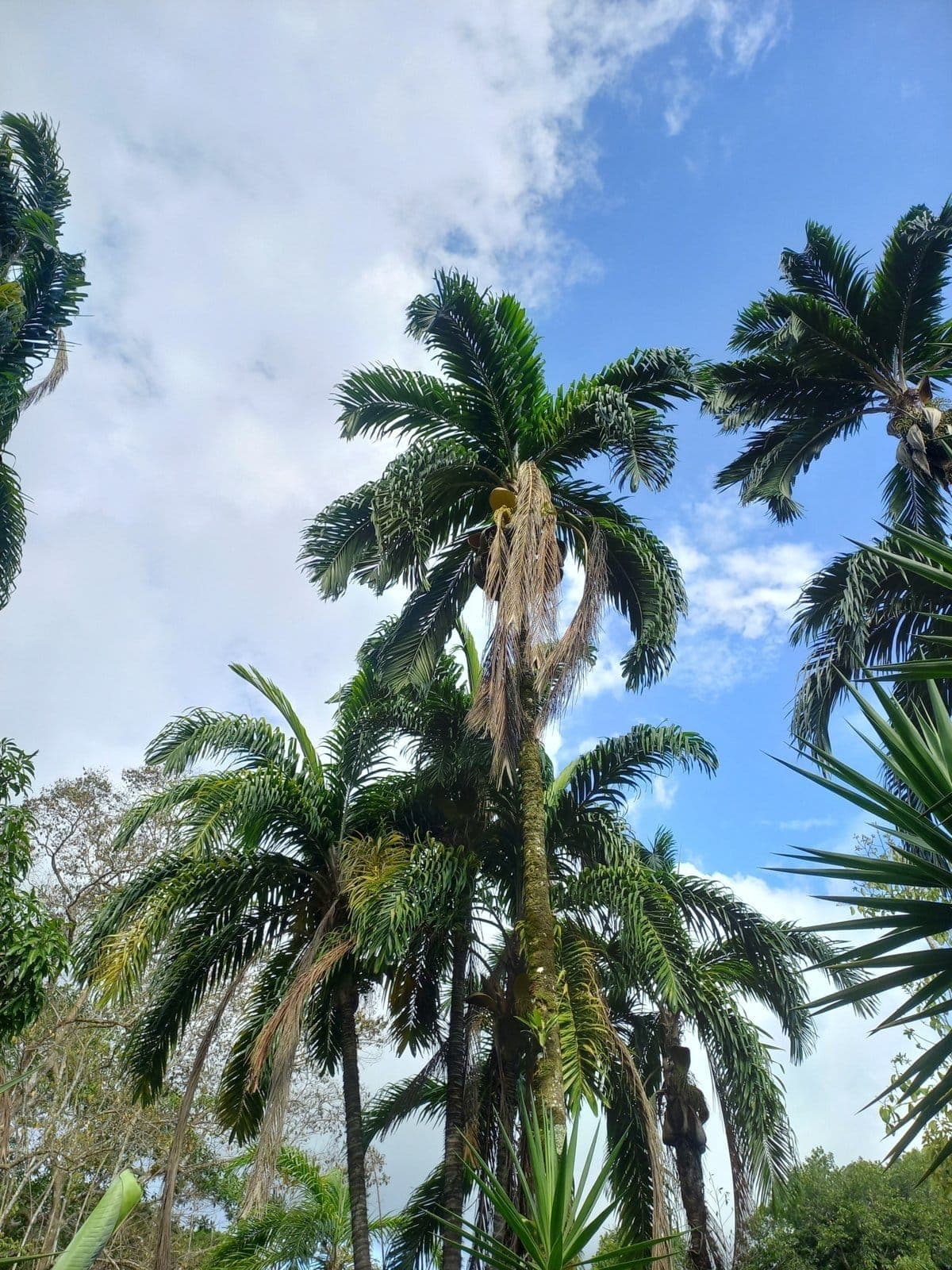
Coyol
Acrocomia aculeata
Pejibaye
Bactris gasipaes
Coyol vs. Pejibaye: Two Spiny Palms with Edible Fruits
Key Difference
Coyol has wickedly long trunk spines (up to 20cm) and hard-shelled fruits, while Pejibaye forms clumps of multiple stems with softer flesh fruits.
Coyol vs. Pejibaye: Spiny Palms of Costa Rica
Both Coyol and Pejibaye are armed palms with fearsome spines and delicious edible fruits deeply woven into Costa Rican culture. Here's how to tell them apart.
Look at the growth form. If you see multiple stems clustered together, it's Pejibaye. Single trunk with extremely long spines (8-20 cm)? That's Coyol.
🔍Quick Identification Guide
Side-by-Side Comparison
Detailed Comparison Table
| Feature | Coyol (Acrocomia aculeata) | Pejibaye (Bactris gasipaes) | | -------------------- | ---------------------------------------- | ------------------------------------ | | Growth Form | Solitary (single trunk) | Clumping (multiple stems) | | Height | 10-20 m (30-65 ft) | 12-20 m (40-65 ft) | | Trunk Diameter | 20-30 cm | 15-25 cm per stem | | Spine Length | 8-20 cm, extremely long | 5-15 cm, dense rings | | Spine Color | Black, needle-sharp | Black, needle-sharp | | Spine Coverage | Scattered on trunk | Dense rings every 5-20 cm | | Leaf Arrangement | Pinnate fronds | Pinnate fronds | | Leaf Length | 2-4 m | 2-3 m | | Fruit Appearance | Round, 2-5 cm, yellow-brown when ripe | Oval, 4-6 cm, orange-red when ripe | | Fruit Shell | Very hard shell (like miniature coconut) | No hard shell, soft flesh | | Fruit Clusters | Large hanging clusters (20-50 kg) | Compact clusters (5-15 kg) | | Edible Part | Kernel inside hard shell, sap for wine | Entire cooked fruit, heart of palm | | Flavor | Nutty, coconut-like | Starchy, chestnut-like | | Preparation | Must crack shell, or ferment sap | Boil 1-2 hours, eat with mayonnaise | | Cultural Use | Coyol wine (vino de coyol) | Pre-Columbian staple food | | Cultivation | Wild, rarely cultivated | Extensively cultivated (plantations) | | Habitat | Dry forests, savannas, roadsides | Humid forests, cultivated areas | | Elevation | 0-800 m | 0-1200 m | | Distribution | Guanacaste, Pacific slope | Throughout Costa Rica |
Key Identification Features
1. Growth Form (Most Reliable)
Coyol:
- Solitary palm with single trunk
- Never forms clumps
- One palm = one stem
- Trunk stands alone, often in open areas
Pejibaye:
- Multi-stemmed clumping palm
- Forms tight colonies of 10-30 stems
- Stems of different heights/ages together
- Looks like a bamboo grove from distance
2. Spine Characteristics
Coyol:
- EXTREMELY LONG spines (8-20 cm / 3-8 inches)
- Like thick black needles protruding from trunk
- Spines scattered irregularly
- Some of the longest palm spines in Costa Rica
- Dangerous - can penetrate clothing and boots
- Old trunks may lose spines
Pejibaye:
- Long but slightly shorter spines (5-15 cm)
- Arranged in dense horizontal rings
- Rings spaced 5-20 cm apart up trunk
- More organized pattern than Coyol
- Also dangerous but more predictable placement
- Spines persist on mature stems
3. Fruits (When Present)
Coyol:
- Round, 2-5 cm diameter
- Yellow-brown when ripe
- Very hard shell (must crack with hammer or rock)
- White kernel inside (like small coconut)
- Large hanging fruit bunches (20-50 kg)
- Fruits fall and litter ground beneath palm
- Wildlife and livestock eat them
Pejibaye:
- Oval/egg-shaped, 4-6 cm long
- Bright orange-red when ripe (like small peaches)
- No hard shell - soft flesh throughout
- Starchy texture when cooked
- More compact fruit clusters (5-15 kg)
- Harvested green for commercial sale
- Must be cooked before eating
4. Trunk Surface
Coyol:
- Ringed pattern (old leaf bases)
- Dark gray to brown
- Spines protrude directly from trunk rings
- Can appear "fuzzy" from distance due to spines
- Old palms often cleaner looking
Pejibaye:
- Distinct ring patterns every 5-20 cm
- Green to gray-brown color
- Rings of spines encircle trunk
- Younger stems greener
- More uniform appearance
When They Look Most Similar
Young Palms
Both have spiny trunks when young and may not show distinct characteristics yet.
Solution: Look for multiple stems (Pejibaye) vs. single stem (Coyol), even in juveniles.
From a Distance
Both appear as spiny palms with similar frond architecture.
Solution: Count the trunks/stems. One trunk = Coyol, multiple trunks = Pejibaye.
Without Fruits
Harder to distinguish when fruiting characteristics aren't visible.
Solution: Growth form (solitary vs. clumping) is reliable year-round.
Range & Habitat
Coyol
- Distribution: Guanacaste, Pacific coast, dry to seasonal zones
- Habitat: Dry forests, savannas, forest edges, roadsides, pastures
- Elevation: 0-800 m (prefers lowlands)
- Tolerance: Highly drought-tolerant, full sun
- Status: Wild, pioneer species, fire-resistant
Pejibaye
- Distribution: Throughout Costa Rica (native to Amazon, naturalized)
- Habitat: Humid forests, agricultural areas, home gardens, plantations
- Elevation: 0-1200 m
- Tolerance: Needs regular moisture, tolerates partial shade
- Status: Cultivated for millennia, commercial crop
Cultural & Traditional Uses
Coyol (Wild Resource)
Vino de Coyol (Coyol Wine):
- Traditional fermented beverage made from palm sap
- Trunk tapped like maple syrup
- Naturally ferments within hours in tropical heat
- Mildly alcoholic, sweet-sour taste
- Important cultural tradition in Guanacaste
- Sold at roadside stands
Fruit Uses:
- Hard-shelled fruits cracked to extract white kernel
- Kernel eaten raw (coconut-like flavor)
- Kernel pressed for cooking oil
- Livestock feed (cattle crack shells with teeth)
- Wildlife food (peccaries, coatis, parrots)
Other Uses:
- Young leaves for crafts
- Trunk wood for construction
- Traditional medicine
Pejibaye (Cultivated Staple)
Pre-Columbian Superfood:
- Domesticated in Amazon Basin 5,000+ years ago
- Only palm fruit domesticated by indigenous Americans
- Staple food before European contact
- High in protein, fat, vitamins, minerals
Modern Uses:
- Boiled and eaten as snack (with mayonnaise and salt)
- Heart of palm (palmito) - finest in the world
- Flour production from dried fruit
- Animal feed
- Traditional fermented beverages (chicha)
- Oil extraction
Commercial Production:
- Major crop in Costa Rica
- Sustainable heart of palm (harvest from clump, not kill palm)
- Export market
- Agroforestry systems
Safety Considerations
Both Palms: EXTREME SPINE HAZARD
Coyol:
- ⚠️ MOST DANGEROUS PALM SPINES IN COSTA RICA
- 8-20 cm spines penetrate boots, leather gloves
- Can cause serious puncture wounds
- Keep children and pets away
- Not recommended for home landscapes
- Falling fruits can be hazardous
Pejibaye:
- ⚠️ EXTREMELY DANGEROUS SPINES
- Dense spine rings make harvesting hazardous
- Professional harvesters use protective equipment
- Requires caution around clumps
- Spines can break off in skin (infection risk)
- Also not ideal for areas with children
For Both:
- Wear thick gloves, eye protection when working near
- Use long-handled tools for maintenance
- Plant away from pathways and play areas
- Consider spineless Pejibaye cultivars (exist in some nurseries)
Edibility: Both Safe
Coyol:
- Fruits completely safe when properly prepared
- Kernel edible raw
- Vino de coyol safe in moderation (alcoholic)
Pejibaye:
- Must be cooked 1-2 hours before eating (raw = astringent)
- Completely safe after cooking
- Important source of nutrition
- No toxicity concerns
Quick Field Test
-
How many trunks?
- One trunk → Coyol
- Multiple stems clumped together → Pejibaye
-
Can you see fruits?
- Round, hard-shelled, coconut-like → Coyol
- Oval, orange-red, soft → Pejibaye
-
Where are you?
- Dry Guanacaste savanna, roadside → Probably Coyol
- Home garden, plantation, humid forest → Probably Pejibaye
-
Spine pattern?
- Scattered irregular spines → Coyol
- Organized rings of spines → Pejibaye
Ecological & Economic Importance
Coyol (Wild Ecosystem Palm)
- Wildlife value: Fruits feed 50+ animal species
- Drought resistance: Survives long dry seasons
- Pioneer species: Colonizes disturbed areas
- Cultural heritage: Vino de coyol tradition
- Fire resistance: Survives savanna fires
Pejibaye (Domesticated Crop Palm)
- Food security: High-nutrition staple crop
- Sustainable harvest: Heart of palm without killing palm
- Agroforestry: Fits multi-story farming systems
- Commercial value: Export crop
- Historical importance: Fed pre-Columbian civilizations
Tips for Beginners
Start with growth form - single vs. clumping is visible from 50 meters away.
Respect the spines - both palms are armed with dangerous spines. Don't get close without protection.
Try the fruits - Pejibaye boiled with salt is sold at markets and sodas throughout Costa Rica. Taste to understand the cultural importance!
Look for vino de coyol stands - in Guanacaste dry season, roadside stands sell fresh Coyol wine. Try this unique traditional beverage.
Visit plantations - commercial Pejibaye plantations in the Caribbean lowlands show the clumping growth form clearly.
Want to explore more?
Use our interactive tool to compare these species side by side.
Compare in interactive tool