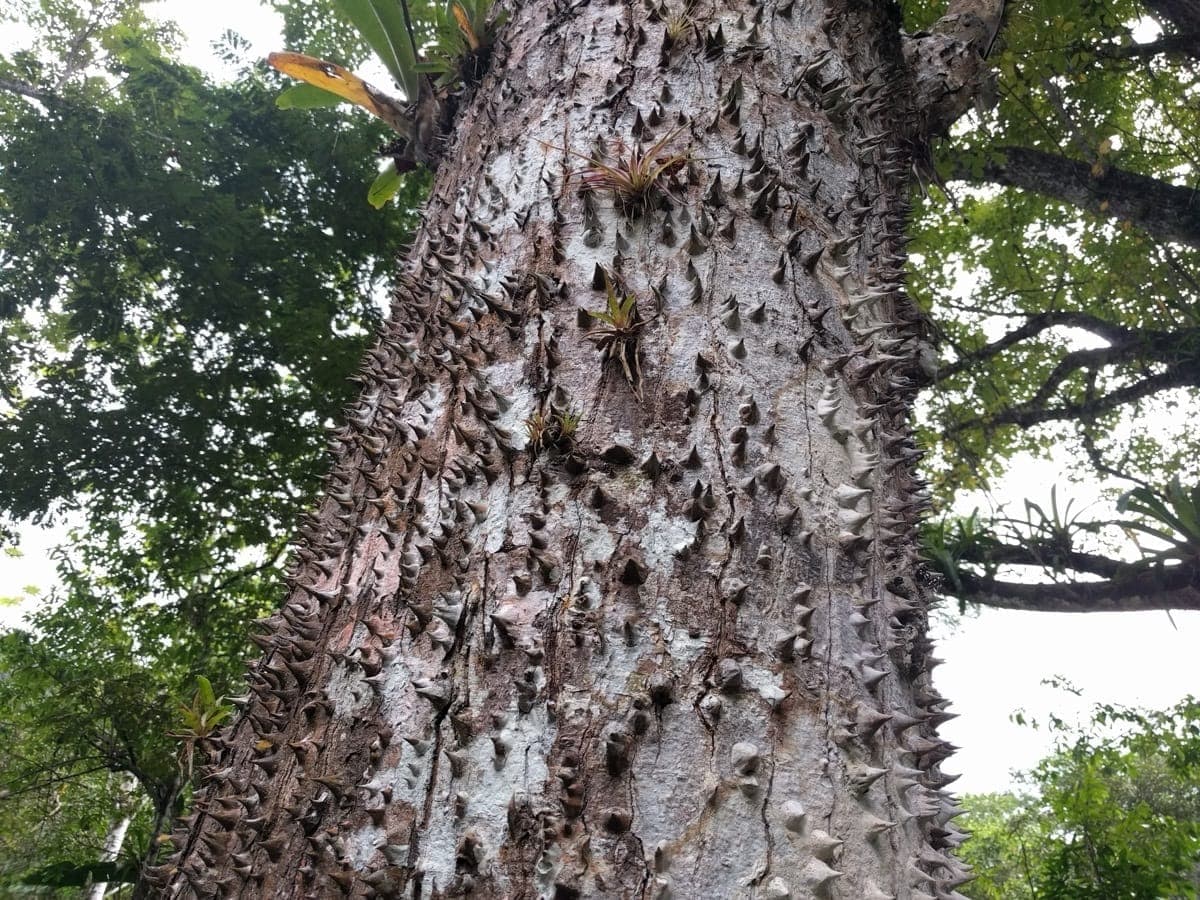
Ceiba
Ceiba pentandra
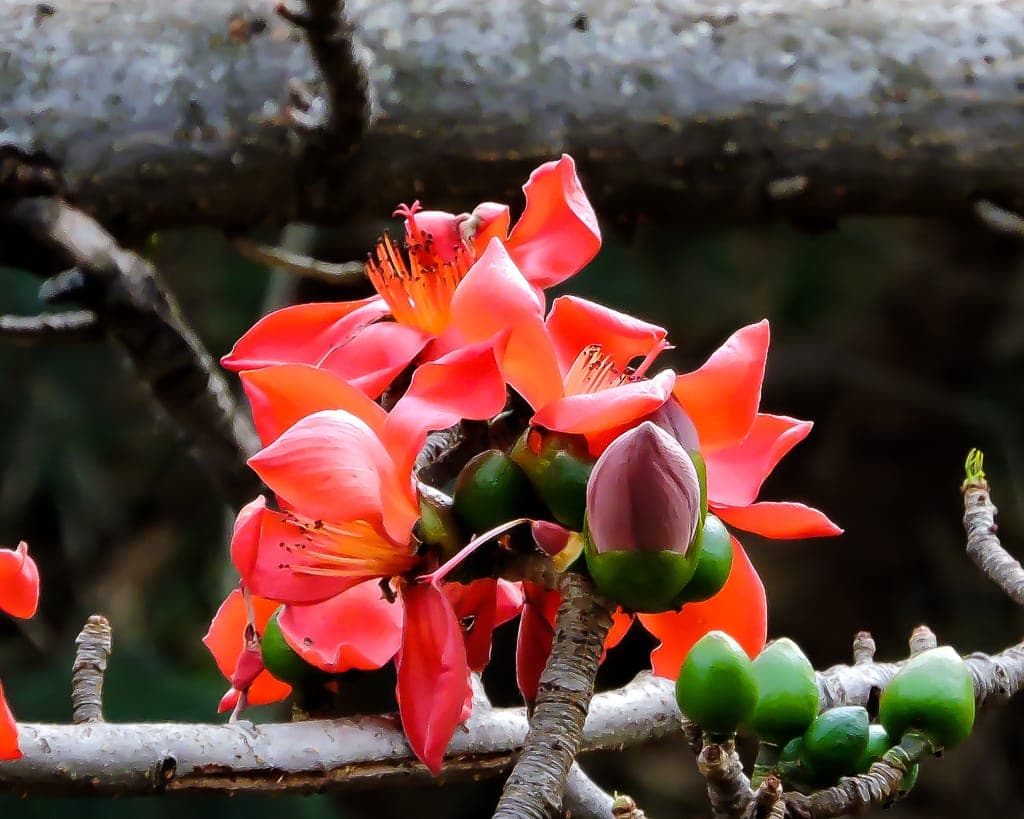
Pochote
Pachira quinata
Ceiba vs. Pochote: Distinguishing Two Spiny Giants
Key Difference
Ceiba has massive buttress roots at the base, while Pochote does not have buttresses.
Ceiba vs. Pochote: Quick ID Guide
Both the Ceiba and Pochote are magnificent trees with thorny trunks that can confuse even experienced tree watchers. Here's how to tell them apart confidently.
Look at the trunk base. If you see massive wing-like buttress roots extending from the trunk, it's a Ceiba. No buttresses? It's a Pochote.
Side-by-Side Comparison
Detailed Comparison Table
| Feature | Ceiba (Ceiba pentandra) | Pochote (Pachira quinata) | | ---------------------- | ----------------------------------------------------- | ------------------------------------------ | | Trunk Base | Prominent buttress roots | No buttresses, straight trunk | | Trunk Surface | Smooth, greenish gray, scattered thick conical spines | Densely covered with sharp conical spines | | Spine Coverage | Sparse, mostly on younger trees | Dense coverage, persists on mature trees | | Maximum Height | 50-70 m (165-230 ft) | 20-30 m (65-100 ft) | | Trunk Diameter | Up to 3+ m | Up to 1.5 m | | Flower Color | Creamy white to pale pink | Bright orange-red to pink | | Flowering Season | January-March (dry season) | December-March (dry season) | | Leaf Size | Larger palmate leaves (7-9 leaflets) | Smaller palmate leaves (5-7 leaflets) | | Leaf Arrangement | Digital/palmate compound | Digital/palmate compound | | Fruit Type | Large woody capsule, splits to release kapok fiber | Woody capsule without kapok | | Seed Dispersal | Wind (kapok fiber) | Wind | | Habitat Preference | Lowland rainforest, moist areas | Dry to moist forest, more drought-tolerant | | Elevation Range | 0-1000 m | 0-1200 m | | Cultural Status | Sacred tree (Maya World Tree) | Valued timber, ornamental | | Distribution | Widespread throughout Costa Rica | Guanacaste, Pacific slope |
Key Identification Features
1. Trunk Base (Most Reliable)
Ceiba:
- Develops dramatic buttress roots - triangular, wing-like extensions
- Buttresses can reach 3-6 m (10-20 ft) up the trunk
- Space between buttresses creates natural alcoves
- Buttresses more prominent in mature specimens
Pochote:
- Trunk goes straight into the ground
- No buttressing at any age
- Base may slightly swell but never forms wings
2. Trunk Spines
Ceiba:
- Scattered thick conical spines
- Spines mostly on younger trees
- Mature trees often lose most spines
- Trunk becomes smoother with age
- Greenish-gray bark color
Pochote:
- Densely packed sharp conical spines
- Spines persist on mature trees
- Fuller spine coverage than Ceiba
- Bark remains heavily armed
- Grayish-brown bark
3. Flowers (When Flowering)
Ceiba:
- Creamy white to pale pink
- Large showy flowers (10-15 cm)
- Abundant nectar attracts bats, bees
- Flowers appear when leafless
Pochote:
- Bright orange-red to deep pink
- Striking colorful display
- Smaller than Ceiba flowers
- Also flowers when leafless
4. Size and Stature
Ceiba:
- One of the tallest trees in Central America
- Massive spreading crown
- Imposing presence in the landscape
- Often emergent above canopy
Pochote:
- Medium to large tree
- Substantial but not as tall as Ceiba
- Dense rounded crown
- Usually within canopy layer
When They Look Most Similar
Both trees can be confusing in these situations:
Dry Season (Leafless)
- Both lose all leaves
- Both have spiny trunks
- Size difference may not be obvious from a distance
Solution: Look at the trunk base for buttresses (Ceiba) vs. no buttresses (Pochote)
Young Trees
- Young Ceiba may not have developed obvious buttresses yet
- Both have spiny trunks
Solution: Check the base carefully - even young Ceiba show slight buttress flare that Pochote lacks
Flowering Time
- Both flower during dry season when leafless
- Both have showy flowers
Solution: Flower color is very different - Ceiba is pale/white, Pochote is orange-red
Range & Habitat
Ceiba
- Distribution: Throughout Costa Rica, both coasts
- Habitat: Lowland rainforest, gallery forest, moist areas
- Elevation: Sea level to 1000 m
- Tolerance: Prefers consistently moist soil
Pochote
- Distribution: Pacific slope, especially Guanacaste
- Habitat: Dry forest, dry to moist transition zones
- Elevation: Sea level to 1200 m
- Tolerance: More drought-tolerant than Ceiba
Quick Field Test
🔍Quick ID
Ask yourself these questions:
-
Does the trunk base have wing-like buttresses?
- YES → Ceiba
- NO → Pochote
-
Is the tree exceptionally tall (50+ m)?
- YES → Probably Ceiba
- NO → Could be either (check buttresses)
-
Are flowers orange-red?
- YES → Pochote
- NO (white/pale pink) → Ceiba
-
Location in Guanacaste dry forest?
- More likely Pochote (both can occur)
Cultural & Ecological Significance
Ceiba
- Maya Sacred Tree: World Tree (Ya'axché) connecting underworld, earth, and heavens
- Wildlife Value: Nectar for bats, nesting sites for large birds
- Kapok Fiber: Traditional use for stuffing, flotation devices
- Conservation: Least Concern, but culturally protected
Pochote
- Timber: Valued for light construction, boxes, canoes
- Ornamental: Planted for spectacular flowering display
- Wildlife: Flowers attract hummingbirds, bees
- Cultural: Traditional medicinal uses
Related Species
If you can identify Ceiba vs. Pochote, you'll also recognize these relatives:
- Barrigón/Spiny Cedar (Hura crepitans): Another spiny trunk, but dangerous explosive seed pods
- Ceiba pentrandra relatives in Malvaceae family
- Balsa (Ochroma pyramidale): Related but no spines, extremely fast-growing
Tips for Beginners
Start with the trunk base - this is the most reliable feature and works year-round, regardless of leaves, flowers, or fruit.
Practice on confirmed specimens - Visit botanical gardens or areas where trees are labeled to calibrate your eye.
Take photos - Compare side-by-side photos of trunks, especially the base, to train your pattern recognition.
Remember the size difference - Ceiba is MUCH taller. If you're looking way up, it's probably Ceiba.
Want to explore more?
Use our interactive tool to compare these species side by side.
Compare in interactive tool