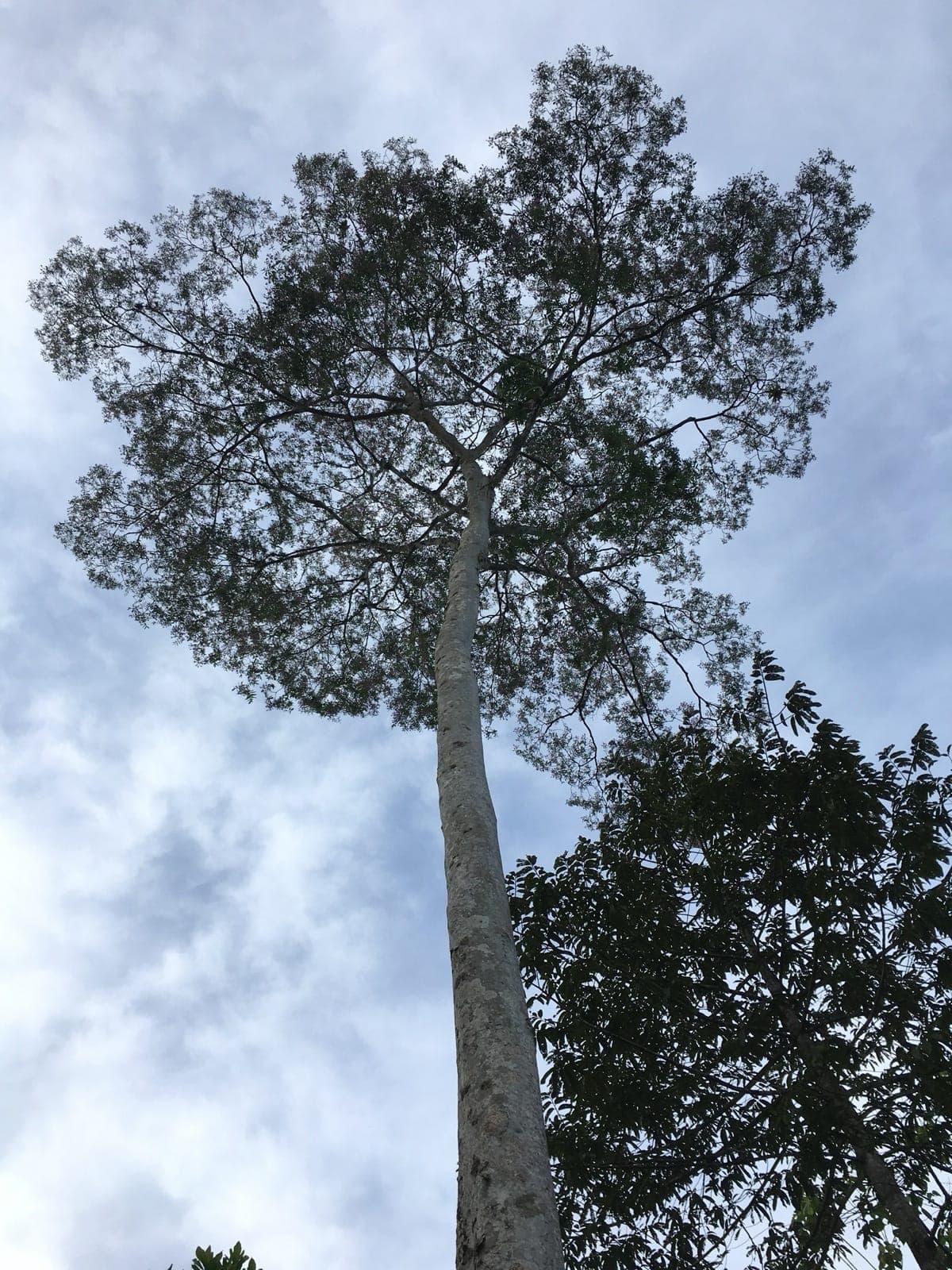
Almendro
Dipteryx panamensis
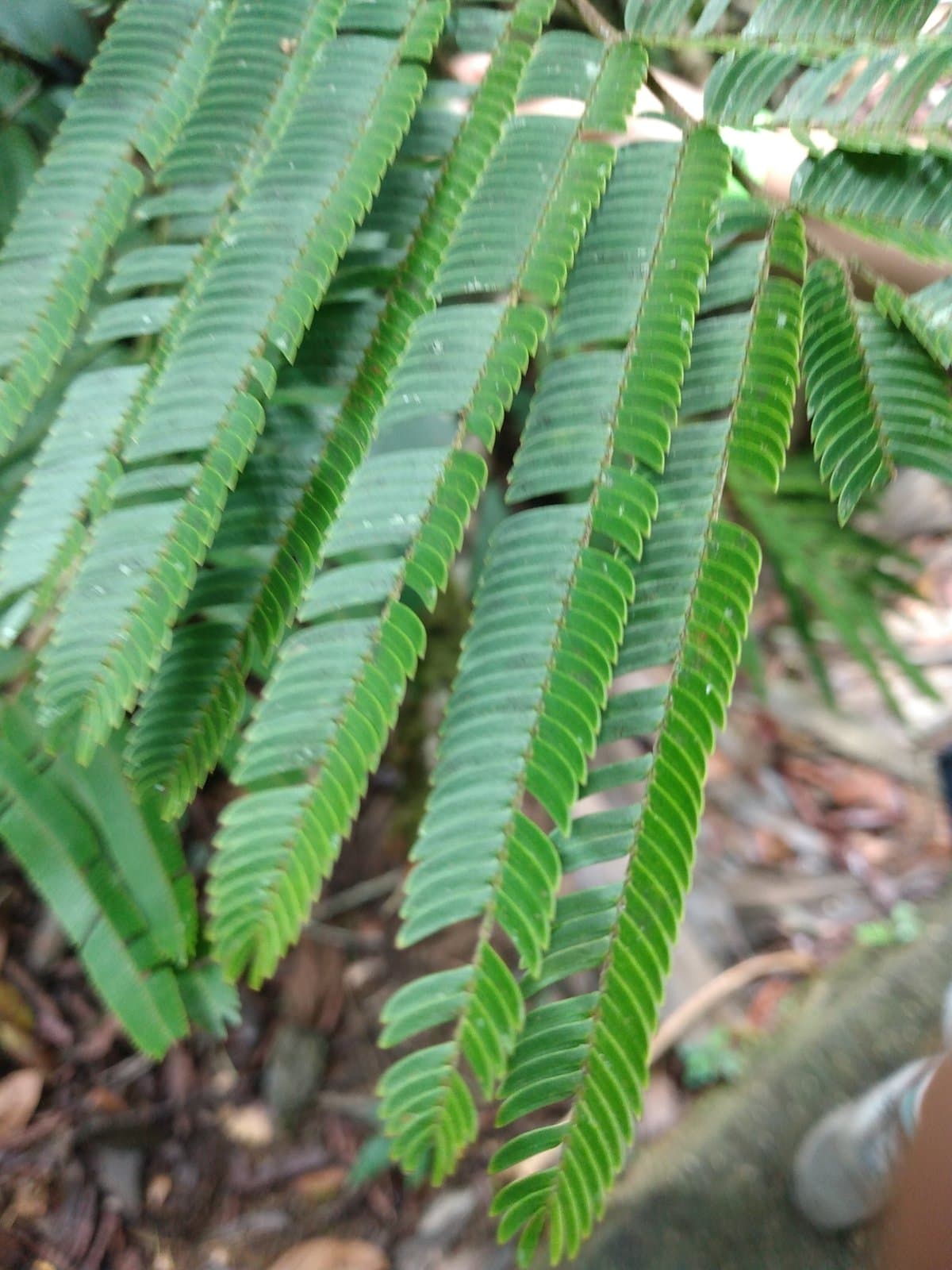
Gavilán
Pentaclethra macroloba
Almendro vs. Gavilán: Rainforest Giants Compared
Key Difference
Almendro has pinnate leaves and single-seeded drupes, towers 40-60m with critical importance for Great Green Macaws. Gavilán has bipinnate leaves and massive explosive seed pods, dominates Caribbean forests through nitrogen fixation.
Almendro vs. Gavilán: Canopy Legume Giants
Both Almendro and Gavilán are impressive legume trees dominating Costa Rica's lowland rainforests. While they share membership in the Fabaceae family, they occupy different ecological niches and have distinctive features. Almendro is the taller, rarer tree critically linked to Great Green Macaw conservation, while Gavilán is often the most abundant canopy species in Caribbean wet forests.
Almendro: Taller (40-60m), once-pinnate leaves, single-seeded drupes, strong coumarin scent, Great Green Macaw habitat. Gavilán: Shorter (25-35m), twice-pinnate leaves (feathery), huge flat explosive pods (25-50cm), nitrogen-fixing, often dominant.
🔍Quick Identification Guide
Side-by-Side Comparison
Detailed Comparison Table
| Feature | Almendro (Dipteryx panamensis) | Gavilán (Pentaclethra macroloba) | | --------------------- | ----------------------------------- | ------------------------------------ | | Maximum Height | 40-60 m (emergent) | 25-35 m (canopy) | | Trunk Diameter | Up to 2-3 m | Up to 1 m | | Crown Form | Umbrella-shaped, emergent | Rounded, dense canopy | | Buttresses | Massive, 3-5 m tall | Well-developed, spreading | | Bark Color | Grayish-brown, deeply furrowed | Gray-brown, rough | | Leaf Type | Once-pinnate (5-9 leaflets) | Twice-pinnate (bipinnate) | | Leaflet Size | Large: 5-15 cm long | Very small: many tiny leaflets | | Leaflet Count | 5-9 leaflets per leaf | 8-20 pairs per pinna, 10-20 pinnae | | Flower Color | Pink to lavender | Cream to yellowish | | Flower Type | Papilionaceous (pea-flower) | Bottle-brush spikes | | Fruit Type | Single-seeded drupe | Large flat woody pod | | Fruit Size | 5-7 cm oval drupe | 25-50 cm long flat pod | | Seed Dispersal | Gravity, bats, macaws | EXPLOSIVE pod dehiscence | | Special Feature | Coumarin scent (tonka bean) | Explosiveseeds flung 10+ meters | | Forest Abundance | Scattered, not abundant | Often most abundant canopy tree | | Conservation Role | Critical for Great Green Macaw | Nitrogen-fixing, forest enrichment | | Geographic Range | Nicaragua to Colombia | Central & South America (widespread) | | Primary Habitat | Both Pacific & Caribbean lowlands | Caribbean wet forests (dominant) | | Elevation Range | 0-800 m | 0-600 m | | Protected Status | Logging banned in Costa Rica (2012) | Not specifically protected | | CITES Listing | Appendix III | Not listed |
Key Identification Features
1. Tree Size & Stature
Almendro:
- Massive emergent: 40-60 m tall (up to 70 m)
- Towers above the rainforest canopy
- Umbrella-shaped crown visible from far away
- Trunk diameter often exceeds 2 m
- One of the largest trees in Central American rainforests
- Scattered distribution - not abundant
Gavilán:
- Canopy tree: 25-35 m tall
- Part of main canopy layer, does not emerge
- Rounded, dense crown
- Trunk diameter typically under 1 m
- Medium to large size
- Often the most abundant large tree in Caribbean forests
2. Leaves (Most Reliable!)
Almendro:
- Once-pinnate (pinnately compound)
- 5-9 large leaflets per leaf
- Leaflets: 5-15 cm long, elliptic to oblong
- Leathery, glossy dark green above
- Alternate arrangement
- Smooth (entire) margins
Gavilán:
- Twice-pinnate (bipinnately compound)
- Feathery appearance - many tiny leaflets
- 10-20 pairs of pinnae, each with 8-20 pairs of tiny leaflets
- Delicate, fine texture
- Overall leaf 20-40 cm long
- Gives tree a distinctive fern-like appearance
This is the easiest field identification feature: - Once-pinnate leaves (like a feather) → Almendro - Twice-pinnate leaves (feathery, fern-like) → Gavilán
3. Fruits/Seeds (Diagnostic When Present!)
Almendro:
- Single-seeded drupe (like a large almond)
- Oval, 5-7 cm long
- Green, becoming yellowish when ripe
- Single large aromatic seed inside
- Coumarin scent - distinctive vanilla/almond smell (tonka bean)
- Falls to ground - gravity dispersal
- Eaten by bats, macaws, agoutis
- Fruiting: December-March
Gavilán:
- Huge flat woody pod - unmistakable!
- 25-50 cm long (up to half a meter!)
- Flat, curved, woody, brown when mature
- Contains large flat oily seeds
- EXPLOSIVE dehiscence - pods crack open violently
- Seeds flung up to 10+ meters
- Loud cracking sound during dry season
- Can startle hikers - sounds like gunshot
Gavilán has one of the most dramatic seed dispersal mechanisms in the forest! On hot, sunny days during the dry season, the pods dry, twist under tension, then suddenly CRACK open with explosive force, hurling seeds 10+ meters away. The sound can be startling - like a branch breaking or a small gunshot!
4. Flowers
Almendro:
- Pink to lavender (occasionally white)
- Papilionaceous - typical pea-flower shape
- Small, about 1 cm
- Terminal panicles
- Sweetly aromatic
- February to May
Gavilán:
- Cream to yellowish
- Bottle-brush spikes - cylindrical inflorescences
- Spikes 8-15 cm long
- Strongly scented
- Mainly dry season
5. Bark
Almendro:
- Grayish-brown color
- Deeply furrowed - thick, rough bark
- Massive buttresses extending 3-5 m from trunk
- Bark breaks off in thick plates
- No colored sap
Gavilán:
- Gray-brown, rough texture
- Fissured with age but less deeply than Almendro
- Well-developed buttresses, spreading
- Red sap when cut - "bloodwood"
- Inner bark reddish
Ecological Roles & Importance
Almendro
Conservation Critical:
- Primary food source for endangered Great Green Macaw
- Macaws nest in trunk cavities (old trees essential)
- Macaws feed on the seeds (December-March)
- Macaw survival directly tied to Almendro conservation
- Logging banned in Costa Rica since 2012
Ecological Functions:
- Nitrogen fixation (legume family)
- Massive carbon storage (long-lived, large trees)
- Wildlife habitat (cavities for nesting)
- Seeds eaten by bats, agoutis, peccaries
- Watershed protection (deep roots)
Cultural/Economic:
- Seeds (tonka beans) contain coumarin - traditional flavoring
- Extremely hard, dense wood (specific gravity 1.0+)
- Premium timber (historical overexploitation)
- Traditional medicine
Gavilán
Forest Dominance:
- Often the most abundant canopy tree in Caribbean wet forests
- Can comprise 30-40% of canopy trees in some areas
- Shapes forest structure and composition
- Nitrogen-fixing - enriches tropical soils
- Fundamental to Caribbean forest ecosystems
Ecological Functions:
- Critical nitrogen fixation - improves soil fertility
- Abundant leaf litter enriches forest floor
- Seeds eaten by wildlife (parrots, rodents)
- Provides nesting sites and habitat
- Explosive seed dispersal spreads species widely
Cultural/Economic:
- Local timber use (construction, firewood)
- Seeds produce oil (traditional use)
- Traditional medicine
- Not threatened - abundant species
When They Grow Together
In lowland Caribbean rainforests, you may encounter both species in the same forest. Here's how to distinguish them:
If You See a GIANT Emergent Tree (40-60m):
- Look at crown - does it tower way above everything else?
- Almendro emerges dramatically
- Gavilán stays in main canopy
Look at the Leaves:
- Feathery, fern-like appearance → Gavilán
- Larger leaflets (5-9 per leaf) → Almendro
Check for Fruits/Pods:
- Enormous flat woody pods → Gavilán (unmistakable!)
- Single drupes with vanilla smell → Almendro
Listen During Dry Season:
- Loud cracking sounds → Gavilán pods exploding
- No sounds → Not Gavilán
Conservation Status
Almendro
Status: Least Concern (IUCN) but locally threatened
Protections:
- Logging banned in Costa Rica (2012)
- CITES Appendix III
- Critical for Great Green Macaw recovery
- Protected in national parks and reserves
Threats:
- Historical overharvesting for timber
- Habitat loss (deforestation)
- Great Green Macaw dependent on old-growth trees
Gavilán
Status: Least Concern - abundant
Situation:
- Widespread and common
- Often dominant species (not threatened)
- Adaptable to disturbed forests
- Nitrogen-fixing promotes recovery
- Not specifically protected but benefits from forest conservation
Summary: Key Differences
Related Pages
- Almendro species page - Learn more about this conservation-critical giant
- Gavilán species page - Explore the Caribbean forest dominant
- Great Green Macaw conservation - Why Almendro matters
Conclusion
While both Almendro and Gavilán are large legume trees in Costa Rica's lowland rainforests, they are quite distinct:
Choose Almendro if you see:
- A massive emergent tree (40-60m) towering above everything
- Once-pinnate leaves with 5-9 large leaflets
- Single-seeded drupes with vanilla/almond scent
- Great Green Macaws flying to/from the tree
Choose Gavilán if you see:
- A canopy tree (25-35m) part of the main forest layer
- Twice-pinnate (feathery, fern-like) leaves
- Enormous flat woody pods (25-50cm long)
- Explosive seed dispersal with loud cracking sounds
- The most abundant large tree in the forest
The most reliable field mark: LEAVES
- Once-pinnate → Almendro
- Twice-pinnate (feathery) → Gavilán
Want to explore more?
Use our interactive tool to compare these species side by side.
Compare in interactive tool